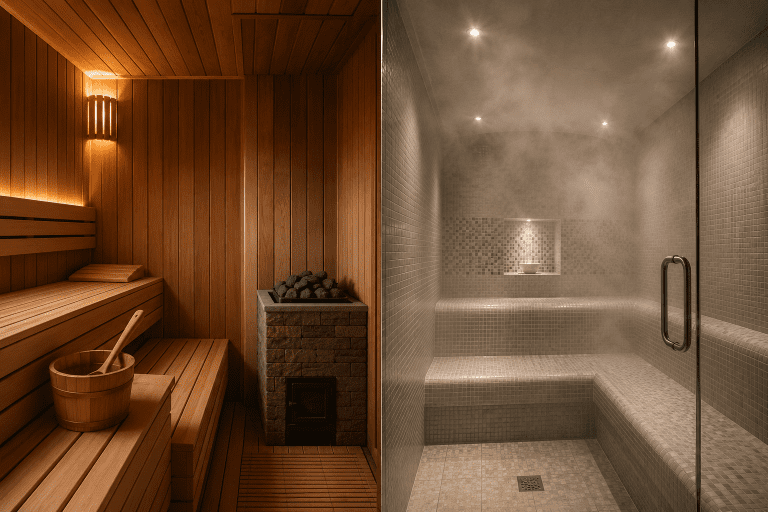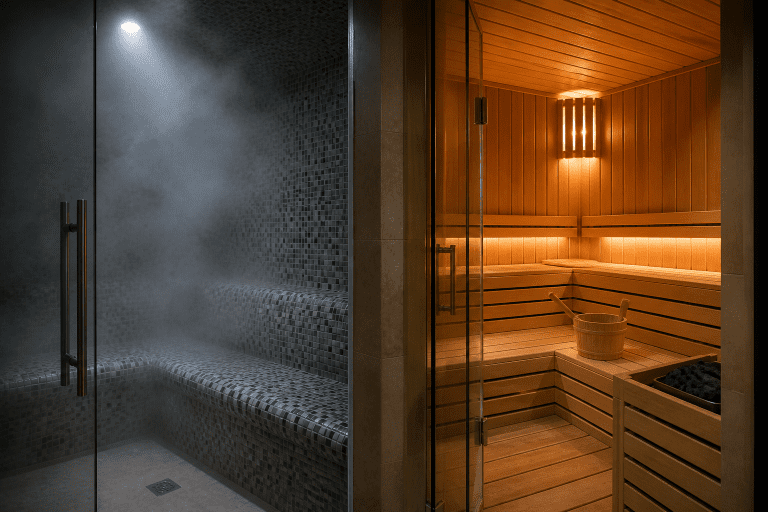
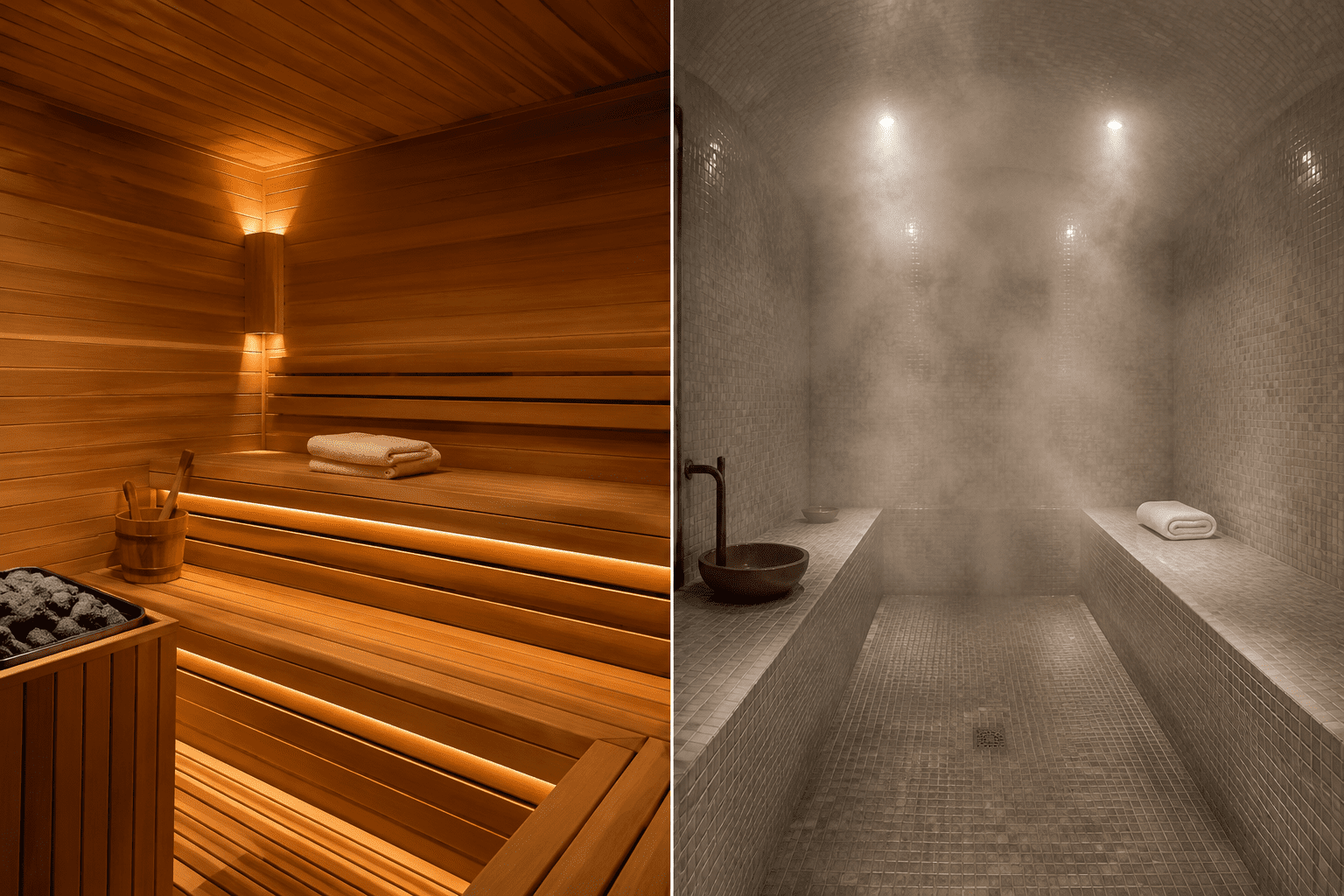
Steam Room vs Sauna Cost: The Real Installation & Running Cost Breakdown
Steam room vs sauna cost depends on more than the equipment price. Compare the complete installed setup: the enclosure, heating equipment, electrical work, plumbing, ventilation and ongoing care. A prefab sauna may involve less construction than a new tiled steam room, but an existing bathroom only saves money if it is suitable for conversion.
As an Amazon Associate, Sunrise & Vitalize earns from qualifying purchases. If you buy through an affiliate link, we may earn a small commission at no extra cost to you.
Quick snapshot
Purchase price: compare a complete sauna package with a complete steam-room installation, rather than comparing a sauna with a generator alone.
Construction: steam rooms need an enclosure designed to control both liquid water and water vapor.
Electricity: traditional electric sauna heaters and residential steam generators commonly need 240V; some smaller saunas use 120V.
Running costs: equipment power, warm-up time, thermostat cycling and your electricity rate determine the bill.
Maintenance: steam adds generator care and mineral-scale management; saunas need cleaning, drying and equipment checks.
Existing space: an ordinary tiled shower is not automatically suitable for steam.
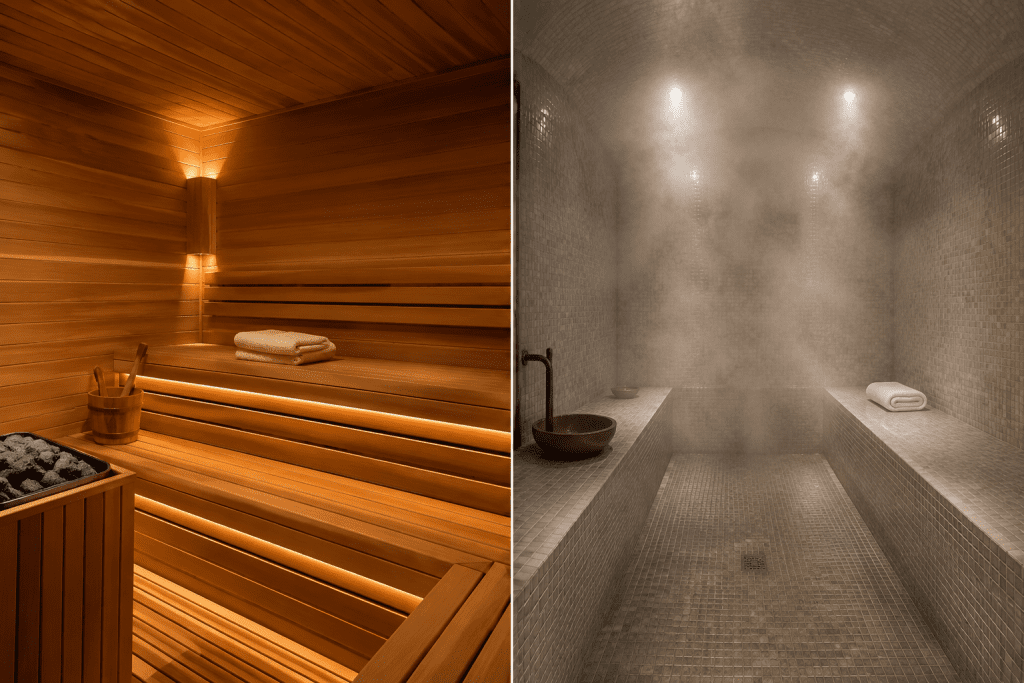
Table of Contents
- What You’re Actually Comparing
- The Real Upfront Hardware Costs
- 5 Installation Factors That Drive the Final Bill
- Running Costs: What You’ll Pay Monthly
- Maintenance — The Honest Ongoing Cost Picture
- Pros and Cons of Each
- Head-to-Head Comparison
- Comparison Table
- Helpful Gear
- FAQ
- The Simple Rule
- Summary Snapshot
- Final Verdict
What You’re Actually Comparing
The steam room vs sauna cost comparison covers three different systems: traditional saunas, infrared saunas and residential steam rooms. Traditional saunas commonly operate around 160–195°F; infrared cabins generally operate at lower air temperatures. Steam rooms use lower temperatures with very high humidity.
Prefab sauna cabins and prefab steam-shower units are available. A custom steam room involves additional enclosure work, while converting a shower depends on whether its construction is suitable for steam.
My regular use of both helps me compare the experience, but it does not establish installation costs. For that, compare equipment specifications and itemized quotes for your own space.
The Real Upfront Hardware Costs
The steam room vs sauna cost comparison needs matching scopes. A generator price is not a complete steam-room price, and a sauna kit may exclude the heater, controls, delivery or electrical work.
For a sauna quote, check whether it includes:
- The cabin or enclosure materials.
- The heater or infrared panels and controls.
- Heater stones, where required.
- Delivery, assembly and a suitable floor or base.
- Electrical work, ventilation and permits.
For a steam-room quote, check whether it includes:
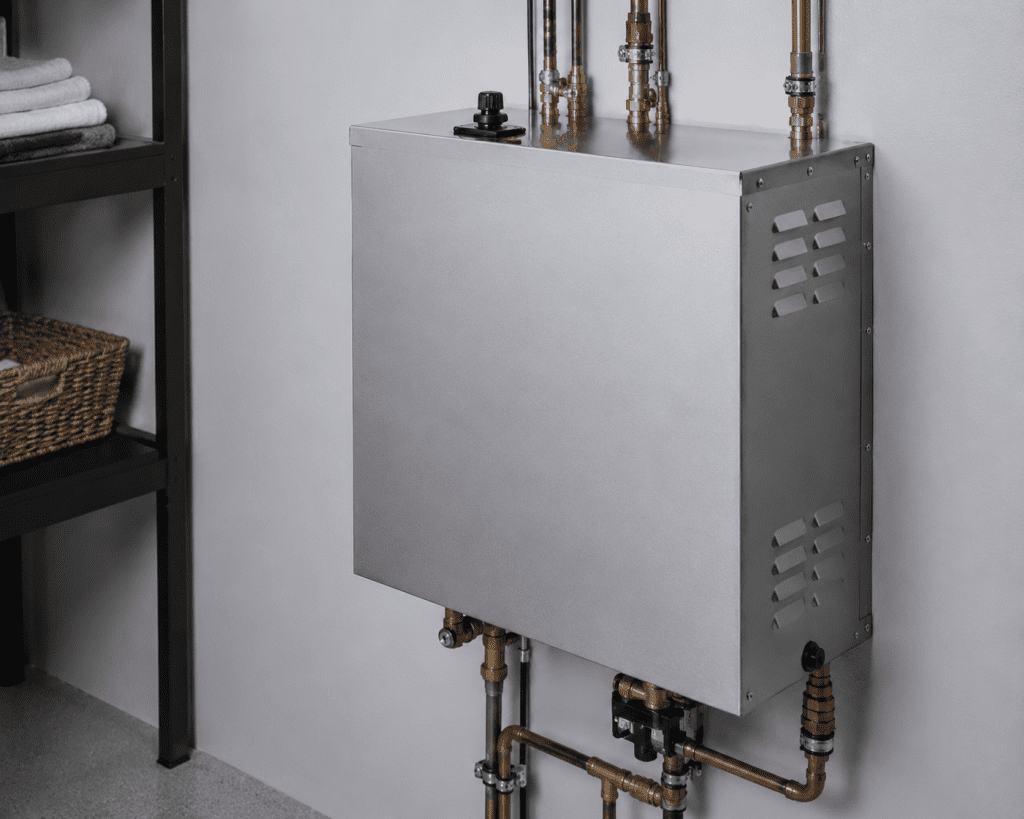
- The correctly sized generator, controls and steam outlet.
- A steam-suitable enclosure, door and waterproofing system.
- Plumbing, drainage and electrical work.
- Installation labor, permits and access for servicing.
Compare complete installed quotes before deciding which option is cheaper. For the generator portion, see Cost to Install a Steam Generator.
5 Installation Factors That Drive the Final Bill
Factor 1: Electrical supply
Traditional electric sauna heaters and residential steam generators commonly require a dedicated 240V circuit, but some smaller saunas use 120V. Check the exact model before budgeting. Have an electrician assess the panel, circuit, wiring route and connection requirements. A panel upgrade can change the total substantially.
Factor 2: Waterproofing and tiling (steam rooms only)
A steam room needs a complete assembly designed for steam exposure, including appropriate waterproofing and water-vapor control across the floor, walls, ceiling and penetrations. Tile and cement board alone do not establish suitability. Follow the enclosure system’s instructions, including any ceiling-slope requirements. A sauna also needs suitable floor protection, moisture management and the construction specified by its manufacturer.
Factor 3: Ventilation
Follow the sauna manufacturer’s ventilation layout. For a steam shower, plan how the surrounding bathroom will exhaust moisture and how the enclosure will dry after use. Fan placement varies by system: some setups vent the surrounding bathroom, while some fans are rated for installation inside a steam enclosure. Follow the generator and fan manufacturers’ instructions. Include any necessary bathroom ventilation work in the installation quote.
Factor 4: Permits
Check permit and inspection requirements with your local building department before work starts. Ask which approvals apply to the electrical, plumbing and enclosure work, and have the contractor identify who will obtain them. Include the actual local fees in your quote.
Factor 5: Labor and contractor type
Some prefab sauna cabins can be assembled by a capable homeowner following the manufacturer’s instructions. Cabin assembly is separate from electrical work: use a qualified electrician for new circuits and hardwired connections. Steam-room projects may also need plumbing and specialist enclosure installation. Compare itemized labor quotes rather than assuming a fixed installation premium.
Running Costs: What You’ll Pay Monthly
Running cost depends on electricity consumed, not equipment wattage alone:
Cost = electricity used in kWh × your electricity rate.
The examples below use an illustrative rate of $0.16/kWh, not a claimed current national average. They assume continuous full-power operation for the stated time, including warm-up. Thermostat cycling can reduce consumption over the same period.
- Traditional sauna: 9kW × 1 hour = 9kWh, costing $1.44 per use.
- Steam generator: 10kW × 30 minutes = 5kWh, costing $0.80 per use.
- Infrared sauna: 2kW × 45 minutes = 1.5kWh, costing $0.24 per use.
At four uses per week, approximately 17.3 uses per month, those examples cost about $25, $14 and $4 per month, respectively. They are different usage scenarios, not a controlled comparison or a recommended session length.
Actual consumption depends on the model, room construction, starting temperature, warm-up and operating time. Steam-room water, drainage and ventilation costs are additional. For the detailed comparison, see Steam Room vs Sauna Energy Costs.
Maintenance — The Honest Ongoing Cost Picture
The main maintenance difference is the steam generator and its water supply. Hardness, frequency of use and the manufacturer’s instructions determine the care required.
Sauna maintenance
- Clean and dry the interior regularly.
- Use only wood treatments approved for the surfaces concerned.
- Inspect and restack heater stones, replacing damaged stones and following the heater’s replacement schedule.
- Check benches, fittings and ventilation openings.
Steam-room maintenance
- Clean the enclosure and let it dry after use.
- Inspect seals, joints and drainage.
- Follow the generator’s specified draining, flushing or descaling procedure.
- Use only approved chemicals and keep the generator accessible for servicing.
Ask for model-specific maintenance requirements and local service prices. There is no reliable universal annual cost or ten-year maintenance total for either system.
Pros and Cons of Each
Steam room pros
- Humid heat for people who prefer that experience.
- Can combine showering and steam in a suitably designed enclosure.
Steam room cons
- Requires steam-suitable construction.
- Adds generator care and mineral-scale management.
- Plumbing, electrical work and enclosure changes can increase the installation scope.
Sauna pros
- Prefab cabins can simplify enclosure assembly.
- Does not require a steam generator or its water supply.
- Traditional and infrared options offer different heat experiences.
Sauna cons
- Needs suitable space, ventilation and electrical provision.
- Traditional heaters can draw substantial power during warm-up.
- Cleaning, drying and equipment maintenance still matter.
Neither system’s temperature alone establishes whether it is suitable for someone with a health condition.
Head-to-Head Comparison
Compare the work each option needs in your home. Existing plumbing and a suitable shower enclosure may reduce a steam conversion’s scope, but visible tile does not prove the hidden construction is suitable for steam.
A prefab sauna may involve less enclosure work in a suitable spare room or garage. Check dimensions, clearances, floor requirements, ventilation and electrical supply before treating either space as ready.
Our deeper breakdown in the steam vs sauna comparison series covers the experience differences in more detail for anyone working through the decision beyond cost alone, and if you’re working with a genuinely tight footprint rather than a full room, Sauna vs Steam Room Small Spaces breaks down what actually fits.
Comparison Table
| Factor | Steam room | Traditional sauna | Infrared sauna |
|---|---|---|---|
| Main purchase | Generator, controls and steam-suitable enclosure | Cabin, heater and controls | Cabin, panels and controls |
| Installation costs to check | Enclosure, plumbing, electrical and ventilation work | Assembly, floor, electrical and ventilation work | Assembly, floor and model-specific electrical work |
| Electricity example per use* | $0.80 | $1.44 | $0.24 |
| Monthly electricity example* | About $14 | About $25 | About $4 |
| Water supply | Required | No generator water supply | No generator water supply |
| Electrical supply | Check model; commonly 240V | Check model; commonly 240V | Check model; 120V options available |
| Main upkeep | Enclosure cleaning and generator care | Cleaning, drying, heater and stone checks | Cleaning, drying and equipment checks |
| DIY scope | Depends on the enclosure and equipment | Some cabin kits allow homeowner assembly | Some cabins allow homeowner assembly |
| Permits | Confirm locally | Confirm locally | Confirm locally |
Illustrative scenarios from the running-cost section, at $0.16/kWh and four uses per week. These are not measured averages or recommended session lengths.
Helpful Gear
Temperature and humidity monitoring: use equipment explicitly rated for the enclosure’s temperature, humidity and condensation conditions. A general indoor room monitor is not automatically suitable, and it does not replace the system’s controls.
Generator maintenance supplies: buy only products approved for your exact generator and follow its maintenance instructions. Do not add a generic descaler without checking compatibility.
FAQ
What is the total installed cost difference between a steam room and a sauna?
There is no fixed difference. Compare complete installed quotes covering equipment, enclosure work, electrical supply, plumbing, ventilation, delivery and permits. A generator-only price cannot be compared fairly with a complete sauna kit.
Which costs more to run — a steam room or a sauna?
Neither is always cheaper. Compare total electricity consumption, including warm-up and thermostat cycling, at your own rate. The examples above illustrate different usage patterns; they do not establish a universal winner.
Do both need a permit?
Requirements depend on your location and the work involved. Confirm electrical, plumbing and building approvals with your local building department before installation.
The Simple Rule
Compare the work your space actually needs. Existing tile and plumbing help only if the enclosure is suitable for steam. A prefab sauna helps only if its space, floor, ventilation and electrical requirements can be met.
Summary Snapshot
Purchase: compare complete installed systems.
Steam construction: verify waterproofing and water-vapor control.
Existing shower: check suitability before assuming conversion savings.
Electricity: include warm-up, operating time, cycling and your local rate.
Maintenance: follow the exact equipment instructions.
Decision: choose the experience you prefer within a fully quoted budget.
![timber-panelled indoor sauna interior with bench seating and stove]](https://sunriseandvitalize.com/wp-content/uploads/2026/05/timber-panelled-indoor-sauna-interior-bench-stove-1024x819.png)
Final Verdict
The steam room vs sauna cost decision starts with your space and the experience you prefer. A prefab sauna may reduce construction work, while a steam shower can combine two uses in one suitably designed enclosure.
Get comparable installed quotes, check the electrical requirements and ask about maintenance before buying. My regular use helps me compare how they feel; the specifications and quotes establish what they will cost in your home.
For anyone working through hot tub installation as a separate wellness addition to the home, our hot tub installation tips breakdown covers the same cost-and-permit territory in that category.
If you’re still working out which direction suits you, our published posts in the steam vs sauna series cover the health benefit differences and setup realities in detail — steam vs sauna and steam room benefits are the two most relevant starting points for anyone still deciding.