Should You Warm Up Immediately After a Cold Plunge?
Warming up after an ice plunge is an important part of the recovery process. Your body doesn’t instantly return to its normal temperature when you leave cold water, so what you do during the first few minutes afterward matters.
The short answer is yes. Start warming up once you’re out by drying off, changing into warm clothes and moving somewhere sheltered. There’s no universal waiting period before taking a warm shower.
Drying off, changing into warm clothing and moving somewhere sheltered are sensible first steps. This guide explains what happens after you leave the water, how to warm up safely, and when adding external heat such as a shower, sauna or hot tub may be appropriate.
Affiliate disclosure: This post contains affiliate links. If you buy through them, I earn a small commission at no extra cost to you — it helps keep this site going.
Quick Snapshot
- Your body may continue cooling for a period after you leave cold water
- Dry off and change out of wet clothing promptly
- Move somewhere warm and sheltered from wind
- Gentle movement can help you warm up naturally
- Sauna, steam rooms and hot tubs are separate contrast-therapy choices, not essential after every plunge
- Persistent or severe shivering, confusion or other signs of hypothermia need to be taken seriously
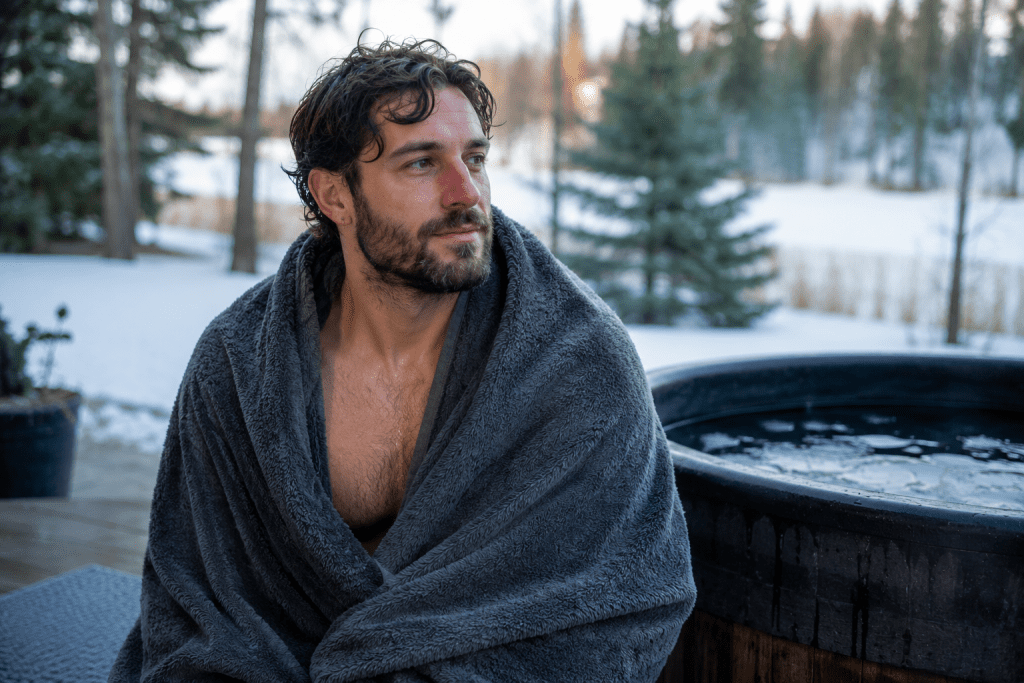
Table of Contents
- What Actually Happens When You Exit Cold Water
- The Honest Case For Gradual Rewarming After a Cold Plunge
- Should You Use Heat Immediately After a Cold Plunge?
- Heat Contrast Protocols — A Different Thing Entirely
- How to Warm Up After an Ice Plunge the Right Way
- 5 Common Mistakes People Make When Getting Out of a Cold Plunge
- Practical Rewarming Options
- Helpful Gear
- FAQ
- Summary Snapshot
- Final Verdict
What Actually Happens When You Exit Cold Water
After leaving cold water, your body can continue cooling for a period even though you’re no longer immersed. This is known as afterdrop. Drying off quickly, removing wet clothing and putting on warm layers can help reduce further heat loss.
How you feel after a cold plunge varies from person to person. Some people feel alert or energised, while others simply feel cold and need time to warm up. The priority after leaving the water should be getting dry, reducing further heat loss and paying attention to how your body responds.
The Honest Case For Gradual Rewarming After a Cold Plunge
Gradual rewarming is a simple approach after a normal cold plunge. Once you’re out of the water, the immediate priorities are to dry off, replace wet clothing with warm layers and move somewhere sheltered.
Your body will begin warming itself naturally, although how quickly you feel comfortable again depends on the water temperature, immersion time, air temperature and your individual response to the cold.
There’s no need to treat the rewarming period as a way to preserve a particular hormonal response. The more practical goal is to reduce further heat loss and return to a comfortable temperature safely.
If you’re regularly using cold exposure alongside training, it also helps to understand the difference between simply warming up and deliberately using heat and cold together. Our guide to steam room benefits explains the heat side in more detail and provides useful context for the contrast approach below.
Should You Use Heat Immediately After a Cold Plunge?
After a normal, controlled cold plunge, the first priority is to stop further heat loss: get dry, change into warm clothing and move somewhere sheltered. Your body may continue cooling for a period after you leave the water, a response known as afterdrop.
You don’t need to rush straight into very hot water or a sauna. Allow yourself to warm up comfortably and pay attention to how you feel. If someone shows signs of significant hypothermia — such as confusion, worsening coordination or severe symptoms — that’s different from normal post-plunge cooling and requires appropriate medical attention.
None of this means avoid heat entirely. It means understanding the difference between rewarming and contrast therapy.
Heat Contrast Protocols — This Is a Separate Conversation
Heat and cold can also be combined deliberately as contrast therapy. This is different from simply warming yourself after a cold plunge: the heat exposure is part of the session rather than something you need to do after every plunge.
Contrast therapy deliberately combines periods of cold and heat, sometimes using a sauna or steam room alongside cold-water immersion. If you choose to use this approach, treat it as a separate protocol rather than assuming external heat is necessary every time you finish a cold plunge.
The ice plunge safety cluster has more on how to structure cold exposure safely for beginners — ice plunge safety — including timing, duration, and exit protocols that feed directly into the rewarming question.
How to Warm Up After an Ice Plunge the Right Way
Here’s the actual sequence that works. Warming up after ice plunge doesn’t require anything complicated.
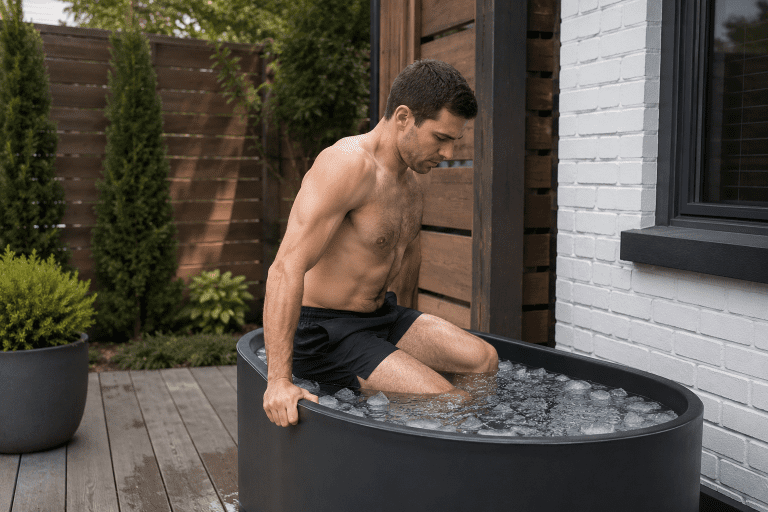
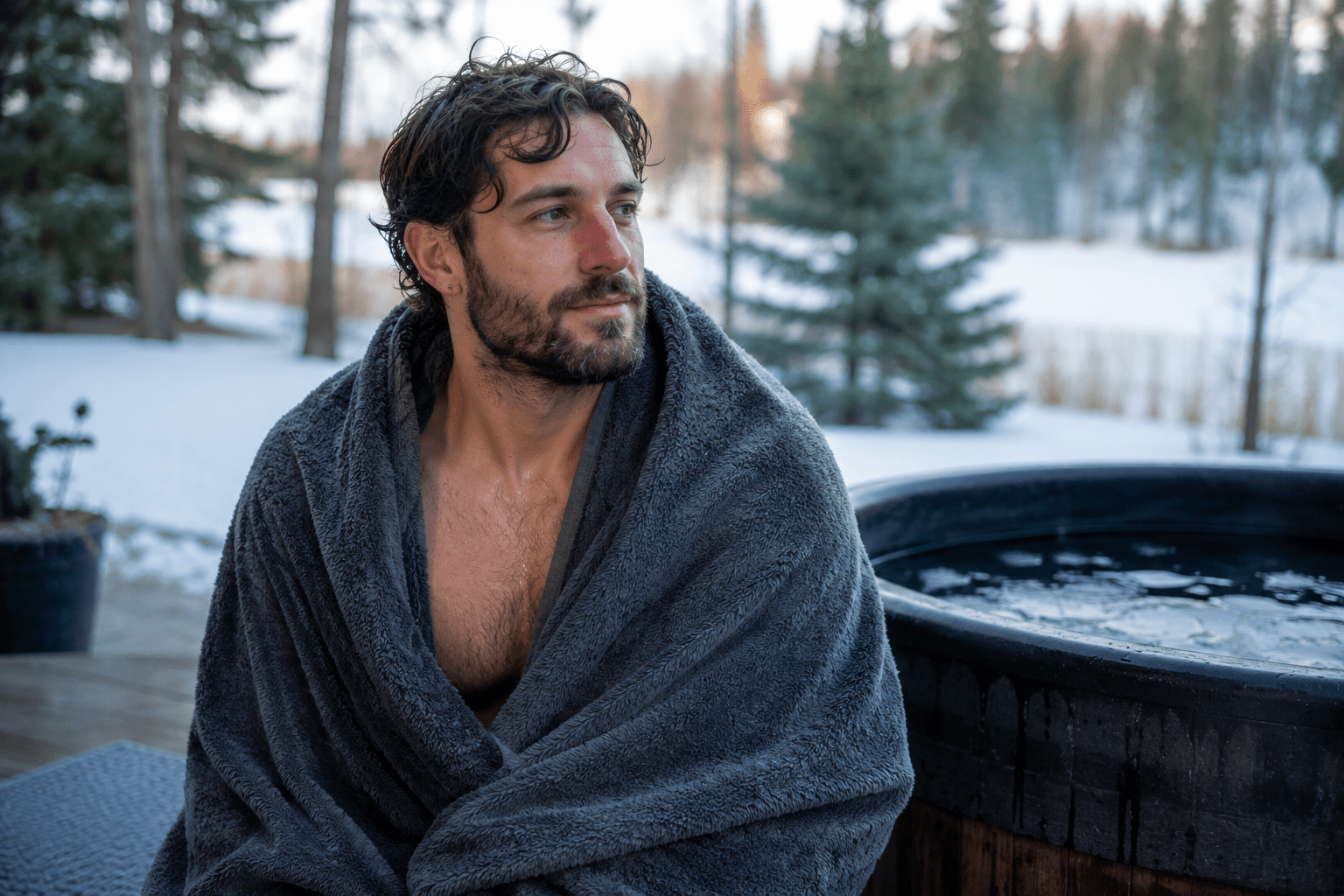
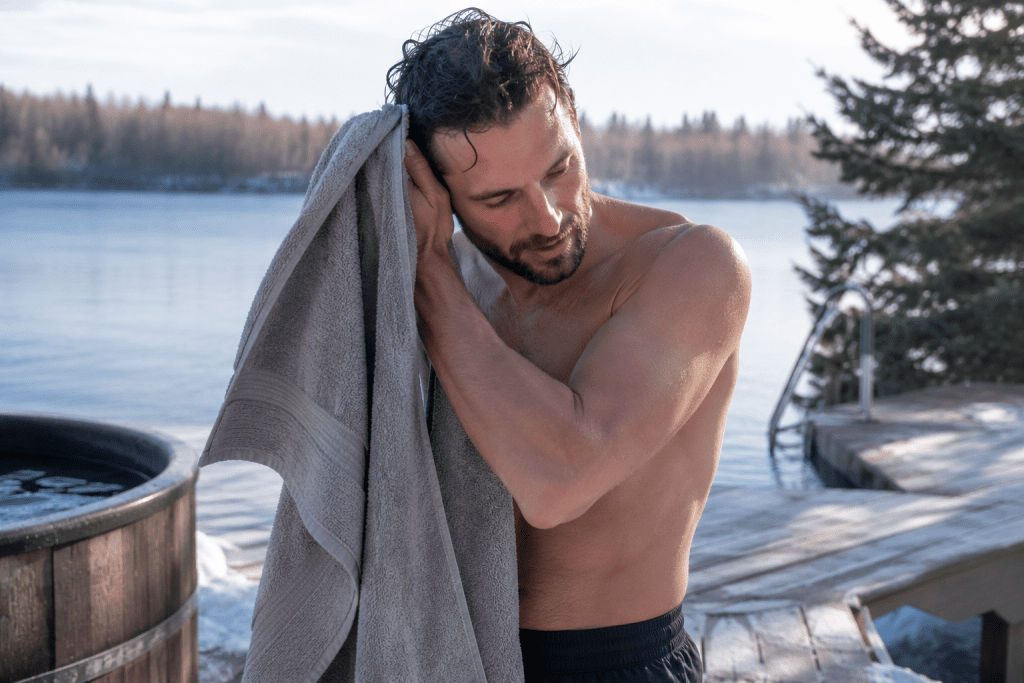
Step out, dry yourself thoroughly and change into dry clothes or a warm robe as soon as practical. Move somewhere sheltered from wind or cold air. Gentle movement, such as walking around, can also help you warm up if you’re feeling well.
How long it takes to feel warm again varies with the water temperature, immersion time, surroundings and the individual. If you’re comfortable and feeling well, you can continue warming naturally or use a warm shower if you prefer. There’s no fixed waiting period that everyone needs to follow.
5 Common Mistakes People Make When Getting Out of a Cold Plunge
1. Using excessively hot water when you already feel unwell
A warm shower can be comfortable after a normal cold plunge, but if you’re dizzy, confused or struggling to warm up, don’t treat very hot water as a substitute for appropriate help.
2. Standing in cold air without drying off first Evaporative cooling from wet skin in cold air accelerates heat loss. Towel off immediately.
3. Ignoring persistent or worsening symptoms
Some shivering can occur as your body generates heat, but persistent or worsening shivering shouldn’t simply be dismissed. Confusion, poor coordination or difficulty warming up are also signs that the situation shouldn’t be treated as normal post-plunge cooling.
4. Sitting still in cold clothes Wet or damp clothing continues pulling heat from the skin. Dry clothes or a robe are not optional.
5. Moving too quickly between cold and intense heat
Going directly from cold water into a very hot sauna or hot tub creates another rapid temperature change for your cardiovascular system. Take the transition slowly, and stop if you feel dizzy, lightheaded or unwell. If you have a heart condition or blood-pressure concerns, get medical advice before combining cold plunges with intense heat.
Practical Rewarming Options
Dry clothes and a warm environment — A straightforward first step after a cold plunge. Dry off, remove wet clothing and get somewhere sheltered.
Gentle movement — Walking around or light movement may feel comfortable as you warm up, provided you’re feeling well.
Warm shower — An optional way to get comfortable after a normal cold plunge. There’s no universal waiting period that everyone needs to follow.
Sauna, steam room or hot tub — These can be used as part of a deliberate heat-and-cold routine, but they’re not required for normal rewarming after every plunge.
Helpful Gear
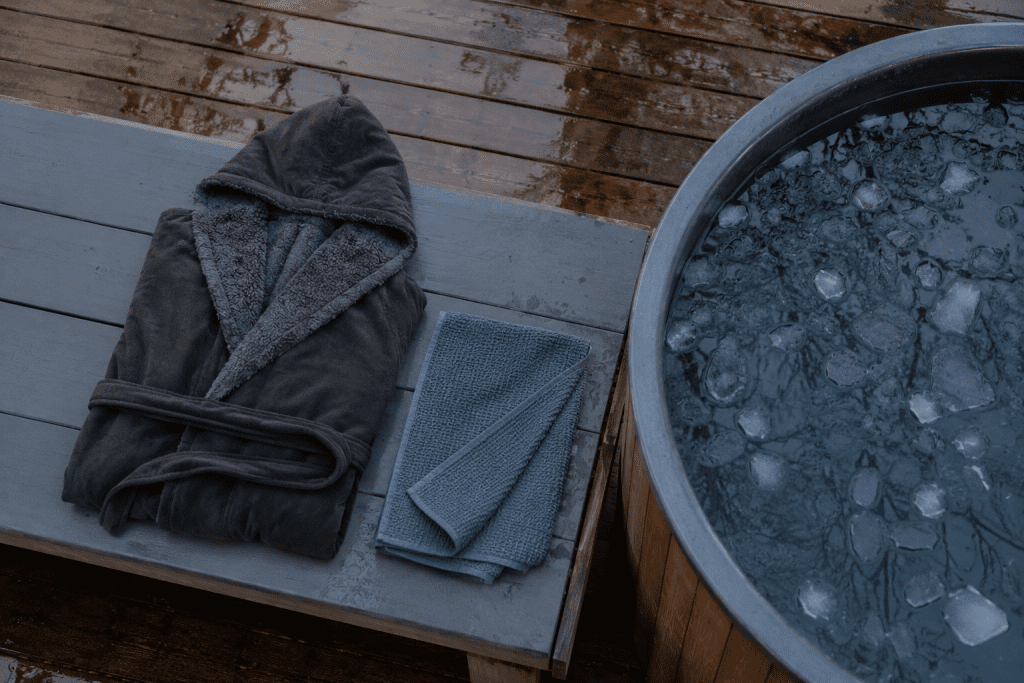
Changing robe / dryrobe style wrap — A hooded microfibre changing poncho that gives you coverage while drying off and changing after a cold plunge.
Microfibre body towel — An oversized, fast-drying microfibre towel that packs down easily and is useful for drying off after a cold plunge.
Neoprene booties — 3mm neoprene foot covers that can help protect your feet from direct exposure to cold water, particularly useful for outdoor cold-plunge setups.
FAQ
How long should you wait before warming up after an ice plunge?
There’s no universal waiting period. After a normal cold plunge, dry off, remove wet clothing and move somewhere warm and sheltered. How quickly you warm up will depend on the conditions and your individual response.
Is it okay to go from an ice plunge to a sauna immediately?
A sauna can be part of a deliberate heat-and-cold routine, but it isn’t necessary for normal rewarming. If you choose contrast therapy, pay attention to how you feel and avoid pushing through dizziness, weakness or other concerning symptoms.
Does warming up too fast reduce the benefits of cold exposure?
There’s not strong evidence that waiting a specific number of minutes before warming up preserves the benefits of a cold plunge. The practical priority after getting out is to reduce further heat loss and return to a comfortable temperature safely.
Summary Snapshot
- Your body can continue cooling after you leave cold water
- Dry off and replace wet clothing with warm layers promptly
- Move somewhere warm and sheltered from wind
- Gentle movement can help if you’re feeling well
- There’s no universal waiting period before using a warm shower
- Sauna, steam rooms and hot tubs are optional contrast-therapy choices, not essential for rewarming
- Persistent or worsening symptoms shouldn’t simply be dismissed as normal
Final Verdict
Warming up after an ice plunge doesn’t need to be complicated. Once you’re out, dry yourself thoroughly, change out of wet clothing and move somewhere warm and sheltered.
There’s no universal rule that says you must wait 10 or 15 minutes before using a warm shower or other external heat. How quickly you warm up depends on the conditions, the plunge itself and how your body responds.
For most routine cold-plunge sessions, the goal is simple: reduce further heat loss, get comfortable again and pay attention to how you feel. Sauna, steam rooms and hot tubs can be part of a separate contrast-therapy routine, but they aren’t required after every plunge.
Related reading: If you’re building out a full cold exposure practice, the ice plunge safety cluster covers the protocols that support everything discussed here — ice plunge safety. For the heat side of contrast work, steam room benefits goes into what steam does on its own terms and how it pairs with cold.
![blood pressure and cold plunges]](https://sunriseandvitalize.com/wp-content/uploads/2026/05/vidar-nordli-mathisen-0fN21zv8yYo-unsplash-768x448.jpg)