
Signs of Hypothermia in Ice Baths: The Honest Safety Guide You Actually Need
The signs of hypothermia in ice baths are worth understanding before you ever lower yourself into cold water — not after something goes wrong. I’ve used cold exposure regularly for years, and the jump from a cold shower to a full plunge is genuinely not comparable. The intensity difference is significant, and with that comes real physiological risk most beginner guides gloss over with a single bullet point.
Most content online either scares you off cold plunging entirely or skips the safety detail because it’s not as exciting to write about as the benefits. This sits somewhere more useful than both.
Affiliate disclosure: Some links in this post are affiliate links. If you buy through them, I may earn a small commission at no extra cost to you — it helps keep the site running. I only link to products I’d genuinely recommend.
Quick Snapshot
- Hypothermia begins when core body temperature drops below 95°F (35°C)
- Early signs include intense shivering, slurred speech, and confusion
- Home ice baths carry higher risk than supervised gym plunges — no one is watching
- Sessions over 10–15 minutes in very cold water significantly increase risk
- Water conducts heat away from the body 25x faster than air at the same temperature
- Knowing the progression from mild to severe is the practical safety skill here
- Most recreational cold plungers never reach dangerous hypothermia — but solo sessions without awareness are where incidents happen
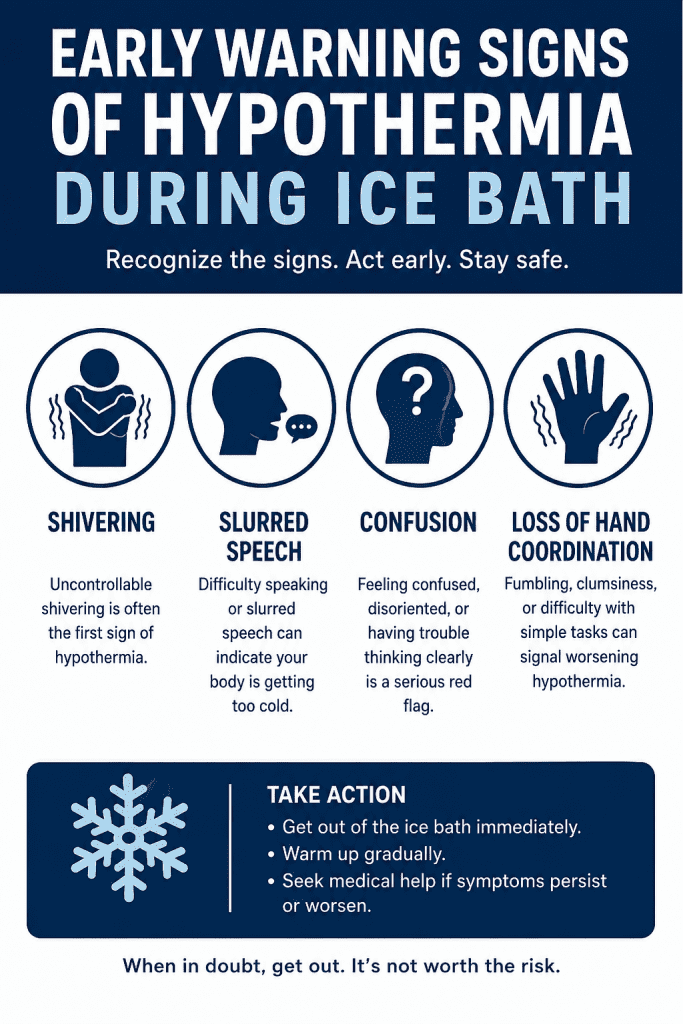
Table of Contents
- What Hypothermia Actually Is (And What It Isn’t)
- The 3-Stage Progression: Mild, Moderate, Severe
- 7 Specific Signs to Watch For During a Plunge
- How Cold Water Temperature Affects Risk
- The Real Cost of Getting This Wrong at Home
- Solo Sessions: The Installation Risk Nobody Talks About
- Water Temperature Monitoring as a Safety Habit
- Honest Pros and Cons of Cold Plunging With Risk Awareness
- Home Ice Bath vs Gym Cold Plunge: Risk Comparison
- Comparison Table
- Helpful Gear
- FAQ
- Summary Snapshot
- Final Verdict
What Hypothermia Actually Is (And What It Isn’t)
Hypothermia is not just feeling very cold. It’s a specific medical condition that occurs when your core body temperature drops below 95°F (35°C) — and understanding the signs of hypothermia in ice baths means understanding what your body is actually doing at a physiological level, not just how uncomfortable you feel.
Your body prioritises protecting core organs above everything else. When cold water pulls heat from your skin, your body redirects blood flow inward — away from limbs, away from the surface. That response is normal and healthy in short exposures. The problem begins when the exposure is long enough that the core itself starts losing the battle.
Is hypothermia likely during a typical recreational cold plunge? For most people doing 2–5 minute sessions in water between 50–59°F, full hypothermia is unlikely but not impossible. The risk increases substantially in colder water, longer sessions, solo environments, and for people with lower body mass or cardiovascular conditions. The signs of hypothermia in ice baths are worth knowing precisely because the early stages are easy to dismiss as normal cold exposure discomfort.
The 3-Stage Progression: Mild, Moderate, Severe
Hypothermia progresses in three clinical stages, and being able to identify which stage you or someone else is in determines the appropriate response.
Mild hypothermia (core temp 90–95°F / 32–35°C): Intense shivering, slurred or slow speech, difficulty with fine motor tasks, skin pallor or blue tinge at the lips. The person is still conscious and responsive. This is the window where getting out immediately, drying off, and warming gently is effective.
Moderate hypothermia (core temp 82–90°F / 28–32°C): Shivering may actually stop — which is often misread as improvement. Muscular rigidity, confusion, disorientation, and slowed heart rate. This is more serious and warrants medical attention. The signs of hypothermia in ice baths at this stage are harder to self-identify because cognitive function is already impaired.
Severe hypothermia (core temp below 82°F / 28°C): Loss of consciousness, very slow or absent pulse, no shivering. This is a medical emergency. Recreational ice baths are extraordinarily unlikely to reach this stage in normal conditions, but the pathway from mild to moderate is faster in very cold water than most people expect.
7 Specific Signs You Actually Need to Watch For During a Plunge
This is the practical section. The signs of hypothermia in ice baths don’t always announce themselves clearly — several mimic normal cold exposure responses, which is exactly why awareness matters.
1. Shivering that feels uncontrollable or violent. Some shivering is normal. Shivering so intense you can’t hold position or control your breathing is your body’s alarm system firing. Get out.
2. Slurred or slow speech. If you’re plunging with someone else and their speech changes noticeably, take it seriously immediately. This is one of the clearest early markers.
3. Fingers and hands that stop responding. Loss of fine motor control — fumbling with the lip of the tub, inability to grip, hands that won’t close properly — is a direct sign your peripheral circulation has been severely restricted.
4. Mental confusion or unusual calm. This is the counterintuitive one. People in moderate hypothermia sometimes describe feeling peaceful or even warm. That paradoxical warmth is dangerous. If someone in a plunge suddenly stops shivering and seems unusually relaxed after a long session, the signs of hypothermia in ice baths may be progressing rather than resolving.
5. Skin colour changes. Blue or grey tinge at lips, fingernails, or around the mouth. Pale, waxy skin on the extremities. These are visible circulation signals, not just cosmetic cold responses.
6. Breathing changes. Shallow, slow, or irregular breathing in cold water is not normal. The cold shock response — gasping, rapid breathing — should normalise within 60–90 seconds of entry. If breathing remains laboured or becomes noticeably slow well into the session, something is wrong.
7. Difficulty getting out. This sounds obvious but it’s actually critical. If you find yourself struggling to coordinate the physical act of exiting the tub — not because of soreness but because your limbs won’t respond properly — that’s a functional sign, not just discomfort. According to the CDC’s guidance on cold stress and related illness, cold water immersion can impair neuromuscular function before most people recognise the cognitive warning signs — making self-rescue progressively harder the longer exposure continues.
How Cold Water Temperature Affects Risk
Water temperature is the primary variable in how quickly the signs of hypothermia in ice baths can appear. Water conducts heat away from the body approximately 25 times faster than air at the same temperature — a fact that makes “it’s only 50°F, that’s not that cold” a genuinely misleading way to think about it.
Here’s the practical breakdown:
- 59–68°F (15–20°C): Recreational recovery range. Cold enough to produce benefits, low hypothermia risk in sessions under 15 minutes for healthy adults.
- 50–59°F (10–15°C): The popular plunge range. Cold shock response is significant on entry. Hypothermia risk increases meaningfully beyond 10 minutes, especially for lean individuals.
- 40–50°F (4–10°C): High-performance cold exposure range. Shorter sessions required. Risk of the signs of hypothermia in ice baths appearing increases substantially, particularly for beginners.
- Below 40°F / 4°C: Not recommended for recreational use without medical supervision. Dangerously fast heat loss even in short sessions.
Most home ice bath setups land in the 50–59°F range. That’s the right zone for benefits — but it’s also cold enough that a 20-minute session in a solo environment creates genuine risk. The cold shower I use daily produces a completely different physiological response from a full plunge at this temperature. The intensity is not comparable, and neither is the risk.
The Real Cost of Getting This Wrong at Home
The signs of hypothermia in ice baths matter most in home settings because there’s no lifeguard, no staff, and often no one watching. The cost of ignoring them isn’t abstract — it’s the difference between an effective recovery session and a serious incident.
Home cold plunge setups range from $300 DIY chest freezers to $5,000+ purpose-built units. Whatever you’ve invested in the equipment, the actual cost of unsafe practice is a session that ends in an ambulance rather than a towel. Most home setups are used solo. That asymmetry — significant investment in the physical product, almost no investment in safety awareness — is the gap this blog is trying to address.
For those exploring home wellness setups more broadly, understanding the basics of steam room benefits and how heat exposure pairs with cold contrast gives useful context on both sides of the temperature spectrum and how they interact.
Solo Sessions: The Real Installation Risk Nobody Mentions
The most common installation guidance for home cold plunges covers electrical requirements, drainage, and waterproofing. What it almost never covers is the single most significant risk factor: using it alone.
The signs of hypothermia in ice baths include cognitive impairment — confusion, disorientation, impaired judgment. This means the person most at risk is also the person least equipped to recognise and respond to that risk in the moment. A solo session with no one in the house creates a window where symptoms could progress without any external check.
Practical solo session rules that actually reduce risk: always tell someone you’re plunging before you start. Set a visible timer — not a phone timer you have to unlock, a kitchen timer on the edge of the tub. Have a towel and dry clothes within arm’s reach before you get in, not across the room. Know your exit — practice getting out smoothly when you’re not cold so the movement is familiar when you are.
These aren’t dramatic precautions. They’re the kind of habits that cost nothing and matter in the rare session where something goes slightly wrong.
Water Temperature Monitoring as a Safety Habit
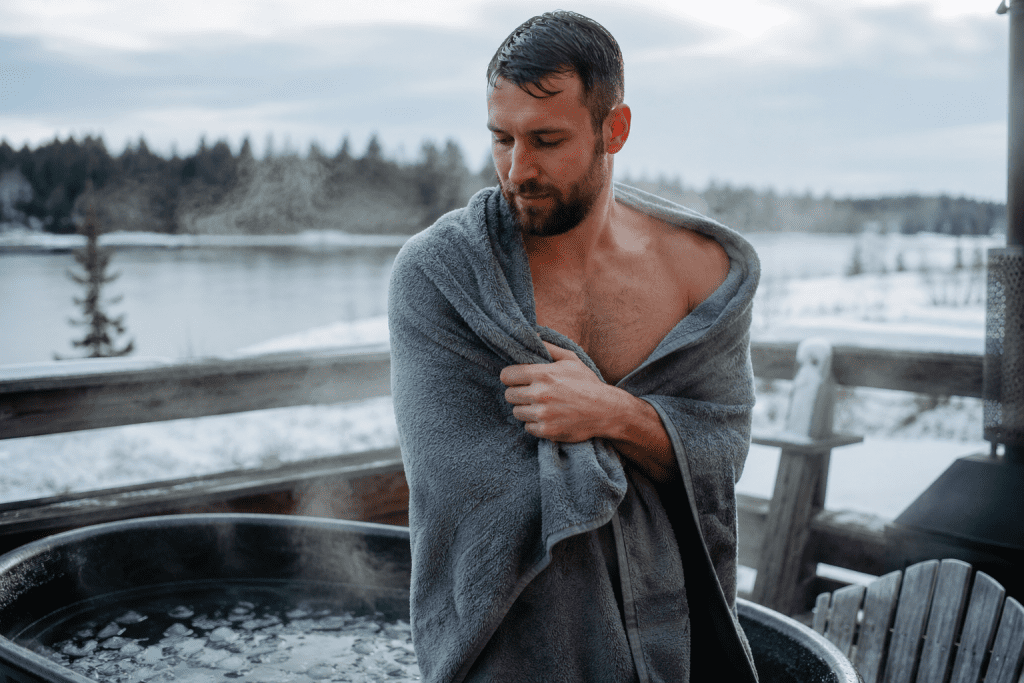
Knowing your water temperature before entry is not optional — it’s the first line of defence against encountering the signs of hypothermia in ice baths unexpectedly. Ice melt is not precise. A chest freezer set to a certain level varies by ambient temperature, insulation, and how recently ice was added.
A floating thermometer in the tub before every session takes ten seconds and tells you exactly what you’re getting into. The difference between 52°F and 44°F is not always visible or feel-able until you’re already in. Monitoring water temperature is also useful for tracking whether your setup is consistent — if your 15-minute session at 54°F produces great results, you want to be able to replicate that, not accidentally do 15 minutes at 44°F without realising it.
The broader principle in ice plunge safety applies here — the equipment is only as safe as the habits around it. This is one of the more practical ones.
Honest Pros and Cons of Cold Plunging With Risk Awareness
Pros
The benefits of cold plunging are real — reduced inflammation, faster muscle recovery, improved mood and alertness. The natural high after a gym session combined with heat and cold contrast genuinely lasts hours; it’s not a placebo. Knowing the signs of hypothermia in ice baths doesn’t diminish those benefits — it protects them. Understanding the risk profile allows you to stay in the beneficial zone without accidentally crossing into dangerous territory. Awareness is what makes the practice sustainable long-term.
Cons
The physiological risk from signs of hypothermia in ice baths is real, not theoretical. Home setups carry inherently higher risk than supervised environments. Cold water immersion is genuinely contraindicated for people with certain cardiovascular conditions, Raynaud’s disease, and hypothyroidism. The margin between “effective cold exposure” and “dangerous cold exposure” is narrower than most beginner guides suggest. Solo sessions remove the external safety layer entirely. These aren’t reasons to avoid cold plunging — they’re reasons to approach it seriously.
Home Ice Bath vs Gym Cold Plunge: Risk Comparison
Most gyms that offer cold plunges operate in the 55–60°F range, limit session time, and have staff present. That’s a deliberately conservative environment — effective, but protected.
Home setups give you full control over temperature and duration, which is both the advantage and the risk. The signs of hypothermia in ice baths appear faster in colder water, in longer sessions, and in solo environments — and home setups can produce all three simultaneously if habits aren’t in place.
Gym cold plunge:
- Temperature usually controlled and consistent
- Staff or other members present
- Session time often naturally limited by social environment
- Less flexibility but more structural safety
Home ice bath:
- Full temperature control (risk and benefit)
- Solo sessions typical
- No external time limits
- Requires self-imposed safety habits to compensate
Neither is inherently unsafe. Home setups just require more self-awareness to replace the structural safety a gym environment provides passively.
Comparison Table
| Factor | Gym Cold Plunge | Home Ice Bath |
|---|---|---|
| Temperature control | Managed by facility | User-controlled |
| Supervision | Staff/members present | Typically solo |
| Session time limits | Often enforced | Self-managed |
| Hypothermia risk | Lower (supervised) | Higher (solo) |
| Cost | Membership fee | $300–$5,000+ upfront |
| Flexibility | Limited to gym hours | Unlimited access |
| Safety habits required | Minimal | High |
Helpful Gear
Floating thermometer — A simple, waterproof thermometer that sits in the water and gives you an accurate reading before and during your plunge. Essential for knowing exactly what temperature you’re working with.
Insulated plunge tub cover — A fitted cover that maintains water temperature between sessions and prevents debris from entering. Reduces how much ice you need per session by slowing thermal exchange.
Waterproof timer — A countdown timer that can sit at the edge of your tub without risk of water damage. Removes the need to check a phone during a session and gives a clear audible signal.
FAQ
What are the first signs of hypothermia in an ice bath? The earliest signs of hypothermia in ice baths are intense uncontrollable shivering, slowed or slurred speech, and loss of fine motor control in the hands and fingers. Skin may appear pale or develop a blue tinge around the lips. At this stage — mild hypothermia — exiting the water immediately and warming gently is effective. The signs are easy to dismiss as normal cold discomfort, which is why knowing them in advance matters.
How long is too long in an ice bath before hypothermia risk increases significantly? For most healthy adults in water between 50–59°F, risk increases meaningfully beyond 10–15 minutes. In water below 50°F, that window is shorter — closer to 5–10 minutes. Individual factors including body composition, cardiovascular health, and prior cold exposure experience all affect tolerance. The signs of hypothermia in ice baths can appear faster than expected in colder water, particularly in lean individuals with lower body fat.
Can you get hypothermia in an ice bath at home if you’re healthy and experienced? Yes, though it’s unlikely in controlled short sessions. Health and experience reduce but don’t eliminate risk. The primary risk factors are water temperature, session duration, and solo environment — all three of which a home setup can produce simultaneously without structural limits. Experienced cold plungers who have ignored the signs of hypothermia in ice baths on a bad day — feeling unwell, post-illness, under-fuelled — are not immune. Awareness remains relevant regardless of experience level.
Simple rule: If you’re shivering so hard you can’t speak clearly, you’ve already stayed too long — get out, dry off, and warm up slowly.
Summary Snapshot
The signs of hypothermia in ice baths are specific, progressive, and partially counterintuitive. Violent shivering, slurred speech, loss of hand function, and paradoxical warmth after shivering stops are the key markers. Water temperature and session length are the primary variables — and home setups require you to manage both without external structure.
Solo sessions are the highest-risk environment, and the practical mitigations are simple: thermometer in the water, timer at the edge, someone knowing you’re in. The signs of hypothermia in ice baths are unlikely to appear in typical 5-minute sessions at 55°F — but knowing them costs nothing and matters when conditions change.
Final Verdict
Cold plunging is genuinely worth doing — the benefits are real, the experience after a hard training session is unlike anything else. But the signs of hypothermia in ice baths are a real physiological risk, not a fringe concern invented to add disclaimers. The gap between a productive session and a dangerous one is mostly awareness and simple habits. Know the temperature you’re entering. Set a timer.
Know what the early warning signs look like so you can act on them while you’re still capable of acting. The signs of hypothermia in ice baths don’t typically arrive with fanfare — they creep in quietly and impair the very judgment you’d need to recognise them. That’s the thing worth understanding before your next plunge.
If you want more on cold exposure safety, the ice plunge safety cluster covers the full risk landscape in detail. For those pairing cold with heat, you’ll find useful context on the contrast method in steam room benefits.


![blood pressure and cold plunges]](https://sunriseandvitalize.com/wp-content/uploads/2026/05/vidar-nordli-mathisen-0fN21zv8yYo-unsplash-768x448.jpg)