Do Spa Filters Actually Improve Water Quality? An Honest Look
Spa filters are one of those components most hot tub owners think about once — at purchase — and then mostly ignore. That’s a mistake. The quality of your water, the smell when you lift the cover, whether your eyes sting after twenty minutes, whether the jets feel clean or faintly grimy — all of it traces back to how well your filtration system is actually doing its job.
I’ve spent enough time in hot tubs to notice when something’s off. And the single most common culprit, in my experience, is a neglected or underperforming filter.
Heads up — some links in this post are affiliate links. If you click through and buy something, I may earn a small commission at no extra cost to you. I only mention products I’d actually use.
Quick Snapshot
- Spa filters physically remove debris, oils, and contaminants from circulating water
- They don’t replace chemicals — they work alongside them
- A clogged or old filter actively makes water quality worse, not just less good
- Cartridge filters are the most common type in home hot tubs
- Replacement typically needed every 12–24 months depending on usage
- Running your filter long enough each day is as important as the filter itself
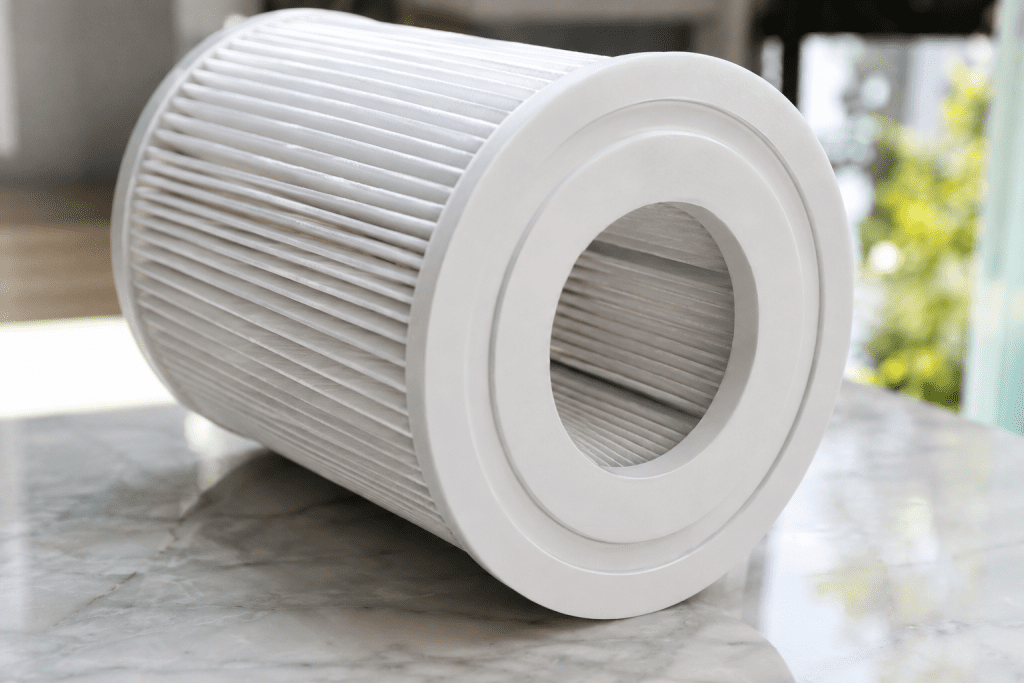
Table of Contents
- What Spa Filters Actually Do
- The Real Cost of Running and Replacing Filters
- Installation and Setup — What to Expect
- Maintenance: The Part Most Owners Skip
- Pros and Cons
- Filter Types Compared
- Filter Comparison Table
- Helpful Gear
- FAQ
- Final Verdict
What Spa Filters Actually Do
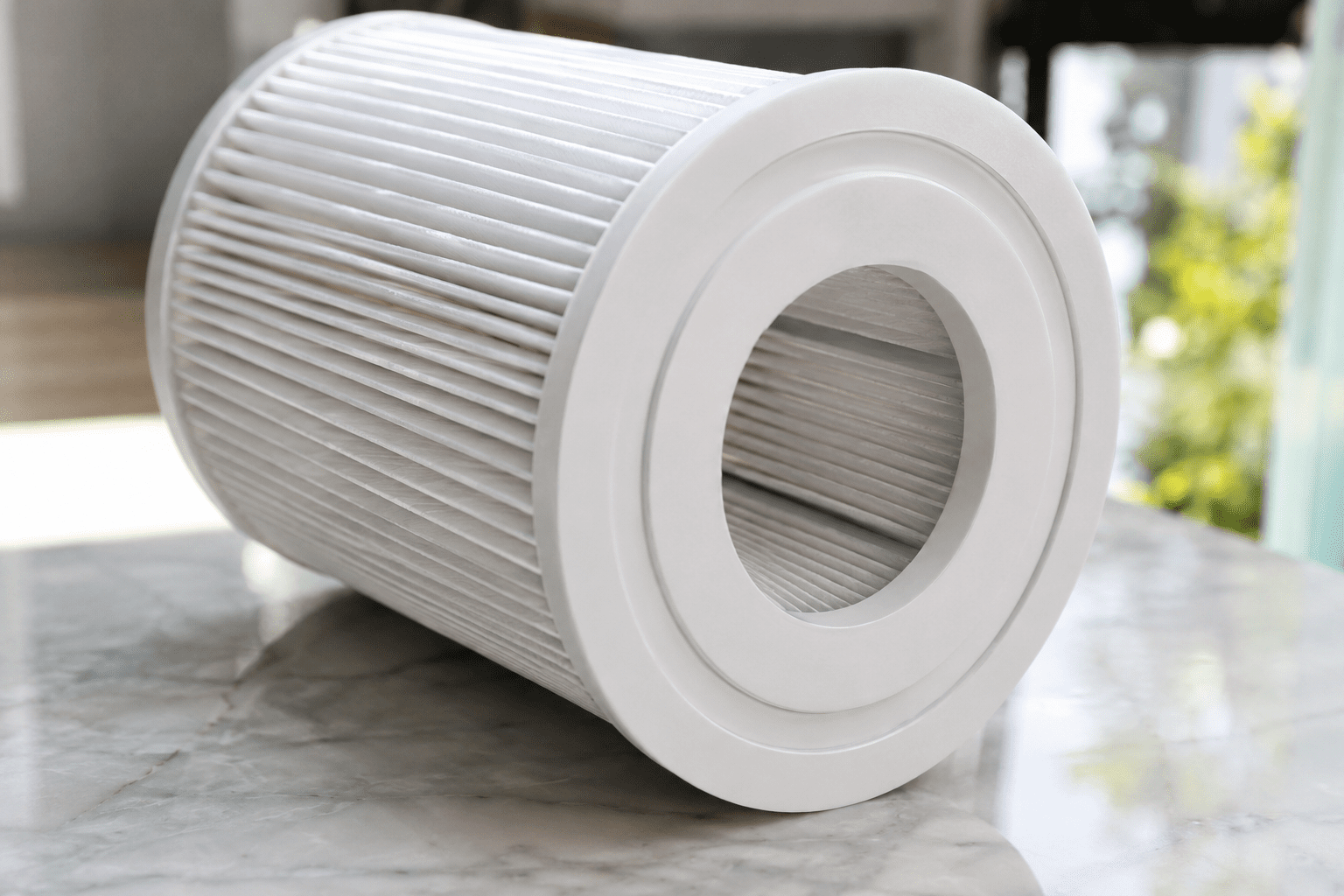
Spa filters sit inside your hot tub’s filtration housing and capture everything the water carries past them — body oils, sunscreen, fine debris, dead skin cells, and other particulates that chemicals alone can’t handle. The filter media (usually a pleated polyester cartridge) traps this material as water is pushed through by the circulation pump.
The effect on water clarity is real and measurable. Clean spa filters keep the water visibly cleaner, reduce foam on the surface, and cut down on the chemical load needed to keep things balanced. When your filter is doing its job properly, your sanitiser — whether that’s chlorine or bromine — works more efficiently because it’s not fighting as hard against suspended particles and organic matter.
What most people underestimate is how directly this connects to the physical experience. Eyes stinging after a session is something almost nobody talks about openly, but it’s incredibly common — and in many cases, it’s not about pH being slightly off, it’s about a filtration system that’s overwhelmed or past its useful life. I’ve noticed this personally, and once the filter situation was properly addressed, it went away entirely. The CDC’s guidance on home pool and hot tub water treatment confirms that filtration and sanitation need to work together — neither compensates fully for the other.
Do spa filters actually make water cleaner? Yes — spa filters physically remove suspended particles, body oils, and debris that chemical sanitisers cannot capture. Without adequate filtration, even a correctly dosed hot tub will develop cloudy water, foam, and odour over time. Filters and chemicals are complementary, not interchangeable.
The Honest Cost of Spa Filters — What the Numbers Actually Look Like
The upfront cost of spa filters is low compared to almost every other hot tub running cost. A standard replacement cartridge for most home hot tubs runs between $20 and $60 depending on size and brand compatibility. If you’re running a dual-filter system — which many mid-range and premium tubs use — you’re looking at roughly $40 to $120 per replacement cycle.
Where the real cost accumulates is in running frequency and chemical waste. When spa filters are underperforming, your sanitiser consumption rises — sometimes significantly. Owners who don’t realise their filter is the problem end up spending more on chemicals every month trying to fix symptoms rather than the cause. That adds up faster than a new cartridge would have. The filter is cheap. The knock-on cost of ignoring it isn’t.
5 Signs Your Spa Filters Aren’t Keeping Up
This is worth its own section because the warning signs are often misread as chemical problems.
Water that clouds up within a day or two of balancing is a filtration signal, not just a chemistry signal. A persistent foam line around the waterline that comes back quickly after skimming is body oil and organic matter building up faster than the filter can catch it. An unusual smell — faintly musty, or vaguely like a public swimming pool — often means the filter is saturated and no longer trapping effectively. And if the jets feel weaker than usual, a clogged filter housing reducing flow is the first thing to check before assuming a pump problem.
Spa filters degrade gradually, which is what makes this tricky. There’s no dramatic failure moment — just water that gets progressively harder to keep clean.
Installation and Setup — Easier Than Most People Expect
For the vast majority of home hot tubs, fitting spa filters is a straightforward owner task. The cartridge housing is typically accessible from inside the tub via a removable panel or directly from the filter compartment. No tools required in most cases — unscrew the housing cap, lift out the old cartridge, drop in the new one, replace the cap.
Where people run into friction is compatibility. Hot tub manufacturers use proprietary sizing and thread configurations, which means you can’t always grab a generic replacement from a hardware store. You need either the OEM part number from your tub’s manual or a verified aftermarket equivalent. Getting this wrong means a filter that doesn’t seat correctly, which can allow unfiltered water to bypass the media entirely — defeating the purpose entirely.
If you’re adding an upgraded filter to an older system or switching filter types, it’s worth cross-referencing with your tub’s specifications before purchasing. Permits aren’t typically required for a standard filter replacement, but if you’re modifying the filtration system more substantially as part of a renovation, Nolo’s home improvement permit guidance is worth a quick check.
Maintenance: The Part Most Hot Tub Owners Actually Skip
Regular cleaning of spa filters is where most people fall short — not because it’s difficult, but because it’s invisible. A filter doing its job from inside a housing doesn’t give you visual feedback that it needs attention.
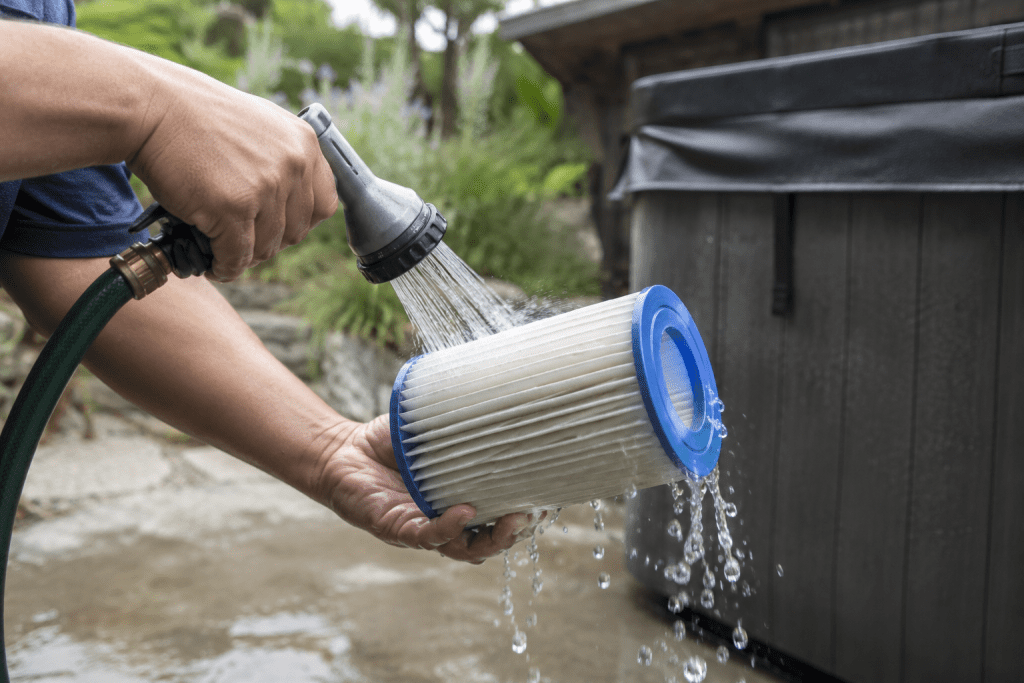
The standard protocol is a rinse with a garden hose every two to four weeks depending on usage frequency. You’re removing the loose surface debris that’s accumulated in the pleats. This is not the same as a deep clean. For a proper deep clean, spa filters should be soaked in a filter cleaning solution every two to three months — this breaks down the oils and fine particles that rinsing can’t shift. Skipping this step is why many filters that look acceptable from the outside are performing at a fraction of their capacity.
Most cartridges need full replacement every twelve to twenty-four months. Running a filter past this point doesn’t just reduce effectiveness — it can actively introduce problems. Degraded filter media sheds particles back into the water. That’s the opposite of what you want.
How often should you clean spa filters? Rinse with a garden hose every 2–4 weeks to remove surface debris. Soak in a dedicated filter cleaner every 2–3 months to dissolve oils and fine particles. Replace the cartridge fully every 12–24 months depending on use. Skipping the soak step is the most common maintenance gap — and the one that causes the most water quality problems.
Pros and Cons of Investing Properly in Spa Filters
Spa filters are not optional equipment — every hot tub has them. But how seriously you take them as a maintenance priority is a choice, and it has real downstream consequences.
Pros
- Directly improves water clarity and reduces chemical usage
- Inexpensive to replace relative to most other hot tub maintenance costs
- Easy DIY swap in almost all home hot tub models
- Extends the life of your pump by reducing particulate load on the system
- Consistent use and maintenance produces noticeably cleaner, fresher water
Cons
- Easy to forget — no visual prompt that a clean is needed
- Proprietary sizing means compatibility research is required at replacement time
- A filter that looks clean externally can still be spent internally — hard to judge without testing flow
- Dual-filter systems cost more to maintain but are genuinely worth it for frequent users
How Different Spa Filter Types Compare
Most home hot tubs use cartridge filters, and for good reason — they’re easy to remove, clean, and replace without specialist tools. But there are a few variations worth understanding.
Cartridge filters are the default for residential hot tubs. Pleated polyester media, replaceable every one to two years. Effective, affordable, and widely available.
Sand filters are common on larger in-ground installations and some commercial setups. They use silica sand as the filtration media, and backwashing removes accumulated debris. Lower ongoing cost, but larger footprint and less suited to compact home installations.
Diatomaceous Earth (DE) filters offer finer filtration than either cartridge or sand — they can capture particles down to around five microns. More effective in theory, but more complex to maintain and handle, with some health and disposal considerations around DE powder.
For most home hot tub owners asking whether their spa filters are adequate, the answer starts with whether you’re using and maintaining a cartridge system correctly — not with switching filter types.
Spa Filter Type Comparison Table
| Filter Type | Filtration Level | Maintenance Complexity | Best For |
|---|---|---|---|
| Cartridge | Good (10–15 microns) | Low | Home hot tubs, most residential setups |
| Sand | Moderate (20–25 microns) | Medium | Larger installations, in-ground spas |
| DE (Diatomaceous Earth) | Excellent (3–5 microns) | High | Maximum clarity requirement, commercial |
Helpful Gear for Hot Tub Filter Maintenance
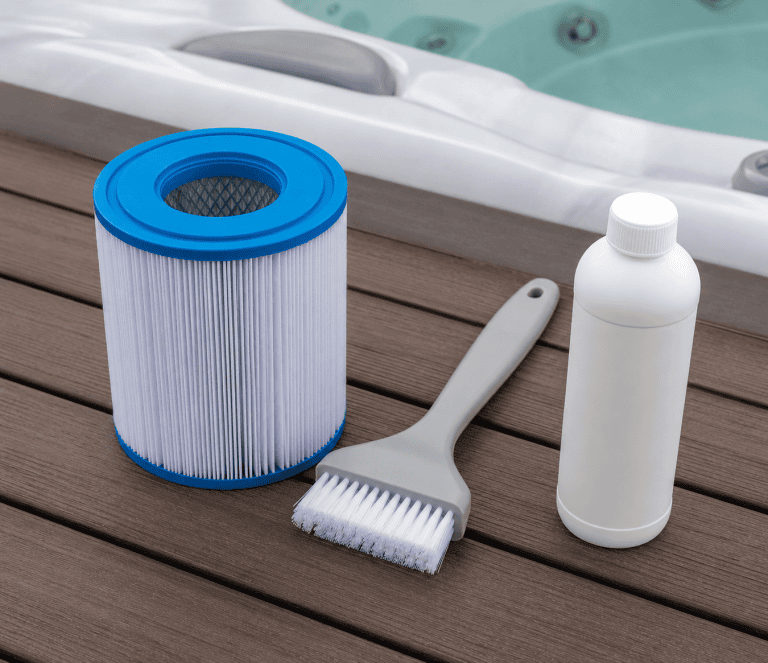
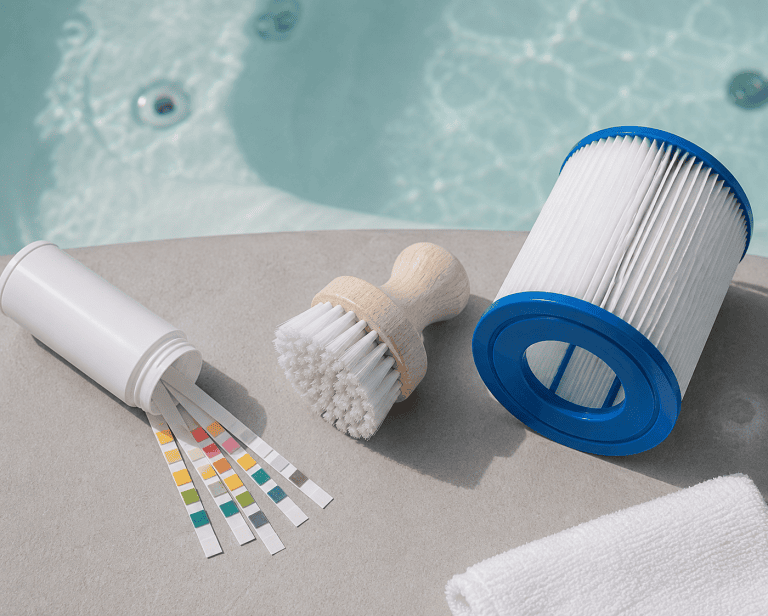
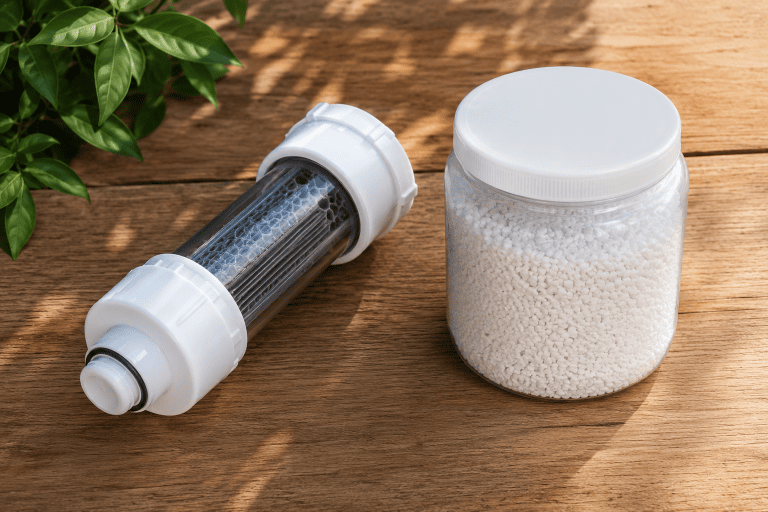
Filter cleaning solution — A dedicated chemical soak concentrate designed to dissolve body oils, mineral scale, and biofilm from pleated filter cartridges. Rinsing alone won’t shift compacted oils — a proper soak solution does what water can’t.
Filter cleaning wand — A comb-style attachment that connects to a garden hose and forces water between the pleats at pressure, cleaning evenly without damaging the media. Far more effective than a standard hose nozzle for regular rinse cycles..
Water test strips — multi-parameter — A fast, inexpensive way to check sanitiser levels, pH, alkalinity, and hardness after filter changes or cleans. When you adjust your maintenance routine, test strips tell you whether the change is working.
FAQ
Can spa filters replace the need for chemicals in a hot tub? No. Spa filters remove physical particles and debris — they don’t sanitise. Chemicals like chlorine or bromine kill bacteria and pathogens in the water. A hot tub running clean spa filters but no sanitiser would still harbour dangerous bacteria. The two systems are complementary — filtration improves chemical efficiency, but neither works without the other.
How do I know if my spa filters need replacing rather than just cleaning? If water clarity doesn’t improve within 24 hours of a fresh chemical balance and the filter has been deep-cleaned, the cartridge is likely spent. Visible discolouration that doesn’t clear after a soak, physical damage to the pleats, or a filter over 18 months old in a frequently used tub are all replacement signals. When in doubt, replace — cartridges are cheap relative to the cost of ongoing chemical use on a degraded filter.
Do spa filters affect jet performance? Yes — a clogged filter restricts water flow through the circulation system, which directly reduces jet pressure. If your jets have become noticeably weaker and nothing else in the system has changed, a blocked or exhausted filter is the first thing to check.
The simple rule: change your spa filters on a schedule, not when the water tells you something is wrong — by that point, it already is.
Summary Snapshot
- Spa filters improve water clarity, reduce chemical costs, and protect your pump
- Cartridge filters suit most home setups — clean every 2–4 weeks, soak every 2–3 months
- Replace the cartridge every 12–24 months regardless of appearance
- Eyes stinging or persistent foam are often filtration problems, not just chemistry problems
- Running your filter long enough daily matters as much as the filter itself
![clear hot tub water with visible jets running]](https://sunriseandvitalize.com/wp-content/uploads/2026/05/clear-hot-tub-water-jets-running-1024x683.png)
Final Verdict
Spa filters are one of the least glamorous parts of hot tub ownership and one of the most impactful on the actual experience. The difference between a tub with a properly maintained filter and one that’s been neglected is immediately noticeable — in clarity, smell, skin feel, and whether your eyes are comfortable after a session.
The investment is minimal. A replacement cartridge costs less than a single month of excess chemicals you’ll spend trying to compensate for poor filtration. Taking spa filters seriously — cleaning them properly, replacing them on schedule, and running your circulation long enough each day — is the single highest-return maintenance habit a hot tub owner can build.
The best hot tub accessories aren’t always the high-tech additions — sometimes they’re the basics, done properly. For more on what else makes a meaningful difference, the Best Hot Tub Accessories cluster covers the full picture. You might also find it useful alongside our wider look at Best Hot Tub Accessories post.
Related Reading If you’re thinking about the wider wellness picture, the steam room health benefits post covers why consistent heat exposure across formats produces results that compound over time.