Sauna Heater Maintenance: Essential Checks Owners Must Do
Sauna heater maintenance is one of those topics that doesn’t get enough attention — until something goes wrong. Most people spend a lot of time researching which heater to buy and almost zero time thinking about what happens after installation. Then a stone cracks, a heating element fails ahead of schedule, or the control panel starts acting up, and suddenly the whole sauna is offline.
The good news? Sauna heater maintenance isn’t complicated. It’s mostly about showing up consistently, staying observant, and not ignoring early warning signs.
Quick heads up: Some links in this post are affiliate links. If you buy through them, we may earn a small commission at no extra cost to you. We only recommend products we’d genuinely use ourselves.
Quick Snapshot
- Sauna heater maintenance takes about 15–30 minutes per month once you get into a rhythm
- The three biggest tasks: inspecting sauna stones, cleaning the heater exterior and interior, and checking electrical connections
- Most heaters need a full stone replacement every 1–2 years depending on use
- Infrared and electric heaters have different (but similarly manageable) care routines
- Catching small issues early — like mineral deposits or worn stones — prevents expensive repairs
Table of Contents
- Why Sauna Heater Maintenance Matters
- How Much Does Upkeep Actually Cost?
- What’s Involved in the Setup Before You Even Start
- What Maintenance Do Sauna Heaters Require — The Core Routine
- Pros and Cons of Different Heater Types (From a Maintenance Perspective)
- Electric vs. Infrared Heater Maintenance Compared
- Helpful Gear That Makes This Easier
- FAQs
- Final Verdict
Why Sauna Heater Maintenance Matters
A sauna heater is the engine of the whole experience. Without it performing at full capacity, you’re either not reaching target temperature, wasting electricity, or sitting in a sauna that smells faintly of burnt minerals and regret.
The thing is, most sauna heater maintenance problems are slow-developing. A stone starts to degrade. Mineral scale builds up on the heating elements. A connection loosens after years of heat cycling. None of these things fail dramatically overnight — they creep up on you, reducing efficiency quietly until something finally gives out.
Why does regular sauna heater maintenance extend equipment life? Regular maintenance — particularly stone inspection and element cleaning — removes mineral buildup and stress points that cause premature failure. Heaters that are properly maintained typically last 10–20 years. Neglected heaters often need partial replacement within 5–7 years.
The Cleveland Clinic notes that regular sauna use supports cardiovascular health and stress recovery — but that’s only true if your heater is actually doing its job properly. A degraded heater that can’t hit 160–190°F isn’t delivering the same physiological benefits as one running at full spec.
Routine maintenance protects your investment and your session quality.
How Much Does Upkeep Actually Cost?
This is the part that surprises people — sauna heater maintenance is inexpensive compared to the cost of deferred repairs.
Here’s a rough breakdown of what you’ll actually spend:
Sauna stones: A full replacement set costs $30–$80 depending on stone type and quantity needed. You’ll do this every 1–2 years with regular use. Individual cracked stones can be replaced for much less.
Cleaning supplies: A soft brush, mild non-toxic cleaner, and a few microfiber cloths. Under $20 total, and most of it lasts years.
Electrical inspection: If you’re comfortable checking connections yourself, this costs nothing. If you hire an electrician for an annual check-in, expect $75–$150. Many heater manufacturers recommend this, especially for high-voltage 240V units.
Replacement heating elements: These aren’t routine maintenance, but they’re worth knowing about. Elements typically run $50–$200 depending on brand and unit size. Most last 5–10 years with good care.
Professional service call: If something does go wrong, expect $100–$300 for a technician visit, not counting parts. This is the scenario good maintenance helps you avoid.
Total annual maintenance cost for a well-maintained sauna heater: roughly $40–$100 per year. Compare that to the cost of a full heater replacement ($400–$1,500+) and the math isn’t complicated.
What’s Involved in the Setup Before You Even Start
Before you can maintain a heater properly, you need to know what type you have and how it was installed. This sounds obvious, but it’s easy to skip the fundamentals.
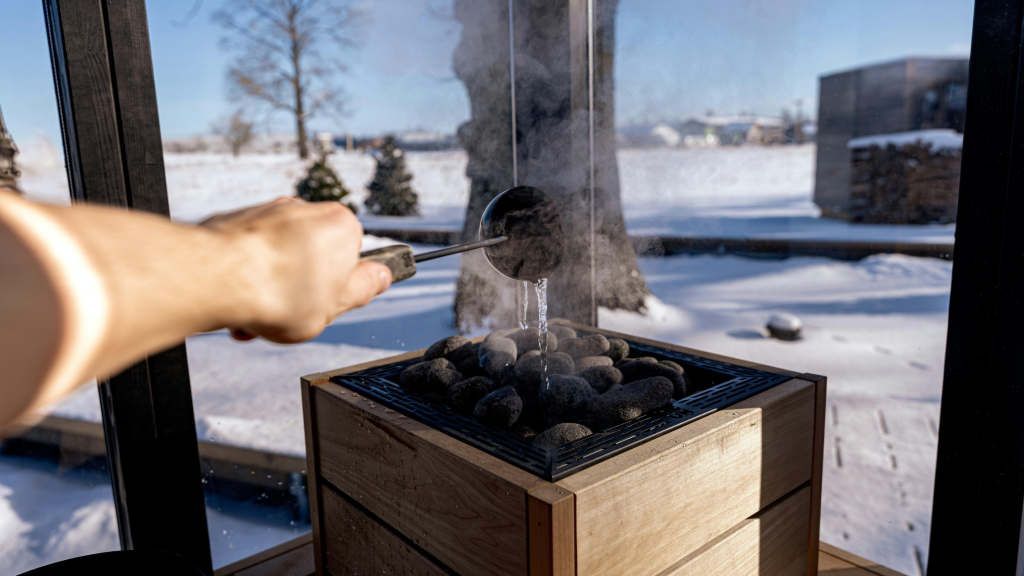
Know your heater type. Electric sauna heaters (with or without stones) and infrared heaters have different maintenance needs. Infrared panels have no stones, no water exposure, and require mostly surface cleaning and emitter checks. Traditional electric heaters with sauna stones need stone inspections, airflow checks, and heating element monitoring.
Locate your documentation. The manufacturer’s manual contains the maintenance schedule specific to your unit. If you’ve lost it, most brands have PDFs available online. This document tells you recommended stone weight, inspection intervals, and what the warranty requires to stay valid.
Understand your electrical setup. Most residential sauna heaters run on 240V dedicated circuits. According to Energy.gov, electric resistance heaters like sauna units require dedicated circuits — sharing a circuit accelerates wear and can create safety issues. Know where your breaker is and whether your installation meets current code.
Establish a logbook. Sounds old-fashioned, but a simple notebook or phone note where you record inspection dates, stone replacements, and anything unusual is genuinely useful when diagnosing problems later.
Sauna Heater Maintenance— The Core Routine
This is the meat of it. Here’s what regular sauna heater maintenance actually looks like, broken down by frequency.
After Every 2–3 Sessions
Let the heater cool completely — this is non-negotiable. Never inspect or touch a heater that’s still warm.
Once cool, do a quick visual pass. Look for:
- Stones that have obviously cracked or crumbled — remove them
- Any unusual residue or discoloration on the exterior housing
- Signs of water damage if you pour water over your stones (some heaters aren’t rated for löyly)
This takes five minutes and catches small problems early.
Monthly
A more thorough inspection is warranted once a month for regular users (3+ sessions per week). For occasional users (once a week or less), quarterly works fine.
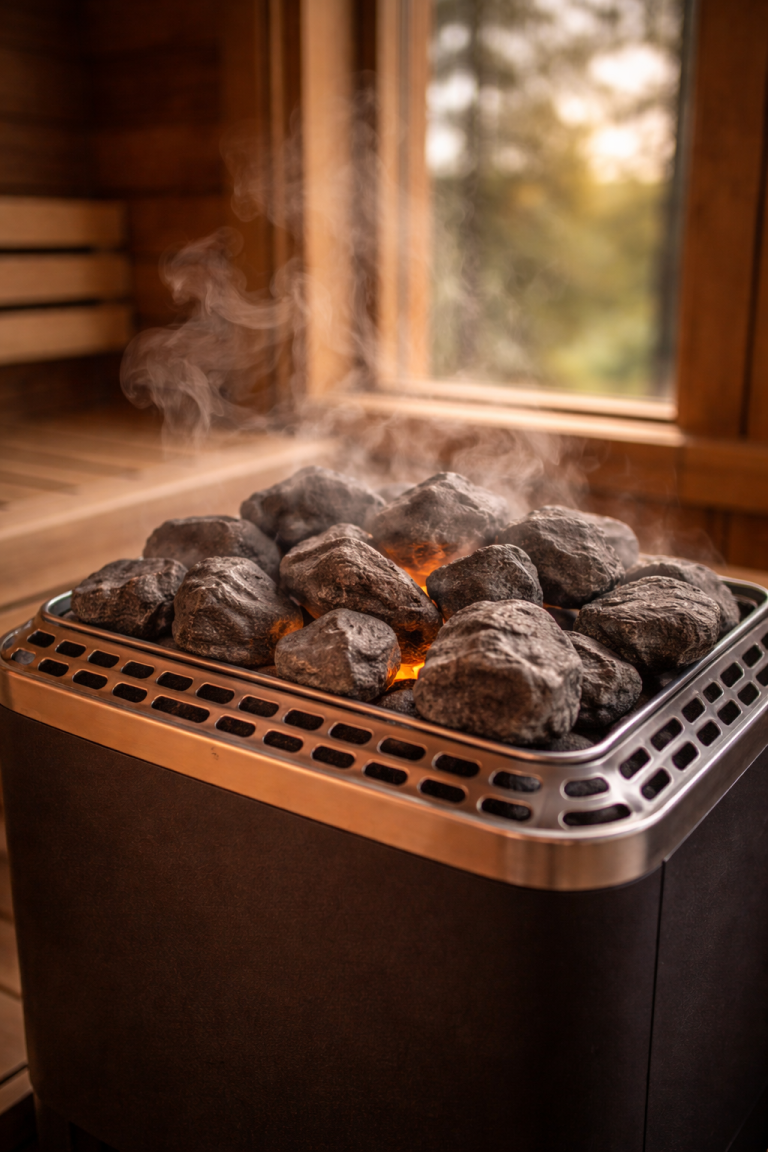
Stone inspection: Remove stones carefully and examine each one. Look for cracks, flaking, or a powdery surface. Compromised stones create two problems — poor heat distribution and fine particles that can fall onto heating elements and cause electrical issues. Replace any stone that’s structurally questionable.
Rearranging stones: While you have them out, this is a good time to rearrange them. Consistent heat exposure on the same surfaces accelerates wear. Rotating stone placement extends their life noticeably.
Exterior cleaning: Wipe down the exterior housing with a damp cloth. Avoid chemical cleaners that leave residue — in a hot sauna, residue can off-gas. A lightly damp cloth handles most surface buildup.
Airflow check: Sauna heaters need adequate clearance to circulate air. Check that nothing has been placed against the unit and that the recommended clearances (usually 4–6 inches from walls and benches, but check your manual) are maintained.
Every 6 Months
Interior cleaning: With the heater fully cooled and the power disconnected at the breaker, remove stones and inspect the interior cavity. A soft brush removes mineral dust and debris that accumulates over the heating elements. Don’t use water inside the heater cavity.
Heating element inspection: Look for visible signs of corrosion, scaling, or uneven coloration on the elements. Mineral buildup appears as white or gray deposits. Light scaling can sometimes be gently brushed off — heavy scaling indicates a replacement is coming.
Connection check: Visually inspect accessible wiring connections for signs of heat damage, discoloration, or corrosion. If anything looks concerning, call a licensed electrician. This is not a DIY repair area unless you have electrical training.
What’s the maintenance schedule for electric sauna heaters? For regular users, do a quick stone inspection every 2–3 sessions, a full stone and exterior check monthly, an interior cleaning every 6 months, and a complete stone replacement annually or when stones show significant degradation. Annual electrical connection checks are also recommended.
Annually
Full stone replacement: Even if your stones look okay, high-use heaters benefit from a full set swap every 12–18 months. Stones absorb minerals from water over time and lose their heat-retention efficiency gradually — you may not notice the change because it’s slow, but new stones noticeably improve performance.
Heating element assessment: After a full year of use, it’s worth evaluating element performance. If heat-up times have increased noticeably despite proper stone maintenance, the elements may be losing efficiency.
Professional electrical inspection: Especially for 240V hardwired units, having a licensed electrician verify the connection is sound is worth the cost. This is both a safety measure and a warranty requirement for some brands.
Pros and Cons of Different Heater Types (From a Maintenance Perspective)
Every heater type comes with its own maintenance trade-offs. Here’s an honest breakdown.
Traditional Electric Heaters with Stones
Pros: Familiar maintenance routine, stones are cheap and easy to replace, heating elements are long-lasting with proper care, wide availability of replacement parts.
Cons: Stone maintenance is ongoing, water exposure (löyly) accelerates stone and element wear, harder to access interior for cleaning in some models.
Wall-Mounted Electric Heaters (No Stones / Minimal Stones)
Pros: Simpler maintenance with fewer components to inspect, faster heat-up reduces element stress.
Cons: Less traditional sauna experience, fewer brands to choose from for replacement parts.
Infrared Heaters
Pros: No stones to maintain, no water exposure, much simpler cleaning routine, longer service life for panels in many cases.
Cons: Emitters can degrade without obvious visual warning, specialized repair when panels fail, harder to DIY any repairs.
Wood-Burning Heaters (Kiuas)
Pros: No electrical components to fail, simple physical maintenance.
Cons: Ash removal after every session, chimney/flue inspection required annually, stone maintenance same as electric.
Electric vs. Infrared Heater Maintenance Compared
| Maintenance Task | Traditional Electric | Infrared |
|---|---|---|
| Stone inspection | Monthly | Not applicable |
| Stone replacement | Every 1–2 years | Not applicable |
| Exterior cleaning | Monthly | Monthly |
| Interior cleaning | Every 6 months | Annually (panel surface) |
| Heating element check | Every 6 months | Annually |
| Electrical connection check | Annually | Annually |
| Water exposure management | Required (if doing löyly) | Never |
| Overall maintenance time | 15–30 min/month | 5–10 min/month |
Helpful Gear That Makes This Easier
A few tools make sauna heater maintenance faster and more effective. These are products worth having on hand:
Sauna Stone Replacement Set look for weight appropriate for your heater (check your manual for the spec). Stone sets run $30–$90 + and are worth keeping a partial spare bag on hand.
Soft-Bristle Cleaning Brush Set You want small brushes that can get into the heater cavity and around stone areas without scratching surfaces. Avoid anything with metal bristles.
Non-Contact Infrared Thermomete Useful for verifying your sauna is reaching target temperature after maintenance. If heat-up times change or temps are off, this helps you pinpoint whether the issue is the heater or the room.
FAQs
How often should sauna heater stones be replaced? For regular sauna users (3+ sessions weekly), plan on a full stone set replacement every 12 months. For occasional users, every 18–24 months is usually sufficient. Inspect stones monthly and remove any that are visibly cracked, crumbling, or powdery regardless of age. Degraded stones affect heat distribution and can damage heating elements if debris falls on them.
Can you clean sauna heater elements yourself? Light exterior cleaning and debris removal from around elements is manageable for most homeowners — always with power disconnected at the breaker and with the heater fully cooled. However, any work involving wiring, connections, or replacing elements should be done by a licensed electrician. Sauna heaters typically run on 240V circuits, and DIY electrical work on those systems is both dangerous and may void your warranty.
What’s the lifespan of a sauna heater with proper maintenance? A well-maintained electric sauna heater typically lasts 10–20 years. Heating elements usually last 5–10 years and can be replaced without replacing the entire unit. Infrared panel heaters have similar lifespans with minimal maintenance. Neglected units — particularly those where stone maintenance is ignored — often show element damage within 5–7 years.
The simple rule: treat your sauna heater like a car engine — check it regularly, replace consumables before they cause problems, and don’t ignore early warning signs.
Summary Snapshot
- Inspect sauna stones every 2–3 sessions; do a full monthly check for regular users
- Clean the exterior monthly; clean the interior every 6 months with power disconnected
- Replace the full stone set every 1–2 years depending on use frequency
- Check electrical connections annually — use a licensed electrician for 240V units
- Infrared heaters need significantly less maintenance than traditional stone heaters
- Annual sauna heater maintenance cost: roughly $40–$100 for a well-maintained heater
- Most heater issues are preventable with consistent, simple upkeep
Final Verdict
Sauna heater maintenance is genuinely one of the easier home wellness maintenance tasks once you get into a rhythm. The stone inspection and swap routine is the biggest time investment, and even that takes under 30 minutes a month. Electrical checks are mostly visual unless something’s clearly wrong, and the interior cleaning only needs to happen twice a year.
The real mistake people make is treating their heater as a set-it-and-forget-it appliance. It isn’t. It runs at high temperatures, handles thermal cycling constantly, and in traditional setups, deals with water exposure on top of all that. Consistency is everything. Sauna heater maintenance is essential.
If you’re due for a new sauna heater — or you’re still deciding what type to get — our picks are a good starting point.
If you’re unsure whether your heater is correctly sized for your room, 6kW vs 8kW sauna heater explains the output differences that affect performance and long-term heater health.
If you’re also running a steam setup alongside your sauna, steam room benefits compares how the two heat sources differ in maintenance and day-to-day use.