Are Outdoor Saunas Harder to Maintain? An Honest Look at What It Actually Takes
Outdoor sauna maintenance is the part nobody talks about when they’re excitedly planning their backyard build. Everyone wants to discuss the heater specs, the wood type, the aesthetic — and then six months in, they’re dealing with warped panels, a corroded heating element, or a door that won’t seal properly because moisture has done its work. I’ve spent years using saunas regularly, and the honest answer to whether outdoor versions are harder to maintain is: yes, meaningfully so — but it’s manageable if you go in with clear expectations.
That gap between expectation and reality is exactly what this post is here to close.
Affiliate disclosure: This post contains affiliate links. If you buy through them, I earn a small commission at no extra cost to you. I only recommend product types I’d genuinely use.
Quick Snapshot
- Outdoor saunas face weather, UV, moisture and pests that indoor units don’t
- Wood treatment is the single most important ongoing task
- Electrical weatherproofing adds cost and complexity vs indoor installs
- Heater maintenance is similar between indoor and outdoor — location is the variable
- Budget $100–$300/year for outdoor-specific upkeep on top of standard sauna maintenance
- With consistent care, a quality outdoor sauna lasts 15–20+ years
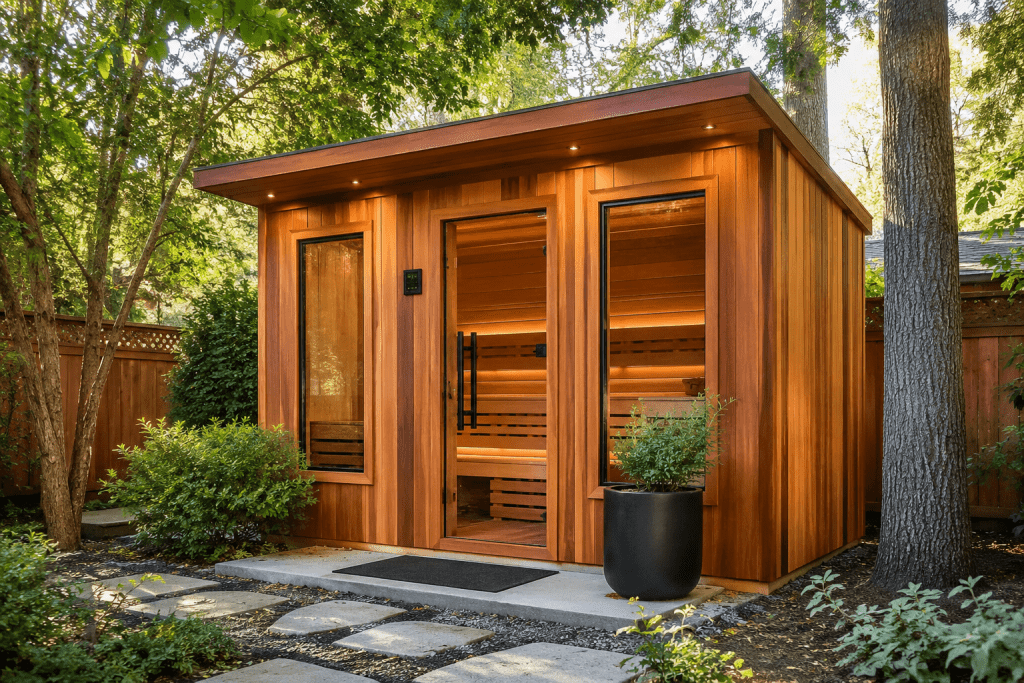
Table of Contents
- What Makes Outdoor Sauna Maintenance Different
- The Real Cost of Keeping an Outdoor Sauna in Shape
- Installation Friction: What Adds Complexity Before You Even Start
- Ongoing Maintenance: What You’re Actually Doing and How Often
- Pros and Cons
- Outdoor vs Indoor: Honest Comparison
- Helpful Gear
- FAQ
- Final Verdict
What Makes Outdoor Sauna Maintenance harder
Outdoor sauna maintenance isn’t a different discipline from indoor care — it’s the same discipline with three or four additional variables permanently in play. The biggest one is exposure. An indoor sauna sits in a climate-controlled environment. An outdoor sauna gets rained on, sun-bleached, frozen, thawed, and visited by insects. Every one of those factors accelerates the wear that would happen anyway on any sauna, and compounds in ways that catch people off guard.
Wood degradation is the clearest example. Cedar and spruce are the standard choices — both handle heat and humidity well — but without regular treatment, exterior surfaces crack, grey out, and eventually start letting moisture into joints and panel edges. That moisture doesn’t stay on the surface. It works its way into the structure and, over time, causes the kind of warping that means a door that sealed perfectly in year one starts letting cold air in by year three. I’ve seen people blame the build quality when the real issue was skipping the annual exterior sealing step.
The heater itself isn’t significantly harder to maintain outdoors than indoors — the concern there is the weatherproofing of the electrical supply running to it, which I’ll cover in the installation section. According to the U.S. Department of Energy, electric resistance heating operates at nearly 100% efficiency at point of use, but outdoor setups do work harder in cold climates as the unit compensates for ambient temperature drops. That real-world efficiency gap is worth factoring into your running cost expectations from day one.
Does the sauna experience itself change outdoors? Not in any way that matters. The heat inside the cabin is the heat inside the cabin — that particular combination of intense warmth and a genuine sense of purging that I find more acute in a sauna than anywhere else is identical whether you’re in a backyard cabin or a spa changing room. The maintenance burden is outside the walls, not inside them.
The Real Cost of Keeping an Outdoor Sauna in Shape
Outdoor sauna maintenance costs money in two categories: regular consumables and periodic structural care. Understanding both upfront prevents the unpleasant surprise of a bill that feels large because it wasn’t anticipated.
What does outdoor sauna maintenance actually cost per year? For a standard 2-person to 4-person outdoor cabin, budget $100–$300 annually for exterior-specific maintenance on top of your standard sauna running costs. This covers exterior wood sealant or stain ($30–$80 per application, done annually or biannually depending on your climate), roof inspection and any minor repairs ($0 if all is well, $50–$200 if flashing or shingles need attention), and weatherstripping replacement for the door ($20–$40). If you’re in a climate with hard winters, add a cover or tarp system for the off-season.
Running costs for outdoor sauna maintenance are slightly higher in cold climates simply because a 9kW or 12kW heater reaching 180°F has more work to do when ambient temperature is 20°F versus 65°F. This is real but not dramatic — though it raises the fair question of whether outdoor units need a more powerful heater to begin with — most users in cold states report marginally longer heat-up times rather than dramatically higher electricity bills. What does hit harder is if your electrical installation wasn’t done properly, which leads us to installation friction.
The sauna heater itself — regardless of indoor or outdoor location — typically needs element inspection every 3–5 years and stone replacement every 2–3 years depending on use frequency. These costs apply equally to both setups.
Installation Friction: What Adds Complexity Before You Even Start
The installation gap between indoor and outdoor saunas is real and worth understanding before you commit. Outdoor sauna maintenance starts before day one because a poor installation creates ongoing problems that look like maintenance failures but are actually installation failures in disguise.
Electrical supply is the main variable. An outdoor sauna requires a weatherproof sub-panel or a properly rated outdoor-grade conduit run from your main panel to the installation location. Depending on your state and local code, this work may require a licensed electrician and an electrical permit. Nolo’s guidance on home improvement permits makes clear that unpermitted electrical work can create problems at resale — so don’t cut corners here. This adds $500–$1,500 to installation costs compared to an indoor setup — part of the real installation cost breakdown for outdoor saunas worth reviewing before you budget.
Foundation matters more outdoors than most guides admit — getting the foundation right from the start helps prevent ground moisture from reaching the sauna structure. A concrete pad or properly built deck can provide the stable, elevated base an outdoor sauna needs. This is the single most common structural failure in outdoor saunas that weren’t installed on a solid, slightly elevated base. Skipping it or cutting costs here tends to mean a significant repair in years 4–7.
Roof design on barrel saunas and cabin-style saunas needs annual inspection. Sealant around any seams, flashing, or roof penetrations should be checked every spring. Five minutes with a tube of exterior silicone sealant catches problems before they become water ingress issues.
Ongoing Maintenance: What You’re Actually Doing and How Often
Outdoor sauna maintenance settles into a predictable rhythm once you know what the tasks actually are. There’s nothing here that’s technically difficult — it’s consistency that matters.
Monthly (during regular use season):
- Wipe interior benches with a damp cloth after sessions; leave door cracked for ventilation
- Check door seal is sitting flush and not compressing unevenly
- Inspect sauna stones for cracks — cracked stones should be replaced, not used
Twice yearly:
- Check exterior wood for greying, cracking, or any soft spots that indicate moisture penetration.
- Apply exterior wood sealant or UV-protective stain to all exposed surfaces
- Inspect roof sealant at any seams or joints
- Flush and clean any drainage channel if your floor has one
Annually:
- Full electrical connection check — confirm all weatherproof fittings are intact and no corrosion has developed on outdoor conduit
- Inspect heater element and controls
- Replace weatherstripping on door if compression has reduced
- Check foundation for any movement or moisture damage at base panels
The heater has its own maintenance cycle too, so my sauna heater maintenance guide covers the elements, stones and electrical checks in more detail.
Every 2–3 years:
- Replace sauna stones (use with frequency dependent — heavy weekly users will be at the lower end)
- Deep clean interior with sauna-safe cleaner to address any tannin staining on benches
The honest reality of outdoor sauna maintenance is that the total active time involved across a year is probably 4–6 hours. What it requires is not expertise — it’s attention. The problems that become expensive are almost always ones where a small issue was visible and ignored.
Pros and Cons
Pros
- No permanent footprint inside the home — significant for smaller properties
- Outdoor setting enhances the mental separation from daily routine that makes sauna effective
- Easier to pair with cold exposure — a cold shower or outdoor plunge nearby is more achievable in a backyard setup
- Barrel and cabin designs can add visual value to a property
- No ventilation management required inside the home
Cons
- Outdoor sauna maintenance demands are meaningfully higher than indoor equivalent
- Installation costs are higher, particularly electrical runs and foundation work
- Weather events — heavy snow loads, severe wind — create periodic structural concerns that indoor units never face
- Harder to use consistently through harsh winters without additional motivation
- Pest intrusion (wasps, mice nesting under base panels) is a real and underreported issue that requires seasonal checks
Outdoor vs Indoor: Honest Comparison
The comparison between outdoor and indoor saunas usually gets written as a lifestyle preference discussion. It is — but it’s also a maintenance and cost discussion that deserves the same honesty.
For the fuller picture beyond maintenance — upfront cost, lifestyle fit, setup differences — the full outdoor vs indoor comparison is worth reading alongside this one.
Which has lower ongoing maintenance costs? Indoor saunas, clearly. The absence of weather exposure means exterior wood treatment, roof inspection, weatherproof electrical maintenance, and foundation monitoring simply don’t exist as tasks. An indoor sauna’s ongoing maintenance is primarily about the heater and interior benches — both of which apply equally to outdoor units. Outdoor sauna maintenance adds a reliable $100–$300 in annual costs and a few additional hours of attention. For most people, that’s an acceptable trade given the lifestyle benefits of the outdoor setup.
That said, the quality of the experience from the inside of the cabin is genuinely equivalent. The heat, the rhythm, the way a proper session feels after a hard workout or a rough week — the combination of heat and cold contrast that produces that natural high lasting hours after a good gym session — none of that differs based on where the cabin sits. The maintenance difference is real, but it’s not an argument against outdoor saunas. It’s just information you need before deciding.
Comparison Table
| Factor | Outdoor Sauna | Indoor Sauna |
|---|---|---|
| Annual maintenance cost | $100–$300 extra | Standard only |
| Weather exposure | Constant variable | None |
| Electrical installation | More complex, permit required | Simpler, shorter run |
| Foundation requirement | Critical | Optional |
| Maintenance hours/year | 4–6 additional | 1–2 |
| Longevity with good care | 15–20+ years | 20–25+ years |
| Experience inside cabin | Identical | Identical |
Helpful Gear
Exterior wood sealant for sauna cabins — A UV-resistant, water-repelling sealant formulated for high-humidity wood structures. Applied to all exterior surfaces annually, this is the single most important product in outdoor sauna maintenance.
Weatherstrip door seal tape — Self-adhesive foam or rubber strip used to restore the door seal on a sauna cabin. Compression degrades over time and a failing door seal is one of the most common sources of heat loss and efficiency drop.
Sauna replacement stones — Natural volcanic or igneous rocks sized for residential sauna heaters. Cracked or depleted stones affect heat distribution and steam quality noticeably.
FAQ
How often should you seal an outdoor sauna? Most outdoor saunas need exterior wood sealant applied once per year in mild climates, and twice per year in climates with harsh winters or intense UV exposure. The best indicator is the wood itself — if water no longer beads on the surface, it’s time to reseal. Letting this lapse for more than one season accelerates cracking and greying noticeably.
Can an outdoor sauna be left outside all winter? Yes, with preparation. Disconnect the electrical supply if the unit won’t be used, leave the door slightly cracked to allow ventilation and prevent mould, and apply a breathable cover if your area gets heavy snow loads. Most quality outdoor saunas are built to handle cold — for a closer look at how efficient barrel saunas specifically are through winter, the risk is moisture accumulation from being fully sealed, not from the cold itself.
How long does an outdoor sauna last? A well-maintained outdoor sauna built from quality cedar or thermowood should last 15–20 years. The ceiling on longevity is almost always the quality of annual maintenance, particularly exterior sealing and foundation integrity, rather than the sauna’s inherent build quality. Units that get consistent care reliably outlast those that don’t by a decade or more.
The simple rule: treat the outside of your outdoor sauna the same way you’d treat any quality exterior wood structure — consistent attention in small doses beats expensive repairs from deferred maintenance every time.
Summary Snapshot
- Outdoor sauna maintenance is more demanding than indoor — weather exposure is the primary reason
- Budget $100–$300 annually in outdoor-specific costs on top of standard upkeep
- Exterior wood sealing is the single most important annual task
- Installation quality determines years 4–10 of structural integrity — don’t cut corners on foundation or electrical
- The sauna experience itself is identical to indoor — the extra maintenance is purely external
- With consistent care, a 15–20 year lifespan is realistic

Final Verdict
Outdoor sauna maintenance is harder than indoor maintenance — that’s not a close call. The combination of weather exposure, exterior wood care, more complex electrical installation, and foundation requirements creates a genuine additional burden that doesn’t exist for indoor units. Anyone telling you otherwise is either not being straight with you or has never used one through a full outdoor seasonal cycle.
But harder doesn’t mean impractical. The total additional time investment across a year is modest, the costs are predictable, and the tasks themselves are not complicated. Outdoor sauna maintenance rewards consistency rather than expertise — which means most people can handle it without specialist help if they stay on top of the schedule. The part of the experience that matters — the heat, the reset.
The way a proper sauna session after a heavy week has a genuinely restorative quality that’s hard to replicate anywhere else — that doesn’t change based on whether the unit is inside your basement or in your garden. If the outdoor lifestyle benefit matters to you, go in with clear expectations about the upkeep, and it will serve you well for a long time.
If contrast therapy is on your radar, Is cold plunging safe for beginners?