
Can You Put a Sauna in a Garage? Everything You Need to Know
Can you put a sauna in a garage? Yes — and for a lot of homeowners, it’s actually one of the smartest setups out there.
It keeps the heat out of your living space, gives you a dedicated wellness zone, and uses square footage that’s often just sitting there collecting dust. That said, it’s not as simple as dropping a prefab unit against the wall and calling it done.
Quick disclosure: some links in this post use our Amazon affiliate tag. If you buy something, we earn a small commission at no extra cost to you. We only mention gear we’d genuinely recommend.
Quick Snapshot
- Yes, you can put a sauna in a garage — with the right prep
- Electrical upgrades are almost always required (240V dedicated circuit)
- Insulation and ventilation matter more than most people expect
- Permits are likely needed depending on your state and county
- Detached garages add extra wiring complexity
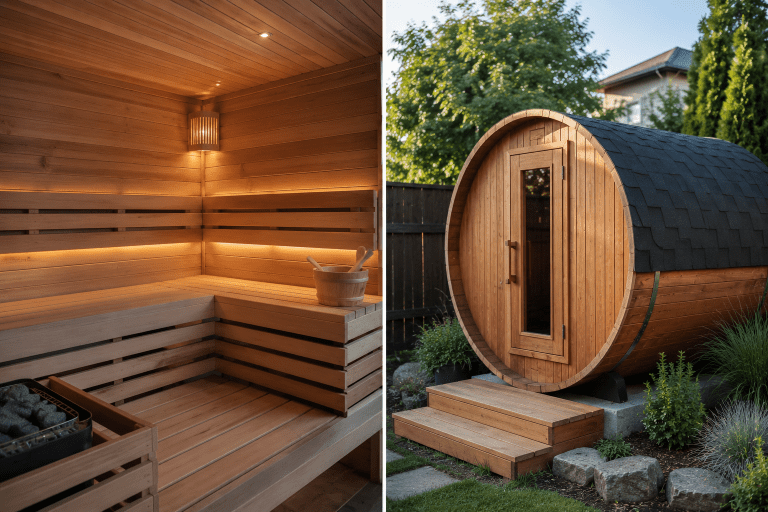
- Barrel and prefab saunas work especially well in garage settings
- Budget realistically: $3,000–$15,000+ all-in depending on size and type

Table of Contents
- Can You Put a Sauna in a Garage? The Core Answer
- What a Garage Sauna Actually Costs
- Installation Friction: What Makes a Garage Build Tricky
- Maintenance in a Garage Environment
- Pros and Cons of a Garage Sauna
- Garage Sauna vs. Other Locations
- Comparison Table
- Helpful Gear for Your Garage Sauna Setup
- FAQ
- Final Verdict
Can You Put a Sauna in a Garage? The Core Answer
Can you put a sauna in a garage? The short answer is yes, and it’s more common than you might think. Garages offer something most interior rooms don’t — raw, adaptable space.
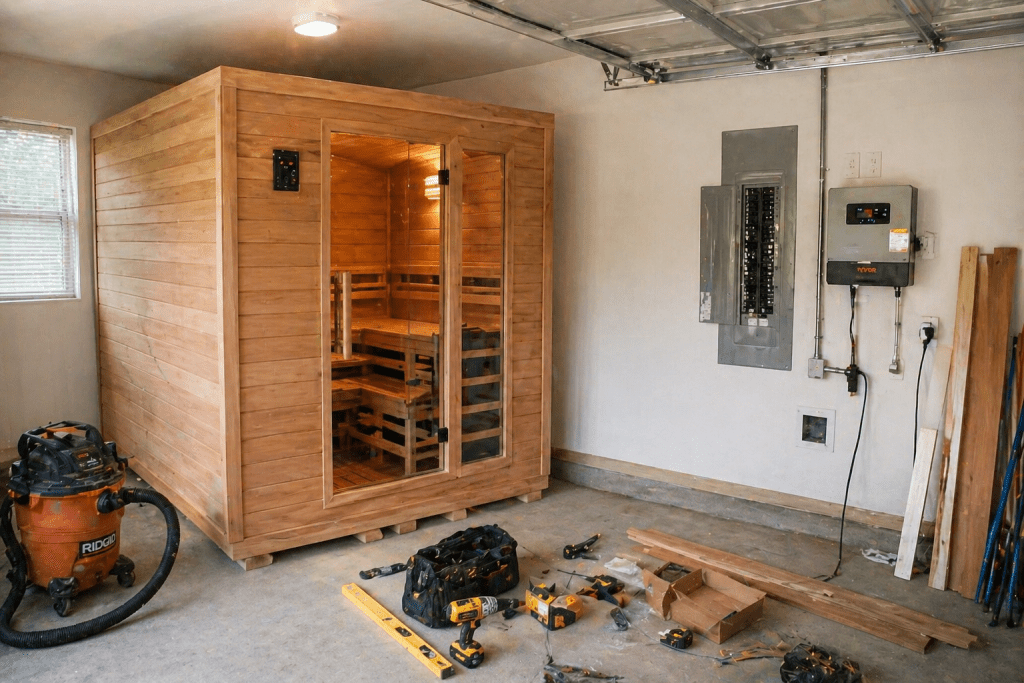
Whether you’re working with an attached two-car garage or a standalone structure out back, the bones are usually there. The floor is concrete (which handles heat and moisture well), the ceiling is often high enough, and there’s typically room to work.
The version that works for your situation depends on three things: the type of sauna you choose, what electrical capacity you already have, and whether your local codes require a permit. Get those three dialled in and a garage sauna is genuinely achievable.
Most people go one of two routes — a prefab indoor unit pushed into a corner, or a full custom build with proper wall framing and insulation. Both work. Both have trade-offs.
What a Garage Sauna Actually Costs
Cost is where reality tends to hit harder than people expect. The sauna unit itself is only part of the number.
A solid prefab sauna -and yes you can put a sauna in a garage at this price point starts around $2,500–$4,000 for a 1–2 person unit. Step up to a 4-person unit and you’re looking at $5,000–$8,000. Custom builds with tongue-and-groove cedar walls, premium heaters and proper benching can push $12,000–$20,000+.
Then there’s everything else:
- Electrical work: $500–$2,000 depending on panel capacity and distance from your sub-panel
- Insulation: $200–$600 if your garage walls aren’t already insulated
- Ventilation: $150–$500 for a proper air exchange setup
- Permits: $100–$500+ depending on your municipality
For most homeowners, a realistic all-in number sits between $4,000 and $10,000. It’s an investment — but one that pays off in daily use if you actually commit to it.
Installation Friction: What Makes a Garage Build Tricky
This is the section most blogs skip. Knowing the friction points ahead of time saves you from expensive surprises mid-project.
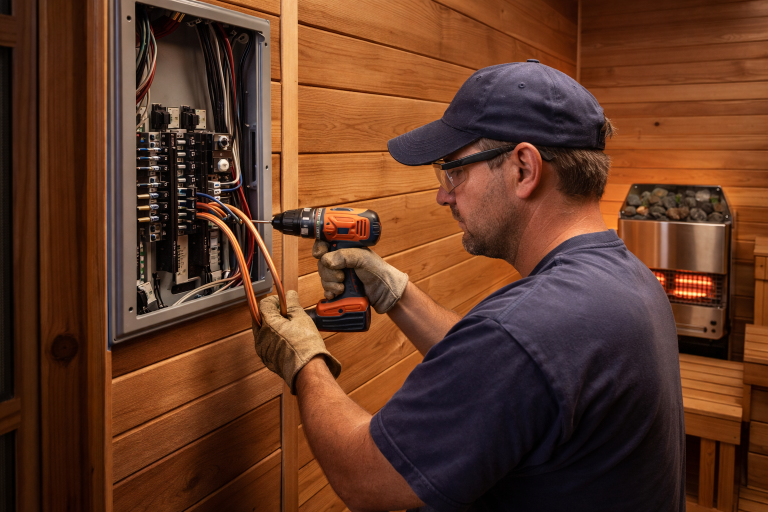
Electrical is the biggest one. Almost every home sauna heater runs on 240V and requires a dedicated circuit. If your garage already has a sub-panel, you may be close to ready. If it runs on a basic 120V outlet circuit, you’ll need an electrician to run a new line — sometimes from your main panel, which adds cost and complexity.
Insulation is the second. Garages are notoriously under-insulated. Heat bleeds out through uninsulated walls fast, which means your heater works harder and your electricity bill climbs. Proper wall insulation before installation isn’t optional — it’s part of the project.
Detached garages add a layer. Running 240V to a detached structure usually means trenching conduit underground from your main panel. It’s doable, but it’s not a weekend DIY job for most people.
Permits are more likely than most people assume. According to Nolo’s home improvement permit guide, electrical work above a certain threshold and structural modifications typically trigger permit requirements in most states. Always check with your local building department before starting.
Ventilation gets overlooked. A garage sauna needs fresh air exchange — both for comfort and safety. A basic upper/lower vent setup works for most installs, but it has to be planned in from the start.
Maintenance in a Garage Environment
Garages introduce a few maintenance quirks that you won’t get with an indoor bathroom install.
Temperature swings are the main one. In colder climates, a garage can drop well below freezing in winter. This isn’t dangerous for the sauna itself — wood handles cold fine — but it means your warm-up time will be longer. A session that takes 30 minutes to heat in summer might take 45–50 minutes in January.
Humidity management. Garages tend to be more humid than interior rooms, especially in spring and after rain. A cedar sauna handles moisture well by nature, but you still want good airflow around the unit to prevent any long-term dampness building up behind or beneath it.
Pests and critters. If your garage has gaps, rodents sometimes take an interest in sauna insulation. It’s worth doing a proper seal job on your garage before installation. Not glamorous, but worth mentioning.
Cleaning is simple. Wipe down benches after sessions, brush out the floor, and re-oil the wood once or twice a year. In a garage setting, a proper mat on the floor outside the unit keeps the space clean and extends bench life.
Pros and Cons of a Garage Sauna
Pros
- Dedicated wellness space separate from the main living areas
- Concrete floors handle heat and splashing naturally
- Usually enough ceiling height for proper bench tiers
- Doesn’t reduce square footage inside the home
- Often easier to ventilate than a bathroom conversion
- Great for post-gym or outdoor recovery routines
Cons
- Requires electrical upgrade in most cases
- Insulation work often needed before installation
- Detached garage adds wiring complexity and cost
- Longer heat-up times in cold climates
- Permit requirements add time and admin
- Less convenient for a quick midday session in winter
Garage Sauna vs. Other Locations
If you’re weighing whether to put a sauna in a garage versus somewhere else in the home, here’s how the main options stack up.
Garage vs. Bathroom: Bathrooms seem logical but almost always require full custom builds — there’s no room for a prefab unit. They’re also harder to ventilate and the humidity can affect surrounding rooms. Garages win on space and flexibility.
Garage vs. Basement: Basements are strong contenders. They’re already insulated in most cases and usually have better electrical access. The downside is ceiling height — older homes often have low basements that limit bench configurations. A garage with high ceilings can beat a cramped basement every time.
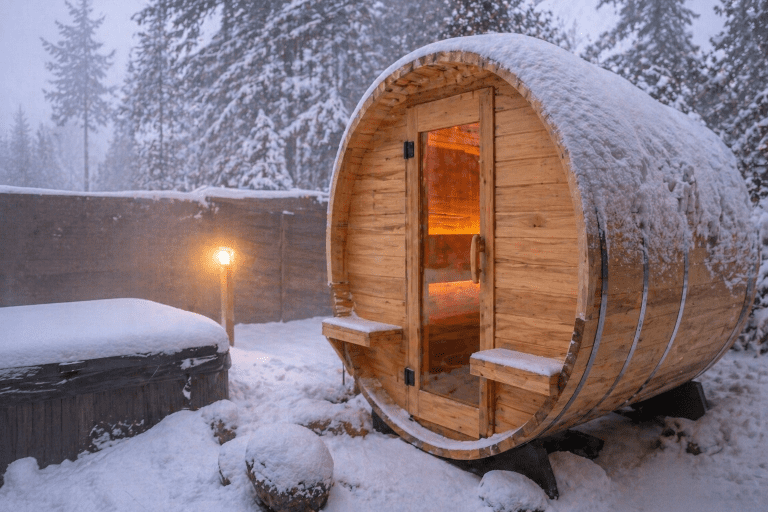
Garage vs. Backyard: Outdoor barrel saunas are excellent, but they need a permanent pad, weatherproofing and more durable construction. A garage sauna is protected from the elements year-round, which extends the life of the unit and reduces maintenance load. If you’re torn between indoor and outdoor approaches, it’s worth reading about the full [indoor vs outdoor sauna trade-offs] before committing.
Garage vs. Dedicated sauna room: If you’re building new or doing a major renovation, a purpose-built sauna room is the gold standard. But for most existing homes, the garage is the closest practical equivalent — especially when space inside the home is limited.
Comparison Table
| Location | Cost Range | Electrical Ease | Space Flexibility | Weather Impact | Permit Likely? |
|---|---|---|---|---|---|
| Garage (attached) | Moderate | High | None | Yes | |
| Garage (detached) | Complex | High | None | Yes | |
| Basement | Easy–Moderate | Moderate | None | Sometimes | |
| Bathroom conversion | Moderate | Low | None | Yes | |
| Backyard/outdoor | Moderate–Complex | High | High | Sometimes | |
| Dedicated sauna room | $$$$+ | Easy | Very High | None | Yes |
Helpful Gear for Your Garage Sauna Setup
These three products are worth adding to your setup. All are well-rated and available on Amazon.
1. Cedar Sauna Bucket and Ladle Set A proper cedar bucket and ladle makes the steam ritual feel like the real thing.
2. Sauna Thermometer and Hygrometer Essential for monitoring temperature and humidity accurately — especially in a garage where ambient conditions vary.
3. Nordic Style Premium Teak Sauna Mat A teak mat keeps the floor of your garage sauna comfortable and helps protect the base of the unit. High-rated options with non-slip backing are worth the small investment.
FAQ
Do you need a permit to put a sauna in a garage? In most cases, yes. Any electrical work involving a new 240V circuit typically requires an electrical permit. If you’re framing new walls inside the garage, a building permit may also apply. Requirements vary by state and county, so always check with your local building department before starting work.
What type of sauna works best in a garage? Prefab indoor saunas and barrel-style units both work well in garage settings. Prefab units are easiest to install and come pre-assembled or in kit form. Traditional Finnish-style saunas with proper framing work excellently too, especially if you’re doing a partial custom build within an existing garage bay.
How long does it take to heat a garage sauna in winter? In cold climates, expect 45–60 minutes for a full heat-up in winter versus 20–35 minutes in warmer months. A well-insulated sauna cabin inside a garage with insulated walls will perform closer to the summer figure even in cold weather. Investing in proper wall insulation pays off significantly during colder months.
The simple rule: if your garage has ceiling height, at least one available wall and access to your electrical panel, you almost certainly have everything you need to make a garage sauna work.
Summary Snapshot
- Can you put a sauna in a garage? Yes — it’s one of the most practical home setups available
- Electrical upgrade to 240V is usually required
- Insulate your garage walls before installation
- Expect $4,000–$10,000+ all-in for most builds
- Detached garages add wiring complexity
- Permits likely needed — check locally first
- Prefab and barrel units are the easiest starting points
Final Verdict
Can you put a sauna in a garage? Absolutely — and for a lot of homeowners, it’s genuinely the best option on the table. You get dedicated space, concrete floors that handle heat and moisture naturally, and usually enough room for a proper setup without gutting a room inside the house.
The friction is real but manageable. Electrical work, insulation, and permits are the three things that catch people off guard. Go in with eyes open on those costs, get your quotes upfront, and the build itself is straightforward.
A garage sauna done right is a long-term wellness asset. It changes how you recover, how you sleep, and honestly, how you feel about your home. If the space is sitting there unused, this might be exactly what it was waiting for.
Explore More from Sunrise & Vitalize
Thinking about where to put your sauna is just one part of the decision. If you’re still weighing your options on setup style, the indoor vs outdoor sauna guide covers the full trade-off in depth — including which climates favour each approach.
For those who want the contrast therapy angle, pairing a home sauna with cold exposure can take recovery to another level — Ice Plunge Benefits covers the essentials.
If you’re looking at the broader wellness picture, the Steam Room Health Benefits post is worth a read alongside your sauna research.