
Do Steam Rooms Help Muscle Recovery?
Do steam rooms help muscle recovery? If you’ve ever stepped into a steam room after a tough workout and felt your muscles practically melt into relief, you already know the answer feels pretty obvious. But there’s actually some real science behind that feeling — and it’s worth understanding before you make steam therapy a regular part of your routine.
Quick heads up: This post contains a couple of affiliate links. If you buy something through them, we may earn a small commission at no extra cost to you. We only mention gear we’d genuinely use ourselves.
Quick Snapshot
- Steam rooms use moist heat (100% humidity, ~110–115°F) to relax muscles post-workout
- Heat increases blood flow, helping flush out lactic acid and deliver oxygen to tired tissue
- Most people feel meaningful relief after 15–20 minutes
- Not a replacement for sleep or nutrition — but a solid recovery tool when used right
- Safe for most healthy adults; check with your doctor if you have heart or blood pressure concerns

Table of Contents
- What’s Actually Happening in Your Muscles After Exercise
- Do Steam Rooms Help Muscle Recovery — The Science Explained
- How Much Does Steam Room Access Cost?
- Getting a Steam Room Into Your Life (Without the Headaches)
- Keeping It Clean and Safe Over Time
- Pros and Cons of Steam Room Recovery
- Steam Room vs. Other Recovery Methods
- Comparison Table: Recovery Methods Head-to-Head
- Helpful Gear for Steam Room Recovery
- Frequently Asked Questions
- Final Verdict
When do Steam Rooms Help Muscle Recovery
When you push hard in the gym, you create tiny microtears in your muscle fibres. That’s the process that builds strength — but it also causes inflammation, stiffness, and that familiar soreness that peaks around 24–48 hours after training.
Your body’s job after that point is to repair, rebuild, and clear out the waste products — primarily lactic acid and metabolic byproducts — that accumulate during intense effort. The faster and more efficiently you can support that process, the better you recover.
That’s where heat therapy enters the picture. And steam rooms, specifically, have a few tricks worth paying attention to.
Do Steam Rooms Help Muscle Recovery
Do steam rooms help muscle recovery in a meaningful, measurable way? The short answer is yes — but with some important context.
The mechanism is primarily circulatory. When your body is exposed to moist heat at the temperatures found in a steam room, your blood vessels dilate. That vasodilation increases blood flow to your muscles, which does two things at once: it helps deliver fresh oxygen and nutrients to damaged tissue, and it helps carry away the metabolic waste sitting in sore muscles.
According to Healthline, steam rooms have been shown to support circulation and may help reduce delayed onset muscle soreness (DOMS) when used consistently as part of a recovery routine .
Do steam rooms help muscle recovery and with lactic acid after exercise? Steam rooms don’t directly remove lactic acid — your liver handles that. But the improved circulation from heat exposure does speed up how quickly your body clears metabolic waste from muscle tissue, which is part of why you feel less stiff and sore after a session.
Beyond circulation, moist heat also works on connective tissue. Tendons, ligaments, and fascia — all the stuff that tightens up after hard training — respond well to warmth. Steam rooms can improve the flexibility of that tissue in ways that make movement feel easier the next day.
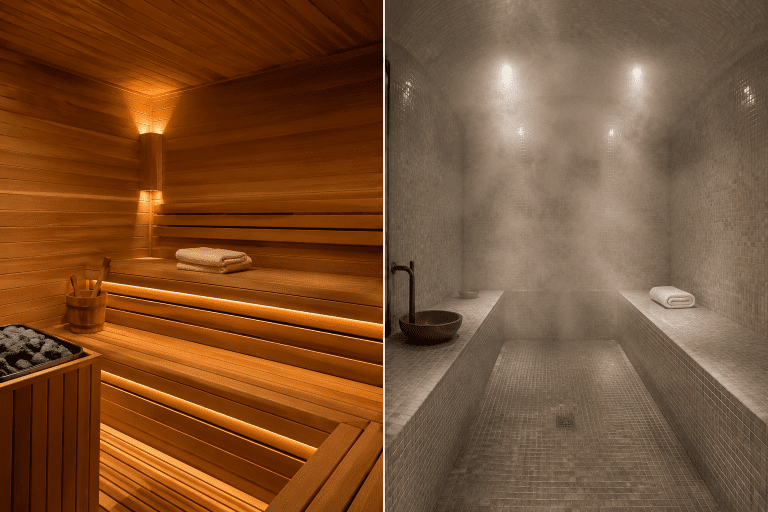
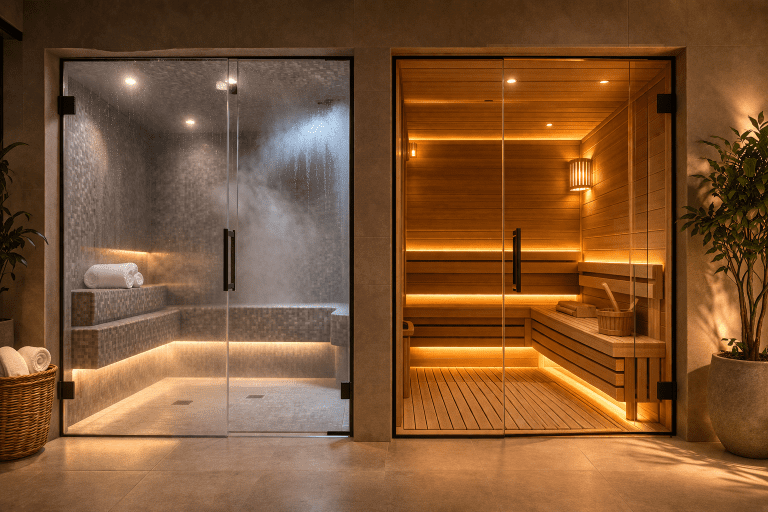
The humidity matters here too. Unlike a dry sauna, the 100% humidity in a steam room means your body can’t cool itself through sweating as efficiently. That keeps your core temperature elevated longer, which extends the vasodilation effect throughout the session.
How Much Does Steam Room Access Cost?
Cost is one of the most practical factors in deciding how to use steam for recovery. And the range is genuinely wide.
Gym or spa access is the obvious starting point. If your gym already has a steam room, you’re essentially paying nothing extra. Most mid-tier gym memberships in the US — typically $30–$70 per month — include steam room access as a standard amenity.
Standalone spa visits run differently. Day spa steam room access usually costs $20–$50 per visit, depending on location and facility quality. In major cities, premium wellness clubs can push that to $80–$120 for a full session with amenities.
Home steam room installations are a bigger conversation. A pre-built home steam shower unit typically costs $2,500–$6,000 for the unit alone, before installation. Full custom-built steam rooms in an existing bathroom can run $5,000–$15,000+ depending on tile work, waterproofing, and the steam generator chosen.
For most people using steam rooms specifically for muscle recovery, gym access is the most efficient entry point. If you’re training four or more times a week and your gym has a steam room, the cost-per-session math works out extremely well.
Getting a Steam Room Into Your Life (Without the Headaches)
If you’re using a gym or spa steam room, there’s no installation friction at all. You show up, you use it, you leave. That’s the beauty of the access model.
Home installation is a different story. Steam rooms require waterproofed walls, floors, and ceilings — typically tile or non-porous materials throughout. Standard drywall and paint won’t survive the moisture long-term. This means any home steam room build is effectively a bathroom renovation project, not just an appliance purchase.
The steam generator itself needs a dedicated electrical circuit — typically 240V — and must be sized correctly for the room’s cubic footage. Undersizing the generator is one of the most common mistakes in DIY builds. It’s worth consulting a licensed electrician before committing to any equipment.
Permits may also be required for significant bathroom alterations. Check with your local building department or visit usa.gov/home-improvement for guidance on what your specific area requires before you start tearing out walls.
If you’re already researching hot tub installations for your backyard, you’ll recognise a lot of the same electrical and permit considerations .
Keeping It Clean and Safe Over Time
Steam rooms are warm, humid, and enclosed — which makes them excellent for recovery and also excellent for growing bacteria if they’re not maintained properly.
Public steam rooms at gyms should be cleaned and disinfected daily. As a user, your job is basic: shower before entering, sit on a clean towel, and avoid shaving, applying lotions, or bringing food inside.
Home steam rooms need regular attention to tile grout, drain covers, and the steam generator itself. Mineral buildup from hard water is a common issue — most generators have a flush cycle that should be run monthly. Grout should be inspected and resealed annually in high-use rooms.
Temperature is also a safety factor. Steam rooms typically operate between 110–115°F. Sessions should stay under 20 minutes, especially for new users. If you feel lightheaded, dizzy, or unusually flushed, get out immediately and cool down slowly.
Hydration matters more than most people realise. You’re sweating significantly even if you can’t see it in a steam room environment. Drink water before your session and rehydrate properly afterward.
Pros and Cons of Steam Room Recovery
Pros
- Increases circulation, which supports faster muscle repair
- Moist heat penetrates connective tissue and reduces stiffness
- Accessible via most gyms at no extra cost
- Relaxation and parasympathetic nervous system activation support overall recovery
- May improve range of motion when used consistently after training
Cons
- Not safe for everyone — those with cardiovascular conditions should get medical clearance
- Overuse or overly long sessions can cause dehydration and dizziness
- Home installation is expensive and requires significant construction work
- Provides passive, not active recovery — doesn’t replace sleep, nutrition, or mobility work
- Public steam rooms carry hygiene variables you can’t fully control
Steam Room vs. Other Recovery Methods
Do steam rooms help muscle recovery better than other methods? That depends on what you’re comparing them to — and what your training looks like.
Cold plunges and ice baths work on a different mechanism. Cold constricts blood vessels rather than dilating them, reducing acute inflammation more aggressively. Many athletes actually combine both — sauna or steam room heat followed by a cold plunge — to create a contrast therapy effect. If you want to explore that approach, the science behind cold exposure is worth digging into through our post on cold plunge benefits
Foam rolling and massage address muscle recovery mechanically rather than thermally. They’re better for targeting specific tight spots and breaking up adhesions in fascia. Steam rooms work more systemically — they affect your whole body at once rather than one muscle group.
Active recovery — light movement like walking or easy cycling — keeps blood flowing without adding stress to damaged tissue. It’s arguably the most underrated recovery tool. Steam rooms complement active recovery well; they’re not a replacement for it.
Sleep remains the single most powerful recovery tool available. No steam room, cold plunge, or supplement comes close to what seven to nine hours of quality sleep does for muscle repair.
Comparison Table: Recovery Methods Head-to-Head
| Method | Best For | Time Required | Cost | Accessibility |
|---|---|---|---|---|
| Steam Room | Circulation, stiffness, relaxation | 15–20 min | Low (gym) to High (home) | Most gyms |
| Cold Plunge | Acute inflammation, mental reset | 5–10 min | Medium–High | Growing but limited |
| Foam Rolling | Specific muscle groups, fascia | 10–15 min | Low | Anywhere |
| Massage | Deep tissue, targeted repair | 30–90 min | High | Requires booking |
| Active Recovery | Blood flow, movement quality | 20–40 min | Free | Anywhere |
| Sleep | Full-body repair, hormonal reset | 7–9 hours | Free | Home |

Helpful Gear for Steam Room Recovery
A few items make steam room sessions more effective and comfortable, whether you’re at the gym or using a home unit.
Microfibre Sauna Towel — A proper-sized towel gives you a hygienic seating surface in public steam rooms and absorbs sweat effectively.
Electrolyte Powder Packets — Replacing sodium and potassium lost through sweating is a simple way to make your recovery session more effective rather than just comfortable.
Waterproof Gym Bag — If you’re heading to the steam room post-training regularly, a bag with a separate wet compartment makes the whole routine far less messy.
Frequently Asked Questions
How long should you stay in a steam room for muscle recovery? Most recovery benefits are achieved in 15–20 minutes at standard steam room temperatures (110–115°F). Staying longer doesn’t significantly increase the benefit and raises the risk of dehydration and dizziness. New users should start with 10 minutes and build up gradually.
Should you use a steam room before or after a workout? After is generally better for muscle recovery. Pre-workout steam can cause early fatigue by raising your core temperature before you’ve even trained. Post-workout use supports circulation, reduces stiffness, and activates the parasympathetic nervous system — all of which help your body shift into repair mode.
Do steam rooms help muscle recovery the same way saunas do? There’s significant overlap. Both use heat to increase circulation and relax muscle tissue. The key difference is humidity — steam rooms operate at 100% humidity versus near-zero in a dry sauna. Some people find moist heat more tolerable and better for respiratory congestion, while others prefer the dry heat of a traditional sauna. The recovery mechanisms are similar either way.
The Simple Rule
If your body is sore and your gym has a steam room, use it. Keep sessions to 15–20 minutes, drink water before and after, and don’t expect it to fix poor sleep or bad nutrition.
Summary Snapshot
- Do steam rooms help muscle recovery? Yes — primarily through improved circulation and heat’s effect on connective tissue
- Most effective when used 15–20 minutes post-workout
- Gym access is low-cost; home installation requires real investment
- Works best as one part of a broader recovery strategy
- Safe for most healthy adults with sensible session limits

Final Verdict
Do steam rooms help muscle recovery in a way that’s worth building into your routine? For most active people, yes — and the access barrier is lower than people think. If your gym already has one, there’s genuinely no reason not to use it after hard training sessions.
The science is solid enough: heat increases blood flow, moist heat penetrates connective tissue, and the relaxation effect supports the parasympathetic nervous system shift your body needs to repair properly. It won’t replace sleep, nutrition, or smart programming — but few things do.
Where steam rooms earn their place is in the gap between a hard training day and the next one. Twenty minutes of moist heat, proper hydration, and a shower afterward is a straightforward, zero-fuss recovery habit that compounds well over time.
If you’re serious about making steam therapy a regular part of how you train and recover, take a look at the options we’ve put together for home steam setups.
Curious how steam rooms stack up against other heat therapy options? Our guide to steam room health benefits covers the full picture of what consistent steam use does for your body over time.
If you’re weighing up different heat recovery tools, our post on best sauna heaters is worth a read for understanding how traditional sauna setups compare for post-workout use.