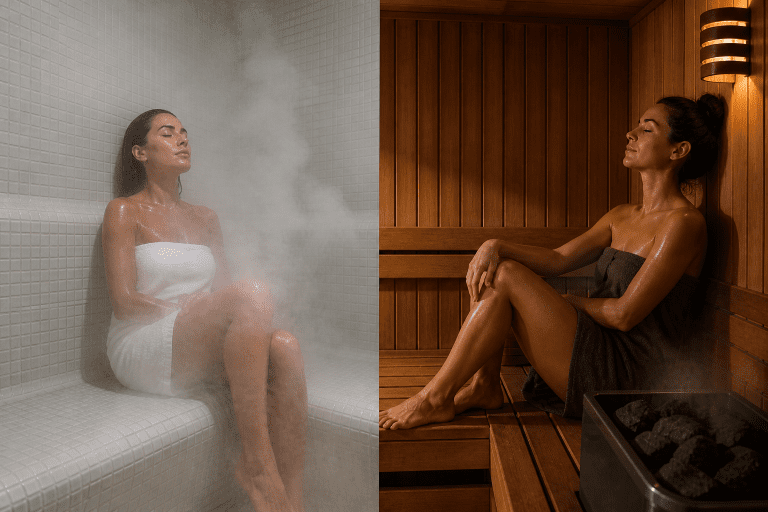

Are Steam Rooms Good for Skin?
Are steam rooms good for skin? They may temporarily soften your skin and leave it looking flushed, but that doesn’t mean they treat acne or improve skin health over time. Heat can also aggravate rosacea, eczema, or sensitive skin. Whether a steam room suits you depends on how your skin responds.
As an Amazon Associate, Sunrise & Vitalize earns from qualifying purchases. If you buy through an affiliate link, we may earn a small commission at no extra cost to you.
⚡ Quick Snapshot
- Steam may temporarily soften the skin and increase surface blood flow; lasting skin improvements are not established.
- Heat and moisture may help loosen surface oil and buildup, but steam does not treat acne or “detox” your skin.
- Heat can aggravate rosacea, eczema, and sensitive skin.
- Afterward, rinse gently with lukewarm water and apply a fragrance-free moisturizer if needed.
- Drink water before and after, keep sessions brief, and leave if you feel unwell or your skin becomes irritated.
- Heat exposure isn’t suitable for everyone. Cleveland Clinic’s sauna guidance advises checking with a healthcare provider before use if you’re pregnant, have heart disease, or have high or low blood pressure, and avoiding sauna use after drinking alcohol. Because steam rooms also expose your body to heat, ask whether they’re appropriate for you too.

Table of Contents
- What Actually Happens to Your Skin in a Steam Room
- The Real Cost of Steam Room Access
- Installation and Access: What’s the Friction?
- Maintenance Considerations
- Pros and Cons for Skin
- Steam Room vs. Sauna: Which Is Better for Skin?
- Comparison Table
- Helpful Gear
- FAQ
- Final Verdict
What Actually Happens to Your Skin in a Steam Room
Let’s start with the mechanics, because once you understand what’s actually going on, the rest of it makes a lot more sense.
A steam room sits at roughly 100–115°F (38–46°C) with humidity levels near 100%. That’s a fundamentally different environment from a dry sauna, which runs hotter but with very low humidity. When you step into a steam room, a few things happen to your skin almost immediately.
First: your skin surface temperature rises. Blood vessels near the surface widen, increasing blood flow and sometimes giving your face a temporary flush. That explains the post-steam glow, but it doesn’t establish that regular steam room use improves skin cell turnover or produces a clearer complexion over time.
For more on what that blood-flow change does and doesn’t mean, see our guide to whether steam rooms improve circulation.
Second: warmth and moisture can temporarily soften the stratum corneum, the outermost layer of your skin. Facial steaming may help some skincare products penetrate more easily, but that doesn’t mean a whole-body steam session makes every serum more effective. Afterward, keep skincare gentle: rinse with lukewarm water and apply a fragrance-free moisturizer if needed. Avoid products that sting or irritate your skin.
Third: sweat glands activate. You’ll sweat significantly in a steam room, even if it doesn’t feel like it because the ambient humidity prevents evaporation. Sweat itself isn’t a magical skin detoxifier — your liver and kidneys handle that — but the combination of heat and sweat can help loosen debris and oxidized sebum sitting in your pores.
Do steam rooms open your pores? Technically, pores don’t open and close like little doors — they don’t have muscles. But the combination of heat, moisture, and sweat softens the material inside congested pores, making it easier to cleanse away after your session. Think of it as loosening, not opening. For people who struggle with blackheads or congestion, a gentle cleanse immediately after a steam session can make a genuine difference.
The Real Cost of Steam Room Access
Here’s where things get practical. Steam rooms aren’t cheap to install or maintain, which is why most people access them through gyms, spas, or hotels.
Gym Membership with Steam Room Access: Many mid-range to upmarket gym chains include steam rooms. Depending on your city and the club tier, you’re looking at $40–$120/month.
Day Spa Sessions: A single spa day with steam room access typically runs $50–$150, sometimes more in major cities.
Home Steam Room Installation: A custom tile steam room in a home bathroom starts around $3,000–$6,000 for a modest prefab setup, and can run $10,000–$25,000+ for a full custom build, plus ongoing utility costs.
Steam Shower Units: A practical middle ground. Pre-built steam shower enclosures with built-in generators range from $2,000–$8,000 installed.
If skin benefits are your main reason for using a steam room, there’s no established session schedule that guarantees clearer or healthier skin. You don’t need to buy a membership or install one for skincare; gentle cleansing, moisturizing, and daily sun protection are a more practical starting point.
Installation and Access: What’s the Friction?
If you’re considering bringing steam room access home, here’s the honest picture.
Space Requirements: A steam enclosure needs to be fully sealed — steam doesn’t play well with surrounding walls, floors, or anything that can warp or mold. Proper tile work, vapor barriers, and a sloped ceiling so condensation drips to the sides rather than on your head are all non-negotiable.
Electrical and Plumbing Work: Follow the chosen generator’s installation manual for voltage, circuit, water supply, and drainage requirements. Have qualified professionals check your home’s services and include any necessary upgrades in the quote.
Generator Sizing: Use the manufacturer’s sizing calculator or guide. Room volume, ceiling height, and surface materials can affect the required output, so don’t choose a generator by floor area alone or assume every residential enclosure needs 7–12 kW.
Timeline: A professional installation, even a modest one, typically takes one to three weeks from start to finish depending on contractor availability and whether any significant upgrades are needed.
Maintenance Considerations
Steam rooms require more ongoing attention than most people expect.
Cleaning Frequency: The warm, humid environment is a breeding ground for mold and bacteria if not cleaned regularly. Tiles, benches, and the drain should be cleaned after every few uses. A monthly deep clean with a steam-safe antimicrobial cleaner is standard.
Generator Flushing: Mineral buildup can affect steam generators, especially in hard water areas. Follow your model’s manual for flushing, automatic drain cycles, and any approved descaling procedure. Don’t add a descaling chemical unless the manufacturer permits it.
Grout and Sealant Checks: The grout lines in a steam room take a beating. Annual inspection and resealing where needed keeps moisture from penetrating behind your tiles — a repair you really don’t want to deal with.
Ventilation: Even though a steam room is sealed during use, the space needs to dry out completely between sessions. Proper ventilation post-use prevents chronic dampness and mold problems.
At commercial gyms and spas, all of this is handled for you — another reason why membership-based access makes sense for most people exploring steam rooms for skin for the first time.
Pros and Cons for Skin
Pros:
- Warmth and moisture may temporarily soften skin and loosen surface oil and buildup.
- Increased surface blood flow can produce a temporary flushed appearance.
- Some people find a steam session relaxing.
Cons:
- Heat can aggravate rosacea, eczema, and sensitive skin.
- Steam is not an acne treatment and does not detox your skin.
- Prolonged exposure can leave skin irritated or dry.
- Sweating causes fluid loss, and poorly maintained shared facilities pose hygiene risks.
Our guide to steam room and detox myths explains why sweating isn’t a detox route.
How often should you use a steam room for skin benefits? There’s no established frequency or minimum session length for improving skin. Keep sessions brief, follow the facility’s guidance, and leave sooner if your skin becomes irritated or you feel unwell. Don’t stay longer or go more often to chase skincare results.
Steam Room vs. Sauna: Which Is Better for Skin?
Neither a steam room nor a sauna is an established treatment for dry skin or acne. Steam rooms use humid heat, while traditional saunas usually run hotter with lower humidity. Both can cause sweating and temporary flushing, and either can irritate heat-sensitive skin.
Humidity alone doesn’t make a steam room suitable for dry skin, and dry heat doesn’t make a sauna a better choice for oily or acne-prone skin. Choose based on comfort and how your skin responds. If either leaves you red, itchy, tight, or irritated, stop using it and seek advice if symptoms persist.
When comparing options, steam rooms good for skin comes down to your skin type and what you’re trying to fix.
For a closer comparison of how each type of heat affects skin, see our steam vs sauna for skin guide.
| Feature | Steam room | Traditional sauna |
|---|---|---|
| Environment | Humid heat | Usually hotter, drier heat |
| Immediate skin response | May temporarily soften skin and cause flushing | May cause sweating and flushing |
| Proven treatment for acne | No | No |
| Suitable for dry or sensitive skin | Heat may irritate; response varies | Heat may irritate; response varies |
| Rosacea or eczema | Heat may trigger symptoms | Heat may trigger symptoms |
| Hygiene | Depends on cleaning and maintenance | Depends on cleaning and maintenance |
| Aftercare | Gentle lukewarm rinse; moisturize if needed | Gentle lukewarm rinse; moisturize if needed |

Helpful Gear
A clean towel and gentle skincare products can help with comfort and hygiene, but you don’t need special gear or a serum to benefit from a relaxing steam session.
Microfiber Steam Room Towel: A highly absorbent towel. Use a clean towel on shared benches for comfort and hygiene.
Gentle Post-Steam Facial Cleanser: Something that removes loosened debris without stripping the newly softened skin barrier. Fragrance-free and sulfate-free is the move.
Hyaluronic Acid Serum An optional hydrating product, rather than something you need for steam room results. Apply according to the product instructions, and use a moisturizer afterward if needed. Let your skin cool first, and skip any product that causes stinging or irritation.
FAQ
Are steam rooms good for skin with congestion issues?
Steam may soften surface oil and buildup, but it does not reliably clear blocked pores or treat acne. Cleanse gently afterward, avoid squeezing blemishes, and use appropriate acne treatment if congestion persists.
Can steam rooms cause acne breakouts?
Heat and sweating can aggravate some people’s skin, although responses vary. Rinse afterward and use a gentle cleanser if needed; avoid scrubbing. If sessions consistently worsen your breakouts, stop and ask a dermatologist for advice.
How long should you stay in a steam room for skin benefits?
There’s no established minimum time for skin benefits. Keep sessions brief, follow the facility’s guidance, and leave immediately if you feel dizzy, nauseated, overheated, or notice skin irritation. Staying longer does not guarantee better skin results.
The Simple Rule
Keep it simple: a brief session if your skin tolerates it, a gentle rinse afterward, and moisturizer if needed. Steam is optional—not a treatment you need for healthy skin. Stop if it causes irritation.
Summary Snapshot
- Steam may temporarily soften skin and increase surface blood flow.
- It does not detox your skin or replace acne treatment.
- There’s no established session length or weekly schedule for improving skin.
- Neither steam rooms nor saunas are proven better for a particular skin type.
- Keep aftercare gentle, and stop if heat causes redness, itching, or irritation.

Final Verdict
Are steam rooms good for skin? They may temporarily soften skin and leave it looking flushed, but lasting improvements are not established. Enjoy a brief session if it feels comfortable, without treating it as an acne remedy or an essential skincare step.
Gentle cleansing, moisturizing, and daily sun protection remain the practical basics. If steam leaves your skin red, itchy, tight, or irritated, stop. People with rosacea, eczema, or persistent skin problems should ask a dermatologist whether heat exposure is suitable.