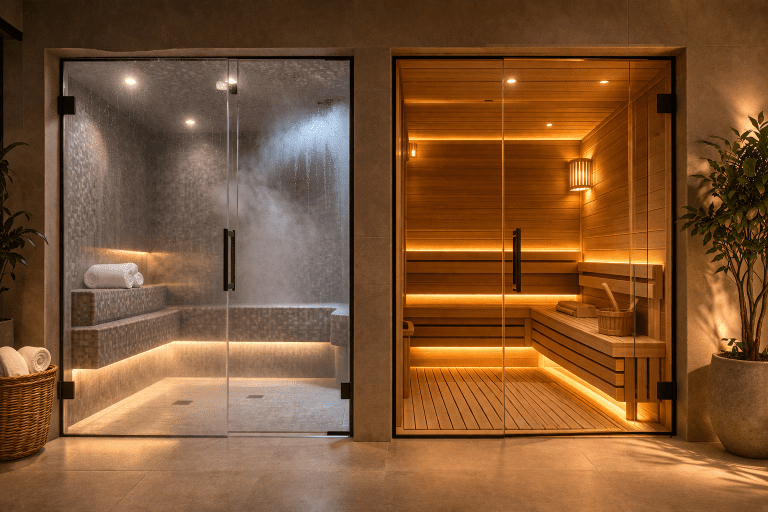
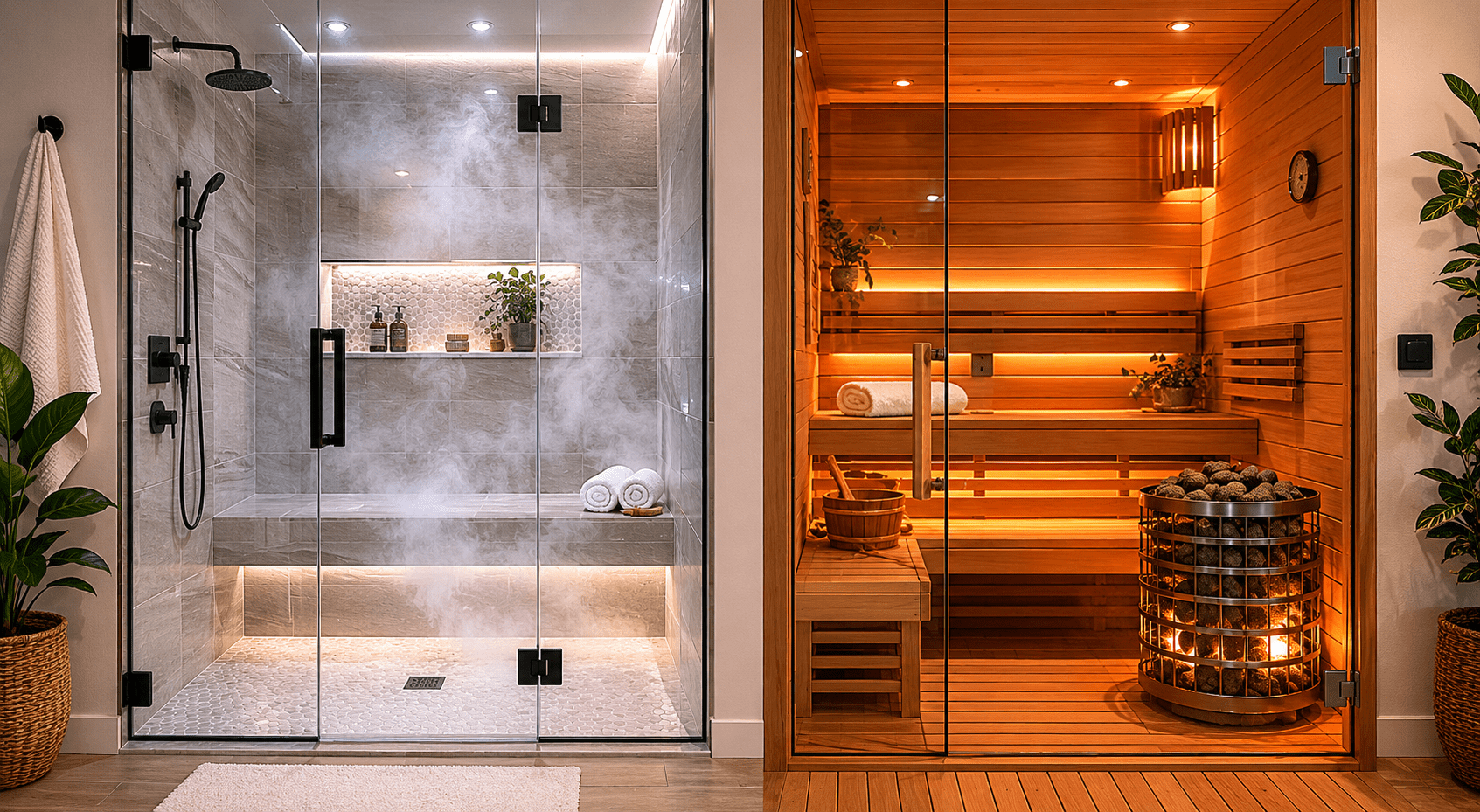
Steam Room vs Sauna Installation: Which One Is Actually Harder to Put In?
If you’re comparing steam room vs sauna installation for the first time, the question sounds simple — pick one, book a contractor, done. It isn’t. The two installations look similar on paper and feel completely different in practice, and the one most people assume is easier is almost always the one that produces the unpleasant surprises.
I’ve spent years using both regularly — the planning stage where everything seems manageable, and the mid-project stage where the budget spreadsheet stops looking like it was written by a rational person.
Heads up: this post contains affiliate links. If you buy through them I earn a small commission at no extra cost to you — it’s how I keep the site going.
Quick Snapshot
- Steam room vs sauna installation: two fundamentally different builds, not just variations on a theme
- Steam generator units start around $500–$800; full steam room installation with prep typically runs $3,000–$10,000+
- Sauna kits start around $1,500 for pre-cut; full custom indoor installation typically $4,000–$15,000
- Steam rooms require full waterproofing — every surface, including ceiling — before the generator is even touched
- Saunas need a dedicated 240V electrical circuit; most homes don’t have a spare one in the right location
- Permits are almost always required for both; few people budget the time or cost for them
- Steam rooms punish rushed prep work more than saunas do — moisture will find every shortcut
- One real number: a typical 4×5ft home steam room shell build (tile, waterproofing, glass door, no generator) runs $2,000–$4,500 in labour alone
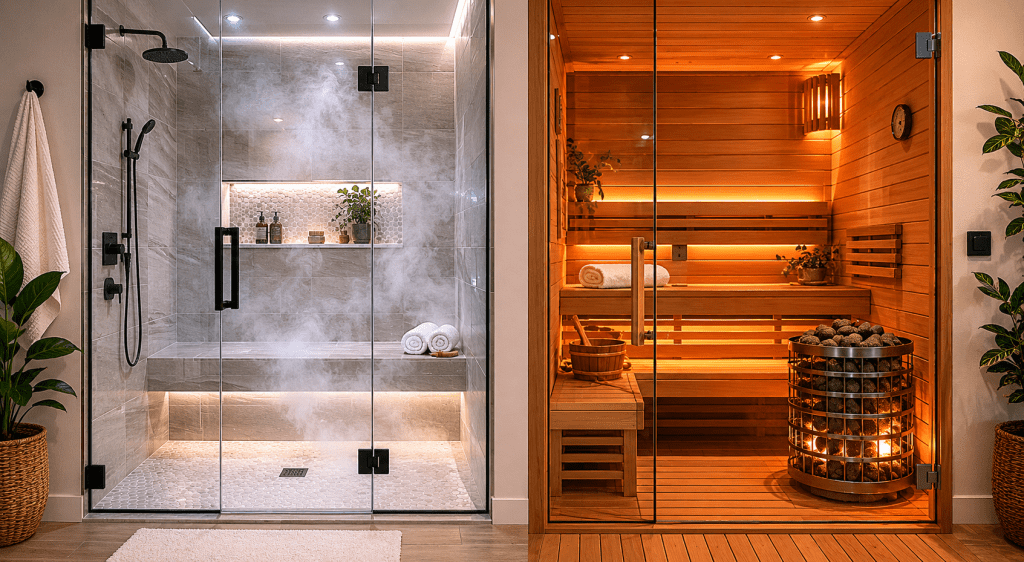
Table of Contents
- What You’re Actually Installing: The Core Difference
- The Real Cost Numbers
- Where Steam Room Installation Gets Complicated
- Where Sauna Installation Gets Complicated
- Electrical: The Detail Most People Hit Late
- Permits — The Part Nobody Budgets For
- Maintenance Complexity After Installation
- Honest Pros and Cons
- Steam Room vs Sauna Installation: Direct Comparison
- Comparison Table
- Helpful Gear
- FAQ
- Final Verdict
What You’re Actually Installing: The Core Difference Between a steam Room vs Sauna Installation
When people talk about steam room vs sauna installation, they often compare the main units — generator vs heater — and treat the surrounding build as secondary. That framing causes most of the budget problems.
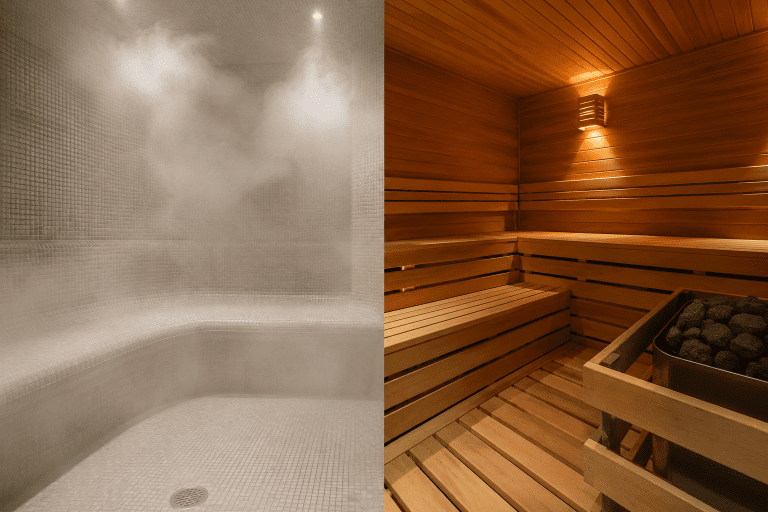
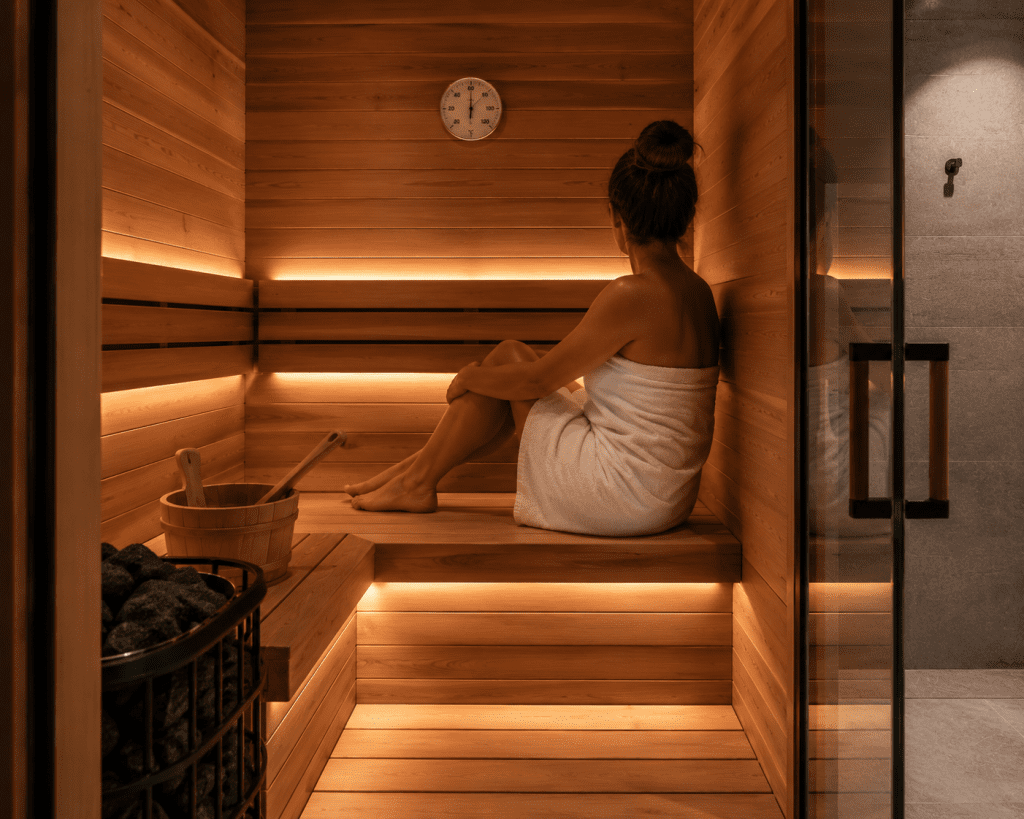
A sauna is a dry, insulated wooden box with a heater inside. The installation challenge is getting the structure right and the electrical supply in place. A steam room is a sealed, tiled, fully waterproofed enclosure where moisture is actively generated and has nowhere to escape. Those are meaningfully different projects.
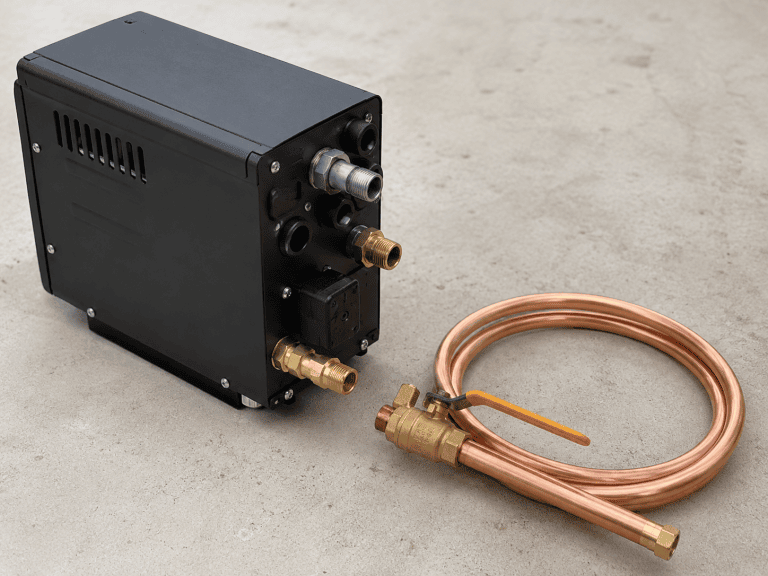
The steam generator itself — the component that produces steam — is often the cheapest part of the steam room vs sauna installation total cost. It’s the room around it that takes the money and the time. Most articles lead with the unit price. That’s the wrong number to start with.
The Real Cost Numbers
For a home sauna, a pre-cut kit for a 4×6ft indoor room runs roughly $1,500–$4,000 for the materials alone. Add labour — framing, insulation, electrical, finish — and a realistic installed cost for a modest indoor sauna is $4,000–$10,000. Custom builds with higher-grade wood and glass panelling push toward $15,000 and above.
For a home steam room, the generator unit itself costs $500–$2,500 depending on the kilowatt output required for the room size. But the steam room vs sauna installation comparison gets skewed at this point, because generator price tells you almost nothing about total project cost.
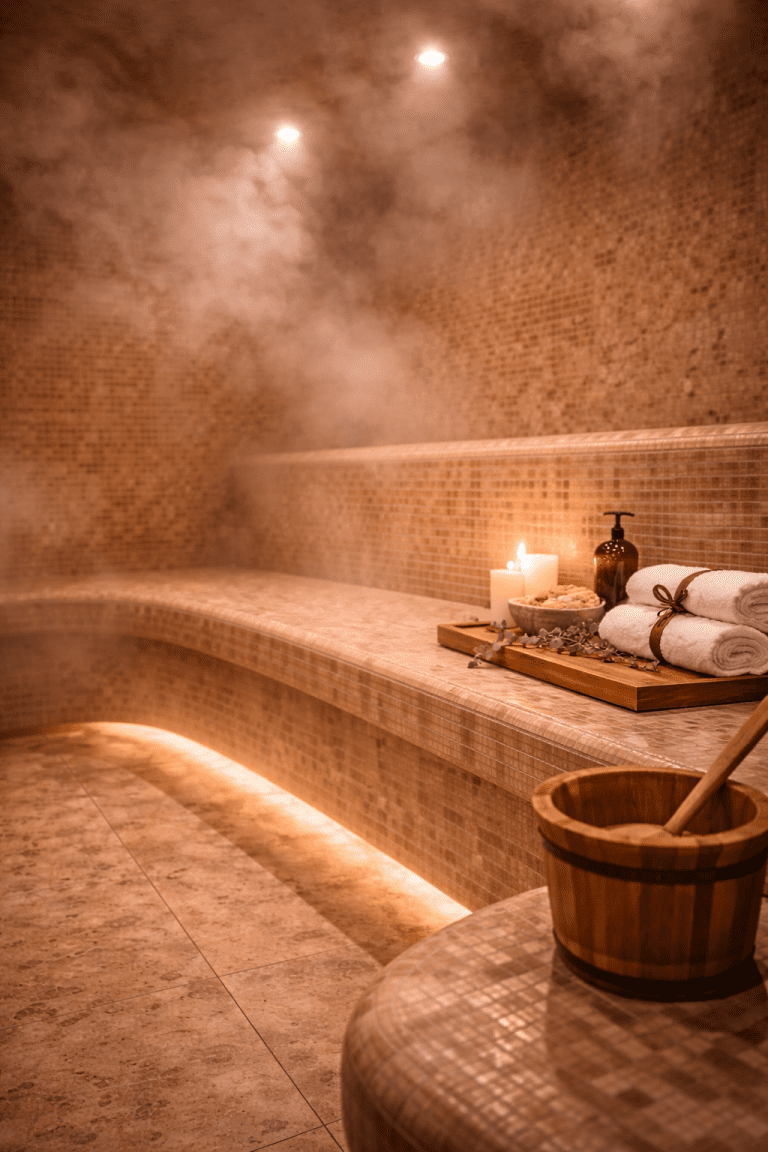
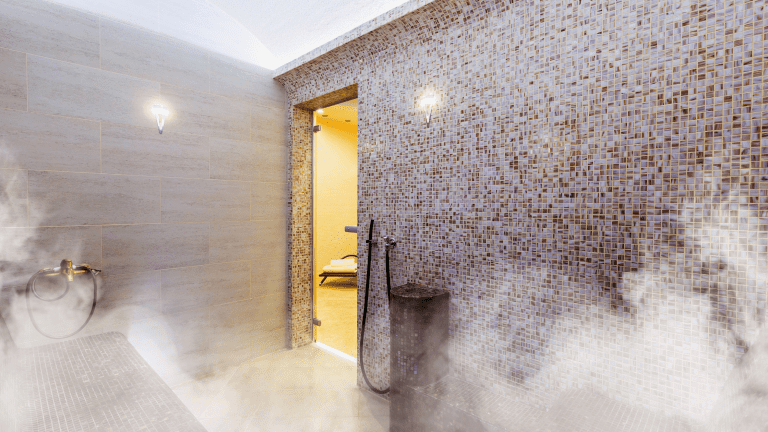
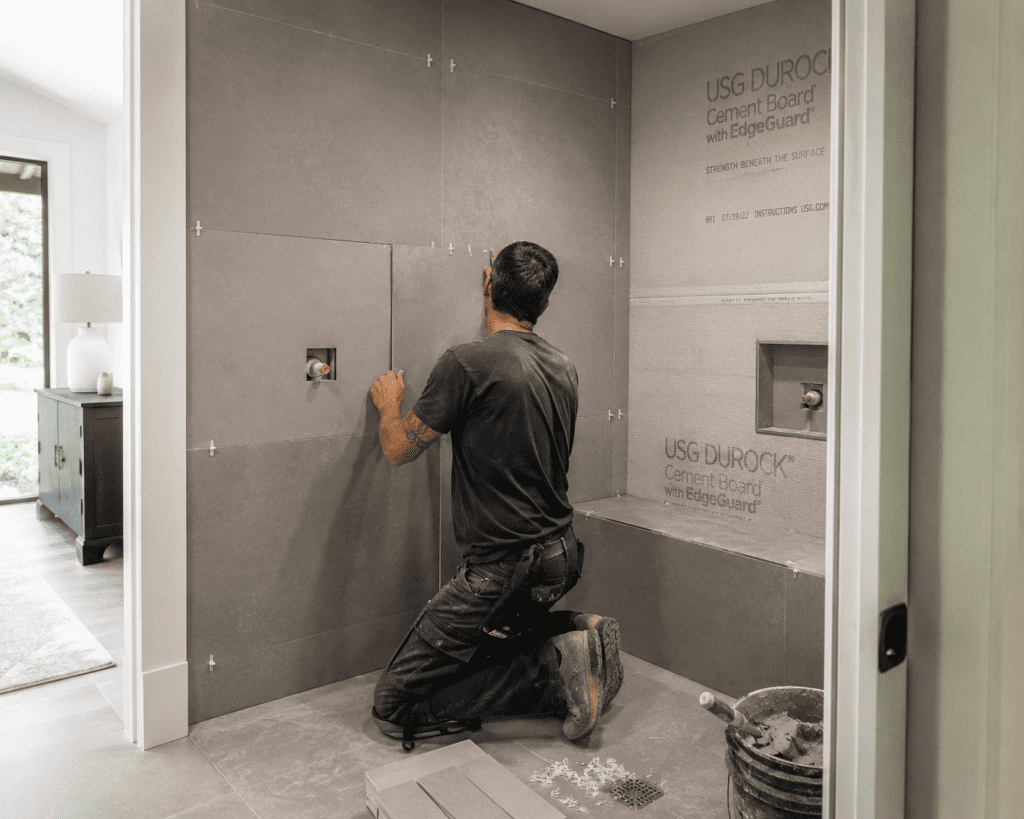
A proper steam room enclosure requires full waterproofing on every surface — floor, walls, ceiling — before any tile goes down. The ceiling slopes to prevent drip. The door seals tightly. The substrate beneath the tile must be cement board or equivalent — standard drywall is not a candidate. A 4×5ft steam room shell, properly built with tile, waterproofing membrane, and a glass door, can run $2,000–$4,500 in labour before the generator is installed. That number surprises most buyers.
For context, if you’re researching the wider costs in this space, our post on [CROSS-LINK: hot tub installation tips] covers a similar pattern — the headline unit price rarely reflects what the total project costs once the surrounding work is factored in.
Where Steam Room Installation Gets Complicated
The waterproofing stage of steam room vs sauna installation is where the real friction lives — and it’s almost always larger in scope than the initial quote suggests.
Every penetration in the walls — pipes, the generator feed line, any electrical conduit — has to be properly sealed. Any gap becomes a moisture pathway. And once the tile is down, you won’t see the consequences of shortcuts for 12–18 months. By then the damage is behind the wall.
The other consistent issue is that contractors who quote steam room work based on the generator size alone frequently underestimate the prep scope. Once the wall is opened, existing tile issues, substrate problems, or drainage gaps appear. The generator quote stays the same. The surrounding work does not.
I’ve seen this play out in both directions — rooms that looked fine from outside that needed full strip-back before any steam equipment could go in, and rooms that were genuinely clean installs from day one. The difference was almost entirely in how thorough the original waterproofing had been on the bathroom in the first place.
Steam rooms also require a slope on the ceiling — typically 1–2 inches per foot — so that condensation runs to the edges rather than dripping directly onto whoever is sitting below. This sounds minor. It isn’t, particularly in retrofit situations where the existing ceiling height is already limited.
Where Sauna Installation Gets Complicated
Sauna installation looks more manageable at the planning stage because the components are more familiar — wood, insulation, a heater. The challenge is that several of those components need to be done in the right order, and skipping steps creates problems that are expensive to fix later.
Insulation is the underappreciated variable. A sauna that isn’t properly insulated takes far longer to reach temperature, costs more to run, and puts more heat stress on adjacent walls than it should. Pre-cut kits include the wood panelling; they don’t always include enough guidance on what needs to happen behind it.
The bench is its own detail. The bench in a sauna gets genuinely hot — hot enough that thin shorts are a problem if you’re not paying attention to what you’re sitting on. Bench depth, height, and material choice affect whether the experience is comfortable or just tolerable, and it’s one of those things that’s hard to appreciate until you’ve been in enough saunas to know what the good ones feel like.
Our post on steam vs sauna benefits covers what each environment actually delivers once it’s installed — which is worth reading before committing to either build, since the experience differences are real and not just about heat levels.
Electrical: The Detail Most People Hit Late
Both options in the steam room vs sauna installation comparison require dedicated electrical supply, and both will almost certainly require an electrician rather than a DIY run.
A sauna heater for a typical home-sized room runs on 240V, typically 4–8kW depending on room volume. Most homes don’t have a spare 240V circuit in the right location. Running new wiring from the panel to the sauna location is standard — and depending on the run length and panel capacity, it’s a $500–$1,500 cost that doesn’t appear in the kit price.
Steam generators also run on 240V for units above a certain output level. The generator needs to be located outside the steam room itself — in an adjacent cabinet, closet, or utility space — with a steam pipe running into the room. The placement of the generator affects both the pipe run and service access for maintenance. Getting this right at installation saves considerable frustration later.
For both options, the electrical work triggers permit requirements in most jurisdictions. This is not optional.
Permits — The Part Nobody Budgets For
Most steam room vs sauna installation projects require permits — for the electrical work, and often for the structural modifications if walls are being altered. According to Nolo’s home improvement permit guide, electrical and plumbing work almost universally requires a permit regardless of project scale.
The permit process adds time — typically 2–6 weeks depending on your local authority — and a cost of $100–$500 or more depending on location and scope. Most installation quotes don’t include this automatically.
The practical problem is that unpermitted work creates issues at resale. Both steam rooms and saunas are visible additions to a property; a buyer’s inspector will note them, and unpermitted electrical work is a specific flag. Doing it right at the start is cheaper than rectifying it later.
Maintenance Complexity After Installation
Steam room vs sauna installation complexity doesn’t end when the contractor leaves. The ongoing maintenance requirements are different enough to factor into the decision.
A sauna is relatively low-maintenance. The wood benefits from occasional cleaning and light oiling, the heater rocks need replacing every few years, and the electrical components are straightforward to service. There are no water systems to manage.
A steam room has more moving parts. The generator has a flush cycle to manage mineral buildup — how frequently depends on your local water hardness. Hard water areas will see scale build up faster, and neglecting the flush shortens generator life noticeably. The tile and grout need regular cleaning because the steam environment is hospitable to mould and mildew in any gap or unsealed area. A steam room that was properly waterproofed at installation is far easier to maintain than one that wasn’t.
The generator itself has a service life of roughly 10–15 years with proper maintenance. Replacement cost is $500–$2,500, so factoring that into long-term cost calculations is reasonable.
Honest Pros and Cons
Steam Room Installation
Pros:
- Can be retrofitted into an existing bathroom or wet room in many cases
- Generator unit is a relatively small physical component
- Smaller room footprint required — even a 3×3ft enclosure can work
- Lower bench/seating requirements than a sauna
Cons:
- Waterproofing scope is consistently underestimated at the quote stage — the room build often costs more than the generator
- Any shortcut in waterproofing will eventually surface, and repairs require removing tile
- Hard water areas require consistent generator maintenance or face early unit failure
- Ceiling slope requirement complicates retrofit in low-ceiling rooms
The con that the industry consistently undersells: the gap between the generator quote and the actual project cost. Most buyers research generator prices and get a rough sense of the investment, then find at the contractor stage that room preparation — waterproofing, substrate, drainage verification, sealing — doubles or triples the number. The generator is the smallest line item on most steam room projects.
Sauna Installation
Pros:
- Pre-cut kits reduce on-site build time significantly
- No waterproofing requirement — dry environment throughout
- Easier for experienced DIYers to manage the build elements
- Lower ongoing maintenance requirements
Cons:
- 240V electrical supply is almost always an additional cost not included in kit pricing
- Insulation quality directly affects running cost and heat-up time — cutting corners here compounds over years
- Requires meaningful floor space — 4×6ft is a practical minimum for comfortable use
Steam Room vs Sauna Installation: Direct Comparison
The clearest way to frame steam room vs sauna installation for decision-making is by where the complexity concentrates.
Steam room complexity is front-loaded. Getting the room right before installation is where the difficulty and cost sits. Once it’s properly built, day-to-day use is straightforward and the generator does its job without drama.
Sauna complexity is more evenly distributed. The build itself is more forgiving, but the electrical cost arrives as a separate line item for most homes, and insulation choices made at installation affect running costs for the life of the sauna.
For the experience side — which matters, because installation complexity should serve the thing you’re actually going to use — the two deliver something genuinely different. Running five-minute rounds of heat in a sauna vs a steam room, with cold between each one, makes the contrast obvious. Sauna heat is drier and more intense; steam room heat feels more enveloping. Neither is better universally. They’re different experiences, and the installation effort buys you access to a specific one.
Comparison Table
| Factor | Steam Room | Sauna |
|---|---|---|
| Main unit cost | $500–$2,500 (generator) | $1,500–$4,000+ (heater + kit) |
| Total installed cost (typical home) | $3,000–$10,000+ | $4,000–$15,000 |
| Waterproofing required | Full room — every surface | None |
| Electrical requirement | 240V (medium-large units) | 240V (standard) |
| Permit typically required | Yes | Yes |
| Minimum usable room size | ~3×3ft | ~4×6ft |
| Post-session skin effect | Noticeably better — consistent use produces visible results | Minimal direct skin effect |
| Maintenance frequency | Higher (generator flush, grout) | Lower (heater rocks, occasional clean) |
| Generator/heater lifespan | 10–15 years | 15–20 years |
| DIY-friendly? | No — waterproofing requires professional | Partial — kits reduce complexity |
The post-session skin row is the one competitor tables skip. It’s a real differentiator — people who use a steam room consistently notice it in how their skin looks and feels. It’s not a marketing claim. People started asking what moisturiser I’d switched to. I hadn’t switched anything. That effect is specific to the steam environment and worth factoring into the decision.
Helpful Gear
If you’re moving ahead with either installation, a few items come up consistently as useful at the planning and early-use stages.
Waterproofing membrane roll — for steam room builds specifically, having the right membrane material specified before the contractor starts saves arguments mid-project.
Digital hygrometer/thermometer — useful for monitoring steam room conditions post-installation and for verifying sauna temperatures during heat-up. A basic one covers both.
Sauna thermometer and hygrometer combo — specific to sauna use, these are often wood-housed and designed for the heat range a sauna operates at.
FAQ
Is a steam room harder to install than a sauna? In most home situations, yes — primarily because of the waterproofing requirement. A steam room must be fully sealed before the generator is installed, and the room preparation work often costs more than the generator itself. Sauna kits reduce build complexity meaningfully; no equivalent shortcut exists for steam room waterproofing. Both require professional electrical work and permits.
Can I install a home sauna or steam room without a permit? Technically possible in some areas, but not advisable. Electrical work for either installation almost universally requires a permit under local building codes. Unpermitted electrical work creates issues at resale — inspectors flag it, and buyers or their lenders sometimes require it to be rectified before closing. The permit process is the slower, more expensive option upfront and the cheaper option long-term.
Is it worth installing a steam room if I’ll only use it a few times a week? Yes — provided the installation is done properly from the start. Two or three sessions per week is enough frequency to see the cumulative benefits, particularly for skin condition and recovery. The concern worth addressing is whether a poorly prepared room will hold up under that usage pattern. A properly waterproofed steam room used a few times a week will outlast a rushed install used daily.
What makes steam room waterproofing so important? Steam produces sustained, high-humidity moisture that will penetrate any unsealed surface over time. Unlike a regular shower, which produces intermittent moisture, a steam room maintains near-100% humidity for the duration of use. Any gap in the waterproofing layer — around pipe penetrations, behind tile at grout lines, at ceiling junctions — becomes a moisture pathway that eventually reaches the substrate and framing behind it. The damage is slow, invisible, and expensive to repair once it’s established.
Which installation takes longer — steam room or sauna? A pre-cut sauna kit installed in an existing space with electrical already in place can be completed in 2–4 days. A steam room retrofit, including waterproofing, tiling, glass installation, and generator setup, typically runs 1–3 weeks depending on scope and whether any substrate issues are found during prep. Factor in permit turnaround time for either project and realistically add 2–6 weeks before work can legally begin.
Does a steam room add more value to a home than a sauna? Both add value, but the calculation is location-dependent. In areas where spa-style bathrooms are expected at a certain price point, a properly installed steam room in the master bath can meaningfully affect buyer interest. A sauna — particularly a well-finished indoor model — also appeals strongly, but is sometimes perceived as more niche. Neither adds value if the installation was unpermitted or shows signs of moisture damage.
The simpler the installation looks at the quote stage, the more carefully you should read what’s included.
Summary Snapshot
- Steam room vs sauna installation: both are real projects, neither is a weekend DIY
- Steam room: generator is the small part — room preparation is where cost concentrates
- Sauna: pre-cut kits help, but electrical and insulation are the variables that move the number
- Both require dedicated 240V circuits and permits in almost all jurisdictions
- Steam room maintenance is ongoing and moisture-dependent; sauna maintenance is lighter
- The post-session experience difference is real and worth understanding before committing to one build
Final Verdict
The steam room vs sauna installation question doesn’t have a universally correct answer — but it does have a clearer framing than most comparison articles offer.
If you’re retrofitting into an existing bathroom with solid tile and good drainage, a steam room installation is feasible with the right contractor. If the existing bathroom has any substrate or waterproofing question marks, budget for them to become scope additions rather than surprises.
If you want the simpler build, a pre-cut sauna kit in a dedicated space — garage, basement, spare room — is the more manageable project for most homes. The electrical cost is real and consistent, but the build itself is more predictable, If you’re working with a genuinely tight footprint rather than a full spare room, our Sauna vs Steam Room Small Spaces guide breaks down what actually fits and what doesn’t.”
What neither option rewards is rushing the planning. The installations that go wrong almost always go wrong because someone led with the unit price rather than the full project scope. Get three quotes. Ask each contractor what they include in room preparation specifically. The answers will tell you most of what you need to know.
For everything you need on the steam room side, the picks below are where I’d start.
If this comparison helped, the rest of the Steam vs Sauna cluster covers what each environment actually delivers in practice — steam room health benefits is worth reading for the physiological side.