Is Solo Ice Bathing Safe? An Honest Look at the Risks
Solo ice bathing safety is something most cold plunge content glosses over — and that bothers me. The benefits get all the attention. The risks, especially around going in alone, get a paragraph at most. This guide goes the other way. Real risks, specific numbers, and what to actually do to protect yourself if you’re plunging without anyone around.
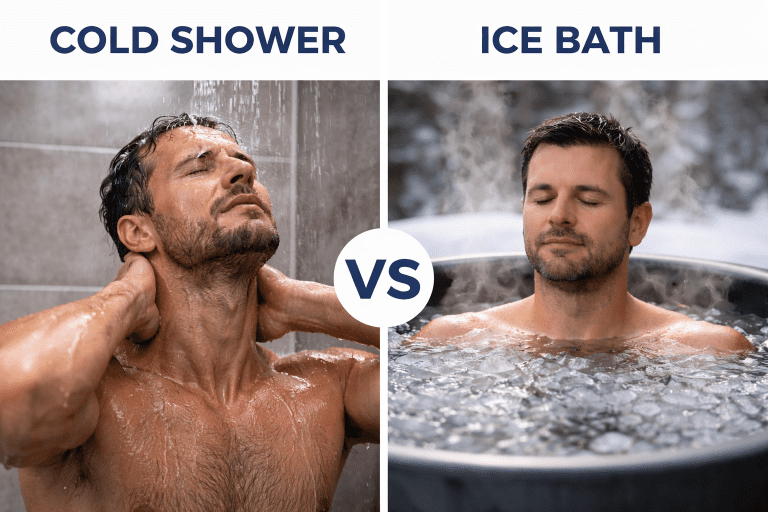
And yes — I’ll still tell you it’s worth it. I do cold showers daily, but a full plunge is a completely different level. Nothing comparable. The feeling after is immediate and unlike anything a shower produces. But that gap in intensity is exactly why solo ice bathing safety deserves its own dedicated breakdown.
Disclosure: This post contains affiliate links. If you buy through them, I earn a small commission at no extra cost to you — it helps keep the site running.
Quick Snapshot
- Solo cold plunging carries specific risks that group sessions don’t
- Cold shock response in the first 30–60 seconds is the highest-risk window
- Water temperature, session length, and exit accessibility all affect solo ice bathing safety
- Simple protocols dramatically reduce risk without removing the benefit
- Not recommended unsupervised for cardiac conditions or first-time plungers
Table of Contents
- What Makes Solo Cold Plunging Different
- The Real Risk Numbers
- What a Cold Shock Response Actually Feels Like
- Cost Reality: Home Setup vs Facility
- Installation and Setup Friction
- Maintenance
- Pros and Cons
- How Solo Compares to Supervised Plunging
- Comparison Table
- Helpful Gear
- FAQ
- The Simple Rule
- Summary Snapshot
- Final Verdict
What Makes Solo Cold Plunging Different
Solo ice bathing safety starts with understanding why the solo part matters at all. Cold water immersion triggers a predictable physiological sequence — and the first phase of that sequence is the one that can cause a problem before you’ve even registered that anything is wrong.
The cold shock response hits immediately on entry. Your body gasps involuntarily, heart rate spikes, and breathing becomes rapid and shallow. In a supervised setting, someone is watching. Alone, if you inhale water during that gasp or become disoriented, there is no one to respond. That is the core solo risk — not that the cold itself is uniquely dangerous, but that the window of vulnerability happens fast and silently.
This doesn’t mean solo plunging is off the table. It means the protocols matter more when you’re alone.
The Real Risk Numbers: 5 Factors That Actually Determine Safety
Solo ice bathing safety is heavily dependent on five controllable variables. Get these right and the risk profile drops considerably.
1. Water Temperature Below 50°F (10°C) is where cold shock becomes clinically meaningful. Most home ice baths sit between 50–59°F. Colder than 50°F without prior acclimation is where solo risk increases sharply.
2. Session Duration The physiological danger window is the first 30–60 seconds. After that, cold shock subsides and the risk shifts to hypothermia on extended sessions. For solo plunging, 2–5 minutes is appropriate. Past 10–15 minutes in cold water, hypothermia becomes a real variable — the CDC’s cold stress guidance confirms that cold water removes heat from the body roughly 25 times faster than cold air at the same temperature, and incapacitation can occur before the person realises they are in difficulty.
3. Exit Accessibility One of the most overlooked solo ice bathing safety factors. If your exit requires climbing, coordination, or any physical effort, test it in warm conditions first. Cold-numbed hands and reduced grip strength are real — anything requiring two functioning hands to exit is a problem after a few minutes in cold water.
4. Prior Acclimation First-time plungers should not go solo. Full stop. The involuntary gasp on first exposure to cold water is more pronounced in unacclimated individuals. After a few sessions, your body anticipates the cold and the shock response is less severe.
5. Underlying Health Cardiovascular conditions, arrhythmia, Raynaud’s, and uncontrolled high blood pressure are all relevant. Solo ice bathing safety for these populations requires medical sign-off — not a disclaimer formality, but a genuine conversation with a doctor about cold exposure and cardiac load.
What a Cold Shock Response Actually Feels Like
What happens to your body in the first 30 seconds of a cold plunge? Your skin sensors trigger an involuntary gasp, heart rate spikes by as much as 20–50 beats per minute, and breathing shifts to rapid shallow hyperventilation. This response is autonomic — you cannot will it away, especially on early sessions. It subsides within 60–90 seconds as your body begins adapting.
This is the part that separates a cold shower from a full plunge. I’d been doing cold showers for years before my first proper plunge and genuinely thought I was prepared. The gasp still caught me. It’s not painful — it’s just a completely different physiological event. That’s the honest version.
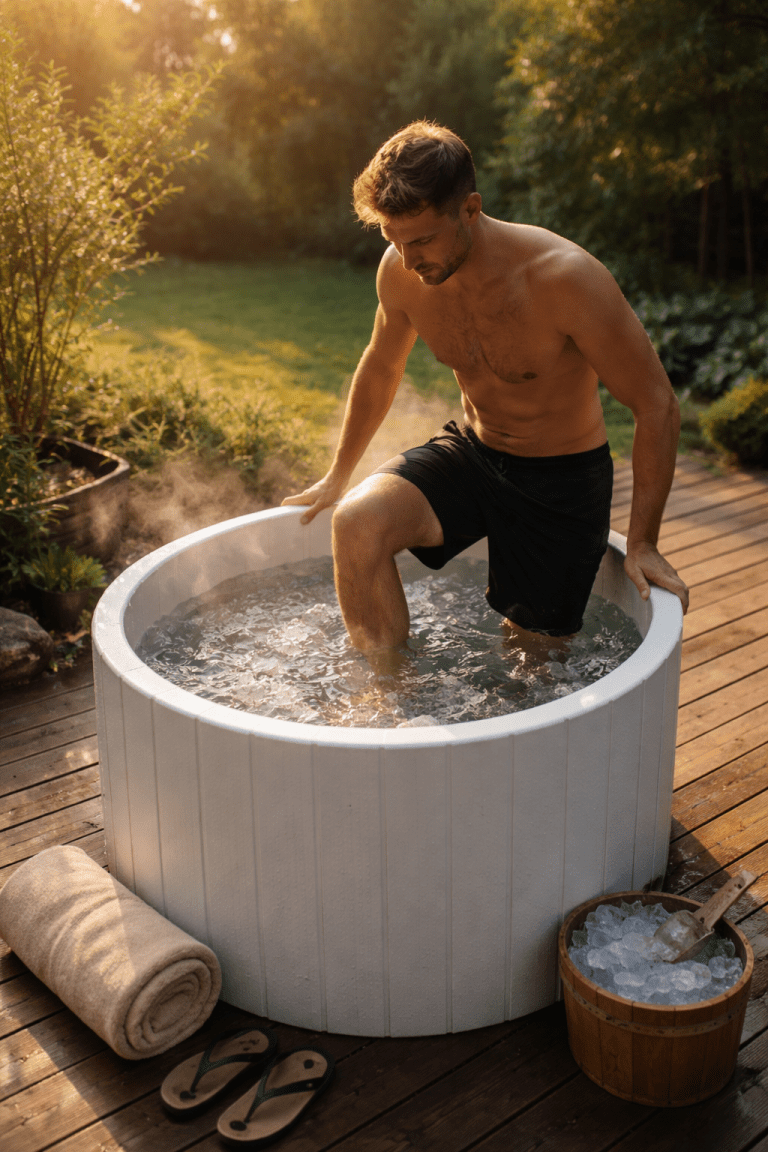
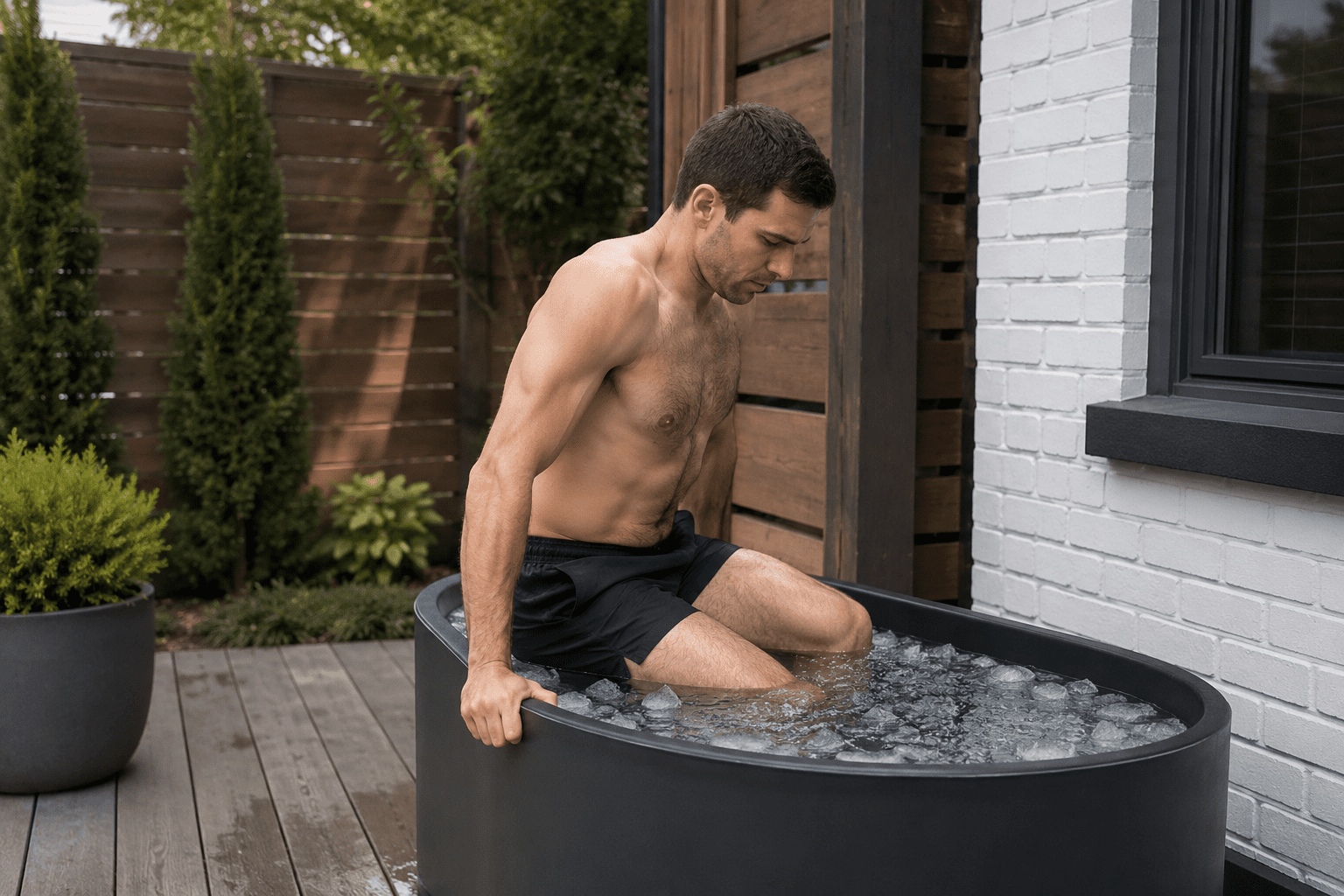
The risk is that if you’re disoriented or in an awkward position during that window, you can inhale water. Solo, there’s no corrective present. This is why entry position matters — standing in the water as you lower yourself in gives you the most control.
Cost Reality: Setting Up a Solo-Safe Home Ice Bath
Solo ice bathing safety at home doesn’t require expensive equipment, but it does require the right equipment. The cost conversation breaks into two tiers.
Budget setups ($200–$600): Chest freezer converted to ice bath, or a soft-sided inflatable plunge tub. Both work. The solo safety issue with budget setups is that some have high sides that make rapid exit difficult. Check entry and exit before committing.
Dedicated cold plunge units ($800–$4,000+): Purpose-built tubs with built-in chillers, lower entry heights, and cleaner drainage. Better for solo ice bathing safety because they’re designed with body mechanics in mind, and the consistent chilled temperature removes the unpredictability of melting ice.
Ice costs add up on DIY setups — $5–$10 per session if you’re buying bags. Purpose-built chillers eliminate that ongoing cost but carry higher upfront investment.
Installation and Setup Friction
The main installation variable relevant to solo ice bathing safety is location. Outdoor setups introduce weather as a variable. Plunging outdoors in winter, already cold before entering, means your body is starting from a lower baseline temperature. Indoor setups provide more controlled conditions.
Electrical requirements for chiller units typically require a dedicated 15–20 amp circuit. If you’re running an extension cord to a chest freezer, that’s a fire and electrical risk separate from the cold plunge risk entirely. A licensed electrician install is worth the cost.
Permits are rarely required for portable cold plunge units. Built-in outdoor installations in some states trigger permit requirements — the specifics vary by county. Worth a call to your local building department before permanent installation.
Maintenance
Maintenance is where solo ice bathing safety often gets undermined by convenience. Stagnant water in a warm environment breeds bacteria quickly. For solo plungers who aren’t maintaining water chemistry, the risk shifts from cold shock to infection.
For chiller units: follow the manufacturer’s water treatment schedule. For DIY setups: change water every 1–3 sessions, or use appropriate sanitiser (small amounts of hydrogen peroxide at recommended concentrations). Test water regularly. The solo user has no one else prompting the maintenance — it has to be self-managed consistently.
Pros and Cons of Solo Cold Plunging
Pros: Solo plunging fits your schedule, not anyone else’s. There’s no waiting, no coordination, and the consistency that produces real results is easier to maintain when you can go when you want. The feeling after — genuinely fantastic, immediate lift in mood and energy — is entirely yours to decide when to access it. Many users who plunge alone report that the private ritual aspect adds something to the experience.
Cons: The core limitation of solo ice bathing safety is the absence of a second person during the highest-risk window. First sessions especially carry more risk than they need to without supervision. Maintenance falls entirely on you, and the temptation to skip it is real when nobody else will notice. Exit accessibility is your problem alone to solve.
The honest trade-off: once you’ve done 5–10 sessions and understand your body’s response, the solo risk is manageable with basic protocols. Before that threshold, supervised is safer.
How Solo Compares to Supervised Plunging
Is solo ice bathing less safe than supervised cold plunging? Objectively, yes — the absence of a second person removes a safety layer during the cold shock window. That said, solo ice bathing safety can be meaningfully improved with the right protocols: never plunge for your first time alone, use a phone timer and keep your phone within reach, choose an entry/exit design you can manage with cold-numbed hands, and always tell someone where you are and how long you plan to be.
The supervised vs solo comparison also depends on where you are in your cold plunge experience. A seasoned plunger with 50 sessions behind them plunging solo is materially different from a first-timer alone. The risk is highest at the intersection of inexperience and no supervision.
Gyms and wellness centres offer supervised cold plunge access, which is the right starting point. Once you’ve built acclimation there, solo ice bathing safety at home becomes a much smaller conversation. If you’re also interested in combining heat and cold, the protocol that produces the best results I’ve found — sauna or steam, cold contrast, repeat — is worth reading about in Steam Room Health Benefits.
Solo vs Supervised Cold Plunge — At a Glance
| Factor | Solo | Supervised |
|---|---|---|
| Cold shock response risk | Higher | Lower |
| Schedule flexibility | High | Lower |
| First-session safety | Not recommended | Recommended |
| Maintenance accountability | Self-managed | Shared/facility-managed |
| Exit risk | Depends on setup | Lower |
| Long-term consistency | Easier | Session-dependent |
| Cost | One-time setup | Ongoing membership |
Helpful Gear for Safe Solo Cold Plunging
Floating digital water thermometer — A buoyant waterproof thermometer that sits in your cold plunge water and displays the current temperature on a large readable screen. Knowing your exact water temperature before entry is one of the simplest solo ice bathing safety checks you can make.
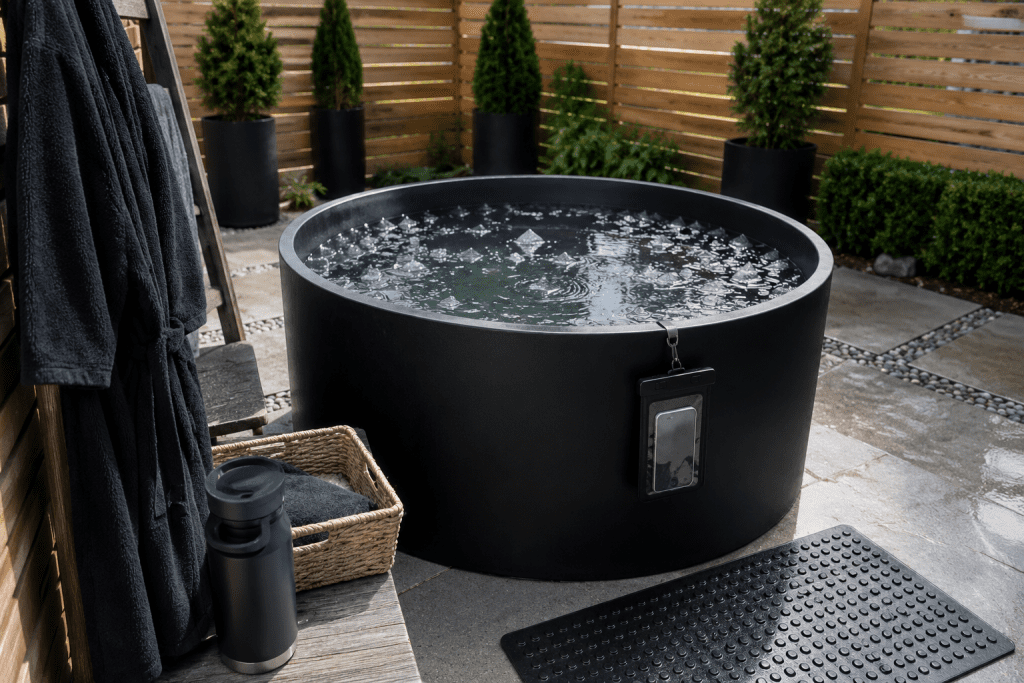
Waterproof phone pouch — A secure pouch that keeps your phone visible and accessible from inside the plunge tub. Lets you monitor your timer and make a call without exiting.
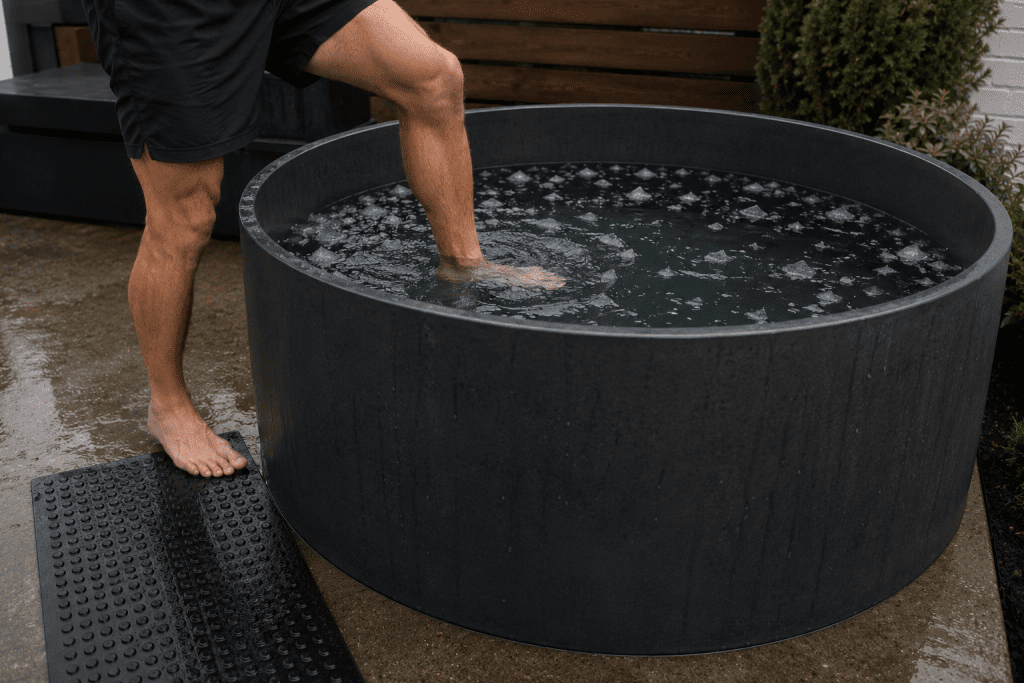
Non-slip rubber bath mat — A textured mat for the ground surrounding your plunge unit, critical for cold-numbed feet on exit.
FAQ
How long should a solo cold plunge session last for safety? For solo plunging, 2–5 minutes is the appropriate range for most people. The cold shock window passes within 60–90 seconds; the risk then shifts toward hypothermia on extended sessions. Past 10 minutes in water below 55°F, solo ice bathing safety declines meaningfully. Set a timer before you get in and exit when it goes off — cold-induced cognitive changes can affect your perception of how long you’ve been in.
What temperature is safe for solo cold plunging? 50–59°F (10–15°C) is the most commonly used range for home cold plunge, and also the most defensible for solo ice bathing safety. Below 50°F without significant prior acclimation raises the cold shock response intensity. Above 60°F, you’re getting cold exposure benefits with a more manageable physiological response — a reasonable starting point for solo first sessions.
Should I always have my phone nearby during a solo ice bath? Yes — keep your phone waterproofed and within arm’s reach. Solo ice bathing safety is meaningfully improved by the ability to call for help without exiting, especially during the first 60 seconds. A wall-mounted or tub-clipped waterproof phone holder solves this cleanly.
The Simple Rule
If you haven’t done at least five supervised sessions, don’t go solo.
Summary Snapshot
- Solo ice bathing safety depends most on cold shock response management and exit design
- Temperature below 50°F, first-time sessions, and cardiovascular conditions are the highest-risk combinations
- 2–5 minutes is the appropriate solo session length
- Maintenance neglect is a genuine solo-specific risk — stagnant water, skipped sanitiser
- With correct protocols, solo cold plunging is a manageable and repeatable practice
Final Verdict
Solo ice bathing safety is a real topic, not a waiver formality. The cold shock response in the first 60 seconds is the primary risk, and it’s the window where the absence of a second person matters most. After that window — and after you’ve built acclimation across multiple sessions — the risk profile shifts to one that’s manageable with basic protocols and sensible equipment choices.
I’d still take the solo plunge. The feeling after is immediate and genuine in a way that’s hard to replicate — a real lift that lasts hours, especially combined with heat work before it. But I went in knowing my body’s response, with a proper exit, a phone in reach, and someone who knew where I was. Solo ice bathing safety doesn’t require abandoning the practice. It requires respecting it.
For more on the safety side of cold exposure more broadly, the Ice Plunge Safety cluster covers the related territory — including cold exposure for recovery and what beginners need to know before their first session. You can read about cold plunge benefits and what the research actually supports in the broader Cold Plunge Benefits posts.