Steam vs Sauna for Skin: Which One Actually Delivers Better Results?
Steam vs sauna for skin is one of those questions that sounds simple until you’ve actually used both regularly. The answer isn’t clean. It depends on what your skin needs, how often you’re going, and honestly — which one you’ll stick with long enough to see anything real happen.
I’ve used both for years. Here’s what I’ve actually noticed.
Heads up: this post contains affiliate links. If you buy through them, I may earn a small commission at no extra cost to you. I only mention things I’d genuinely recommend.
Quick Snapshot
- Steam rooms add moisture directly to skin — better for dry skin types
- Saunas produce more intense heat — deeper sweat, more purging sensation
- Both improve circulation, which drives most of the skin benefits
- Skin results from either require consistency — not a one-session fix
- Steam tends to show faster surface results; sauna feels more systemic
- Cost, installation, and maintenance differ significantly between the two
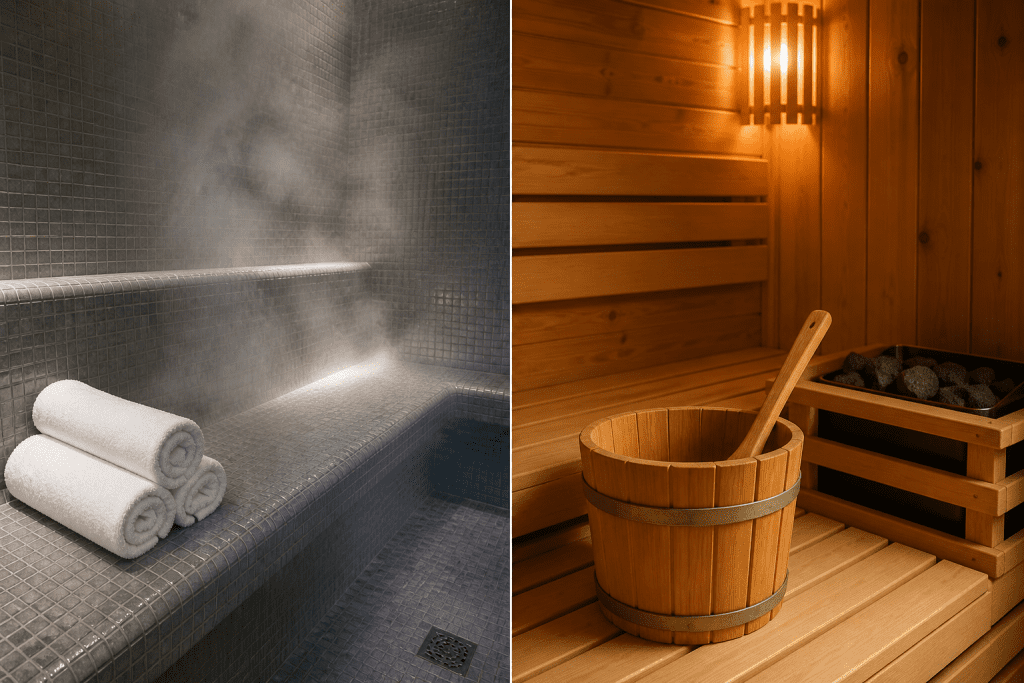
Table of Contents
- What’s Actually Happening to Your Skin in Each
- Cost Reality
- Installation Friction
- Maintenance
- Pros and Cons
- How They Compare Side by Side
- Comparison Table
- Helpful Gear
- FAQ
- Final Verdict
What’s Actually Happening with Steam vs Sauna for Skin
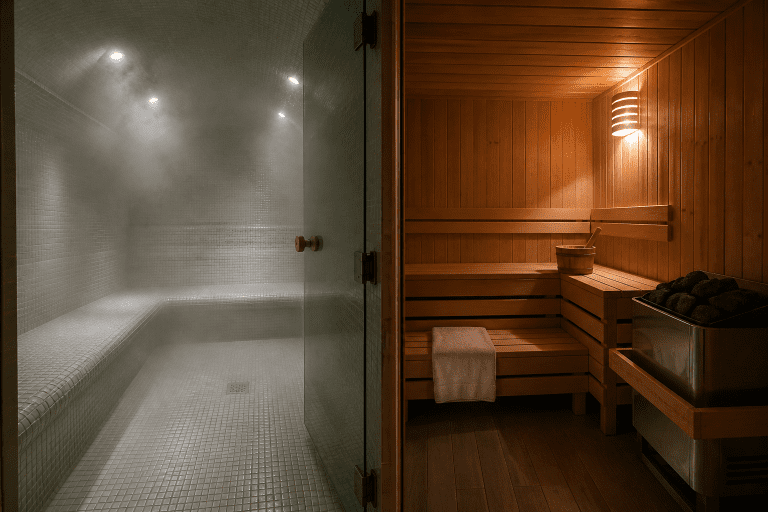
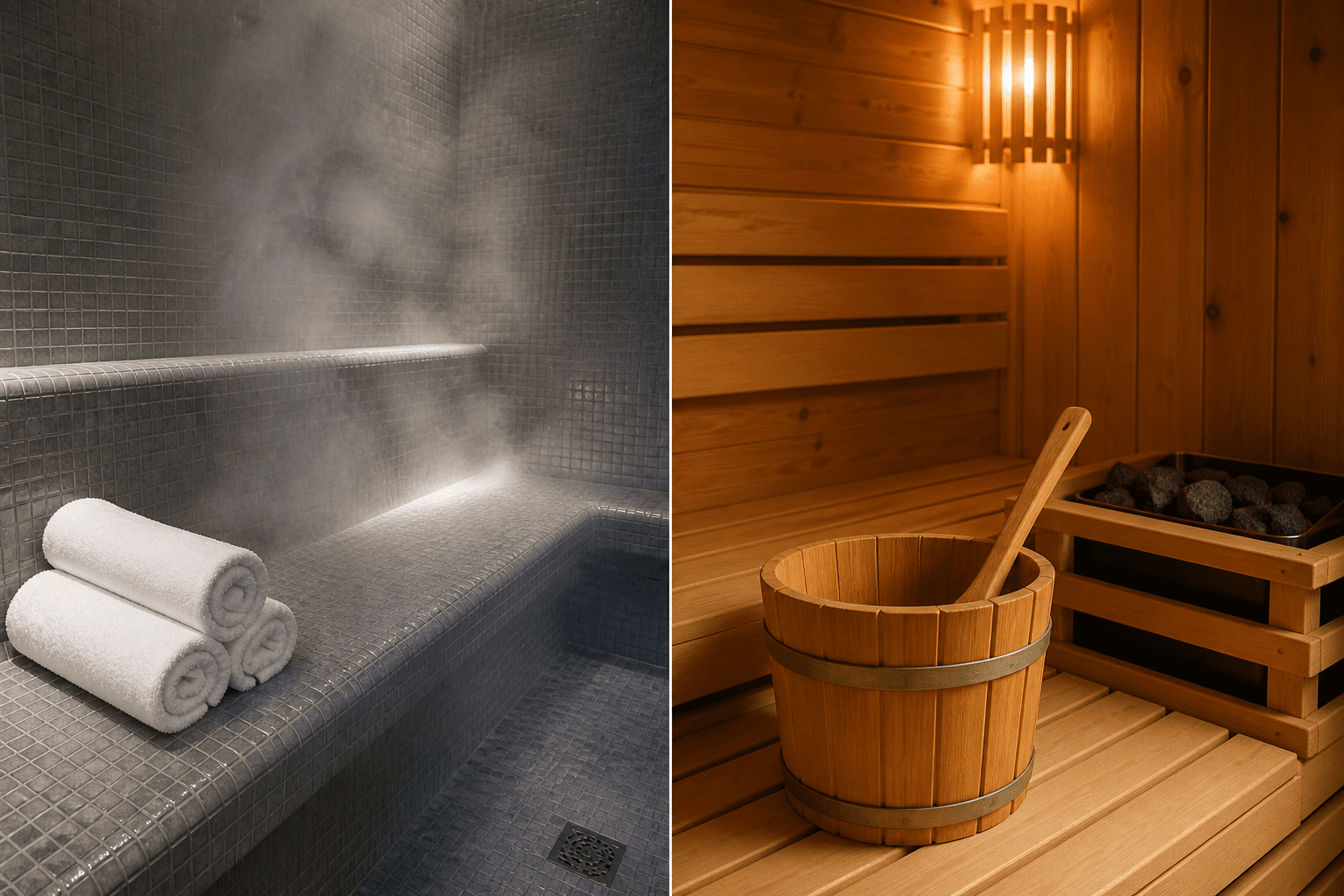
When you’re comparing steam vs sauna for skin, the core difference comes down to humidity. A steam room sits at close to 100% humidity — warm, wet air that sits on your skin and keeps moisture from evaporating. A traditional sauna runs at 10–20% humidity with air temperatures between 150°F and 195°F. The heat is more intense, the air is dry, and your body responds differently.
For a closer look at steam alone, including its limits and cautions, see our guide: Are steam rooms good for skin?
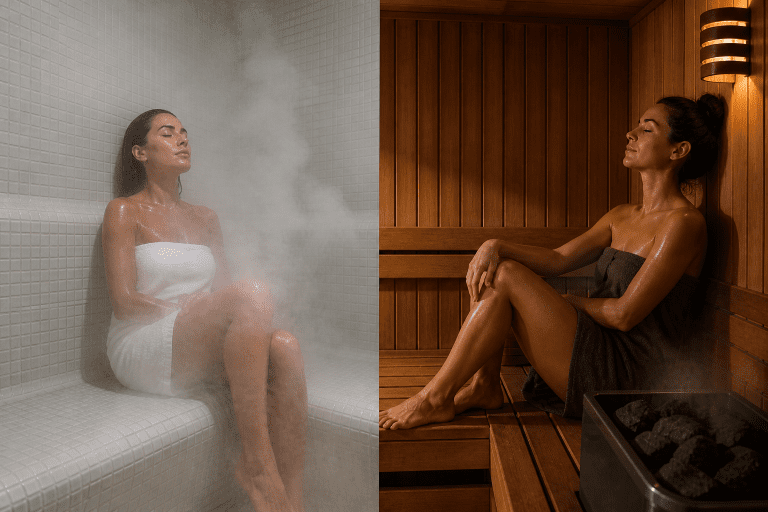
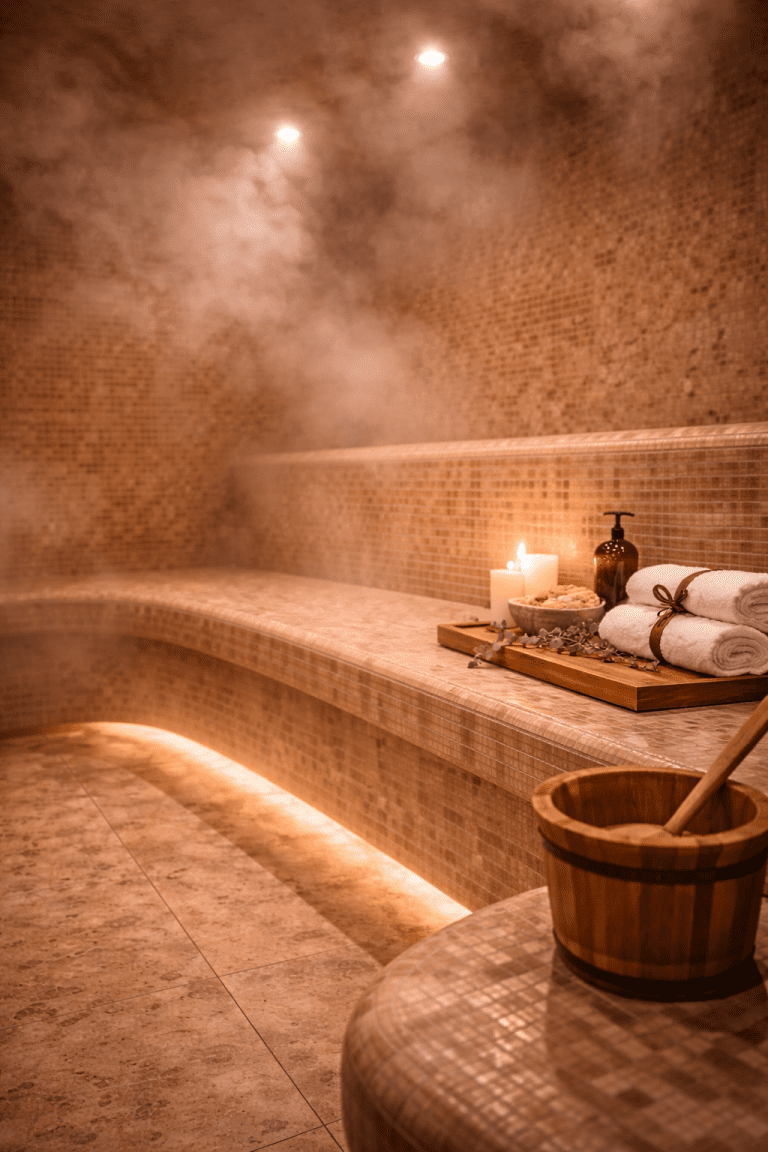
In a steam room, the warm moisture softens the outer layer of skin, opens pores, and makes it easier for the surface to breathe. According to Healthline steam exposure can improve circulation and promote a cleaner, clearer complexion over time by helping clear congested pores and increase blood flow to the skin’s surface.
In a sauna, the mechanism is different. You’re sweating harder, your core temperature rises more sharply, and that sweat is actively pushing through pores at volume. It’s less about surface moisture and more about the body flushing things outward. The sensation is noticeably more intense — there’s a reason people describe sauna as feeling like you’re purging something. That’s not a wellness cliché. It genuinely feels that way after you climb out.
I’ve noticed that after consistent steam use — not one or two sessions, but weeks of regular use — people started commenting on my skin unprompted. One person asked what moisturiser I’d switched to. I hadn’t switched anything. That kind of feedback is hard to fake, and it’s the thing that made steam my personal favourite of the four categories I use regularly.
Does steam or sauna produce faster skin results? Steam rooms tend to produce visible surface skin improvements faster because the moisture directly hydrates the outer skin layer and helps clear congestion. Sauna benefits tend to feel more systemic — deeper sweat, more internal, and often more noticeable after weeks of consistency rather than days.
Cost Reality
The cost gap between steam vs sauna for skin setups at home is real, and most comparison articles gloss over it. A basic home sauna — a pre-built barrel or indoor cabin unit — typically runs $1,500 to $4,500 depending on size and type. A steam generator for a dedicated steam shower starts around $500 for a basic unit but rises quickly to $1,500–$3,000 once you factor in a proper steam-sealed enclosure, a waterproof bench, and installation.
If you’re choosing purely on upfront cost, a sauna often edges ahead because you can buy a pre-built plug-and-play unit with less custom construction required. A steam room almost always needs a custom-tiled, sealed enclosure — which means labour. Neither option is cheap, and anyone pretending otherwise is probably selling something.
Running costs are comparable. Both use electric resistance heating — the sauna to heat the air, the steam generator to produce steam. Expect $1–$3 per session depending on unit size and local electricity rates.
Installation Friction
Installation is where steam vs sauna for skin comparisons often fall apart because the two options have genuinely different demands. A pre-built sauna can be delivered, positioned, and plugged into a 240V outlet — many homeowners handle this themselves with basic electrical prep. A steam room requires a waterproof, steam-sealed enclosure, proper ventilation to prevent mould, a generator correctly sized to the cubic footage of the space, and a drain. That’s contractor territory for most people.
Permits may be required for either, particularly for the electrical work involved. The Nolo guide on home improvement permits is a useful reference if you’re unsure what your local rules require before starting. Don’t skip this step — it matters at resale.
Outdoor saunas are often the most accessible entry point if you’re hesitant about the installation complexity of an indoor steam setup. If you’re weighing that option, the post on Indoor vs Outdoor Saunas walks through that decision in detail.
Maintenance
Maintenance for steam vs sauna for skin purposes is another area where the two diverge. A sauna is relatively low-maintenance — wipe down the benches after use, check the heater elements periodically, and sand or treat the wood if it starts to look worn. Avoid soap or cleaning products inside the cabin. That’s most of it.
A steam room is more demanding. The wet environment means mould and mildew are a genuine concern if ventilation isn’t working correctly. You’ll need to clean tile grout regularly, check the generator for mineral scale buildup (especially in hard water areas), and make sure the door seal is holding. Neglect a steam room and it becomes a hygiene problem quickly. That’s not a reason to avoid it — it’s a reason to set up your cleaning routine from day one and stick to it.
Pros and Cons
Looking at steam vs sauna for skin through a honest pros and cons lens — rather than the usual softened version — here’s what the experience actually produces.
Steam Room Pros: Direct skin hydration, visible surface results faster, softer on the lungs than dry sauna heat, easier on people who find intense dry heat uncomfortable Cons: Higher installation complexity, mould risk if poorly maintained, can feel claustrophobic in a small enclosure, harder to get the temperature right in a basic setup
Sauna Pros: More intense sweat response, deeper purging sensation, easier to install (pre-built options), lower maintenance, better tolerance for longer sessions once acclimatised Cons: Dry air can feel harsh on skin initially, benefits for skin feel slower and less direct, some people find the heat genuinely uncomfortable at first
How They Compare Side by Side
When you put steam vs sauna for skin directly against each other, the honest answer is that they target skin differently rather than one being objectively better. Steam works more on the surface — hydration, pore clarity, complexion brightness. Sauna works more systemically — circulation, sweat volume, that post-session purged feeling that’s hard to describe until you’ve experienced it consistently.
For dry skin types, steam has a clear advantage. Sitting in 100% humidity for 15–20 minutes doesn’t just open your pores — it actively adds moisture to the skin rather than stripping it. Sauna, particularly traditional Finnish-style sauna at high temperatures, can temporarily dehydrate the surface layer. That’s manageable with good hydration before and after, but it’s a real trade-off.
For congested or oily skin, both work — but sauna’s higher sweat volume can be especially effective at clearing out pores over time. The key word is time. Neither option delivers dramatic results from a single session. If you want the full picture on what steam exposure actually does to the body beyond skin, the post on [SAME-CLUSTER LINK: Steam Room Health Benefits] goes into that in detail.
Which is better for dry skin — steam room or sauna? For dry skin specifically, a steam room has a clear advantage. The high-humidity environment adds moisture directly to the skin’s surface rather than stripping it. Saunas use dry heat which can temporarily dehydrate the outer skin layer — manageable with hydration, but a real factor worth considering if dry skin is the main concern.
Comparison Table
| Steam Room | Sauna | |
|---|---|---|
| Primary skin benefit | Hydration, pore clarity | Sweat volume, circulation |
| Best for | Dry/congested skin | General skin health |
| Humidity | ~100% | 10–20% |
| Temperature | 110–120°F | 150–195°F |
| Heat intensity | Moderate | High |
| Installation complexity | Higher | Lower (pre-built options) |
| Maintenance | Higher | Lower |
| Upfront cost | $1,500–$3,000+ | $1,500–$4,500+ |
| Visible results timeline | Faster (surface) | Slower (systemic) |
| Mould risk | Yes — must manage | Minimal |

Helpful Gear
These are products worth having regardless of which direction you go.
1. Waterproof Digital Thermometer/Hygrometer A reliable thermometer and hygrometer lets you actually monitor conditions inside either environment — useful for dialling in temperature and catching humidity problems early before they become maintenance issues.
2. Eucalyptus Steam Concentrate A quality eucalyptus concentrate added to steam works well for clearing the airways and adds a sensory layer to sessions that becomes part of the routine quickly.
3. Sauna Bucket and Ladle Set If you end up with a traditional sauna, a proper wooden bucket and ladle is the right way to add water to the rocks — the cheap plastic versions warp and the experience isn’t the same.
FAQ
Is a steam room or sauna better for skin overall? Neither is objectively better — they work differently. When comparing steam vs sauna for skin, steam rooms are better for surface hydration and visible complexion results faster. Saunas produce a more intense systemic response — deeper sweating, stronger circulation push — which supports skin health over longer consistent use. Most people who use both regularly find that the combination delivers the clearest results.
How often do you need to use a steam room or sauna to see skin results? Consistency is the variable that actually matters. Occasional use produces little noticeable change. Regular sessions — three or more per week over several weeks — is where visible results start appearing. When comparing steam vs sauna for skin outcomes, steam tends to show surface effects sooner, but both require ongoing use rather than a one-time experiment.
Can you use a steam room and sauna on the same day? Yes, and the combination is worth trying. Heat and cold contrast — sauna or steam followed by a cold shower — produces a different physiological response than either alone and is genuinely effective for recovery and skin circulation. The cross-category benefits of pairing heat with cold are real.
Simple Rule
If your skin runs dry, start with steam. If you want intensity and are happy to be patient for results, sauna is the right call. If you can access both, use both — that’s where the real difference shows up over time.
Summary Snapshot
When you’re working through steam vs sauna for skin decisions, the honest summary is this:
- Steam = surface moisture, faster visible results, better for dry skin
- Sauna = deeper sweat, more intense, longer timeline for skin results
- Both require consistency — neither works from occasional visits
- Installation and maintenance complexity favours sauna for most home setups
- For skin specifically, steam edges it — but sauna delivers more total-body benefits
![two wooden doors side by side representing a sauna and steam room entrance]](https://sunriseandvitalize.com/wp-content/uploads/2026/05/003d55c6-b42f-4d14-9f2c-3deb0e2d4331-1024x683.png)
Final Verdict
After years of using both regularly, the steam vs sauna for skin question lands differently depending on what you’re asking. For pure skin results — hydration, clarity, that visible glow that people notice and comment on — steam has the edge. The warm, saturated air does something to your complexion that dry heat simply doesn’t replicate in the same direct way.
But that doesn’t make sauna the lesser option. Sauna produces a more intense experience — harder heat, more demanding sweat response, and a post-session feeling that’s closer to purging than relaxing. For people who find the steam room experience too passive, sauna’s intensity is the point. Both deliver genuine skin benefits when used consistently. Choosing between steam vs sauna for skin ultimately comes down to your skin type, your tolerance for heat intensity, and which one you’ll realistically build into a regular routine.
The one thing I’d push back on in most comparison articles: neither of these delivers much from sporadic use. The results that actually happen — the ones other people notice without prompting — come from months of consistency, not a few interesting sessions.
If you found this useful, there’s more worth reading in this space. For a broader look at what regular steam exposure actually does beyond skin, Steam Room Health Benefits is worth your time. And if you’re still deciding between environments, Steam vs Sauna — which post in cluster is most relevant once published].