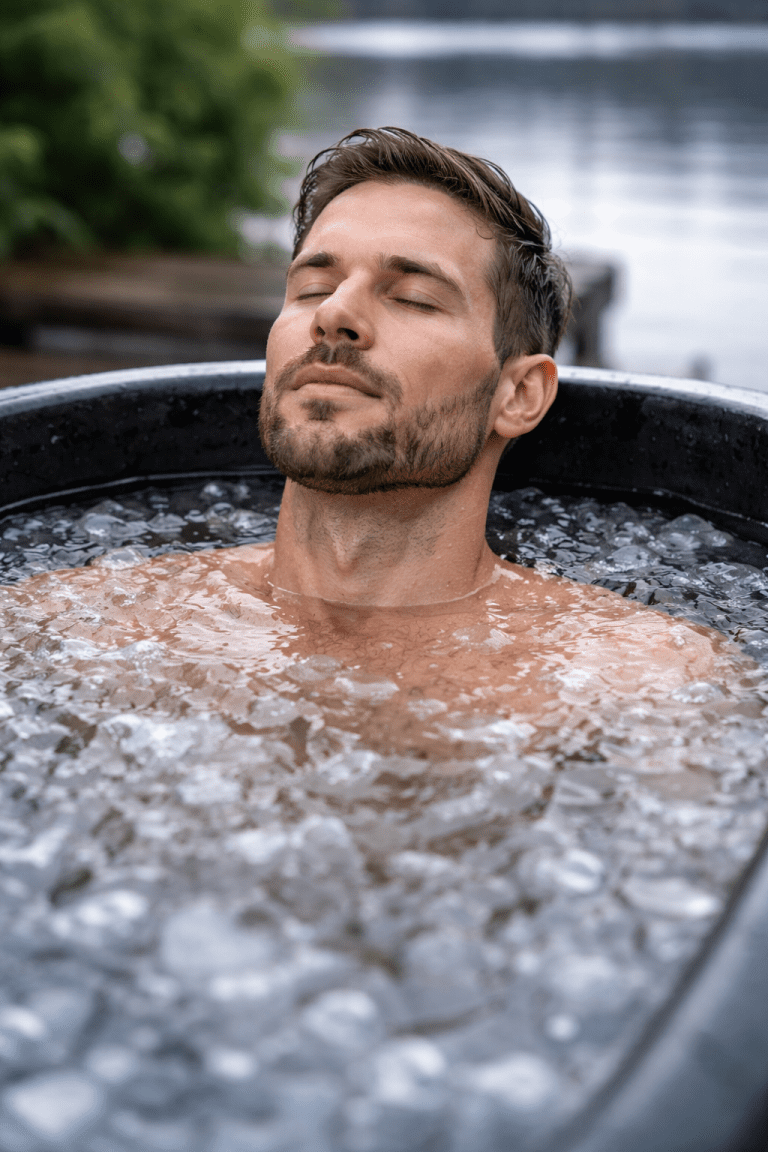
![blood pressure and cold plunges]](https://sunriseandvitalize.com/wp-content/uploads/2026/05/vidar-nordli-mathisen-0fN21zv8yYo-unsplash-scaled.jpg)
Blood Pressure and Cold Plunges: 5 Things That actually Happen
Blood pressure and cold plunges have a complicated relationship — and most articles either oversimplify it or scare you off entirely.
That’s frustrating, because the real picture is more interesting than either extreme.
Heads up: This post contains affiliate links. If you buy through them, I earn a small commission at no extra cost to you. I only recommend gear I’d actually use.
Quick Snapshot
- Cold plunges cause an immediate, sharp spike in blood pressure on entry
- That spike is temporary — your body normalises within minutes
- Regular cold exposure may support long-term cardiovascular health
- People with existing hypertension should speak to a doctor before starting
- The benefit isn’t the spike — it’s the recovery response your body builds over time
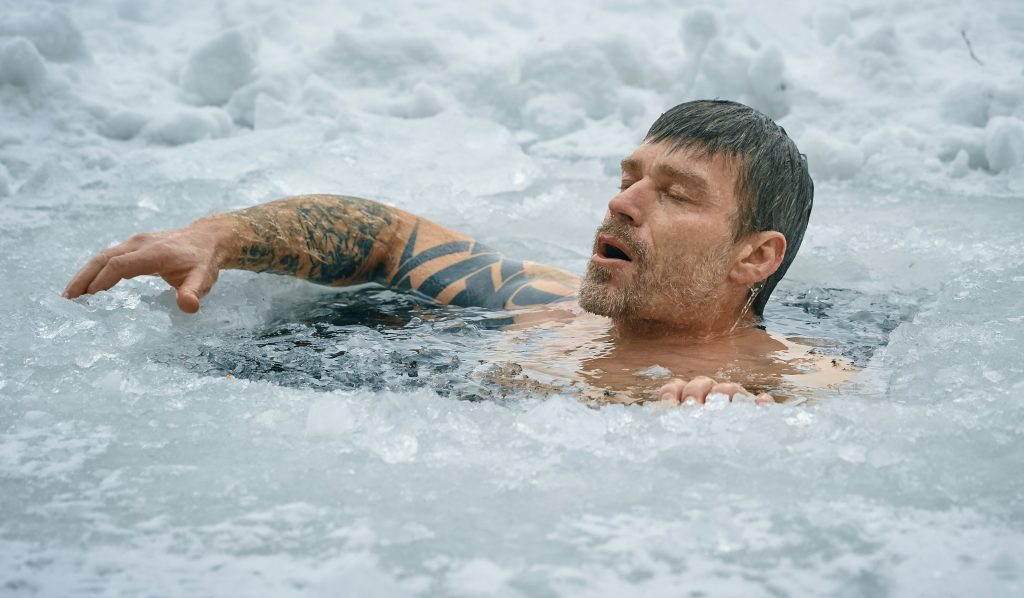
Table of Contents
- What Actually Happens to Your Blood Pressure in a Cold Plunge
- The Short-Term Spike vs. Long-Term Adaptation
- Cost Reality
- Installation Friction
- Maintenance
- Pros and Cons
- Cold Plunge vs. Cold Shower: Blood Pressure Comparison
- Comparison Table
- Helpful Gear
- FAQ
- Final Verdict
How Blood Pressure and Cold Plunges Interact
Blood pressure and cold plunges interact in a very specific sequence that most people don’t fully understand before they get in.
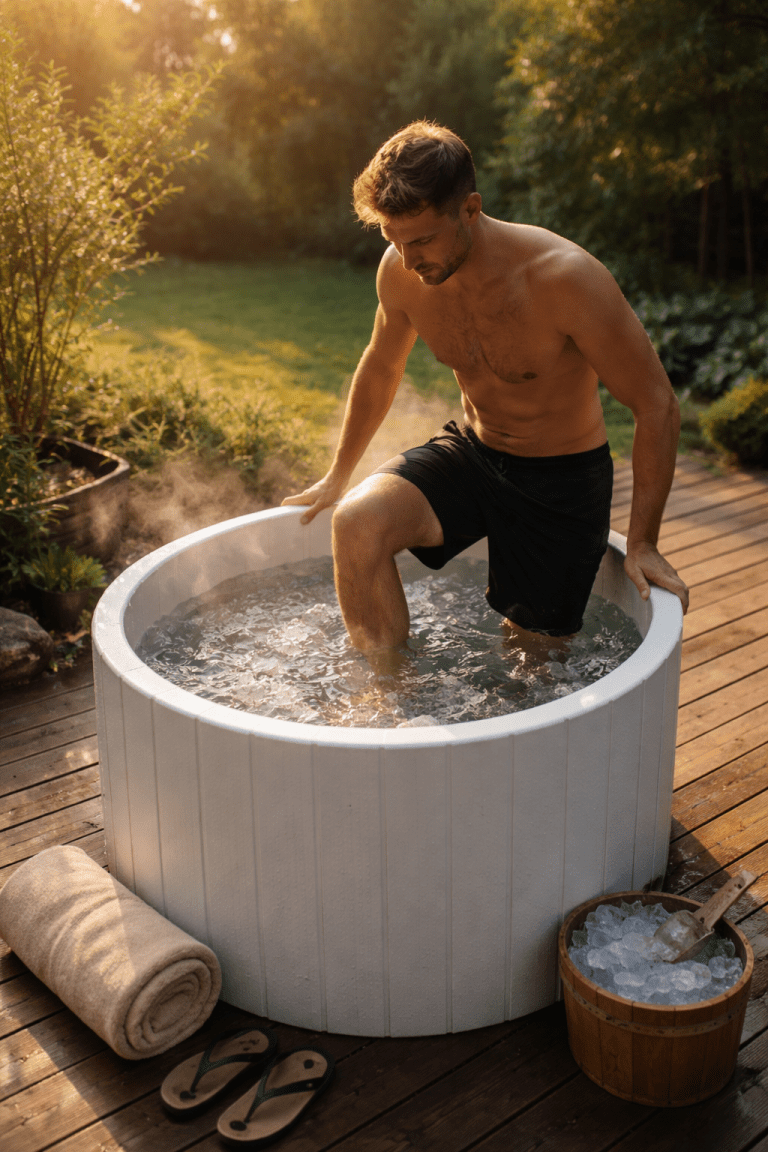
The moment cold water hits your skin, your body triggers the cold shock response. Blood vessels near the surface constrict rapidly. Your heart rate spikes. Blood pressure climbs — sometimes dramatically — within the first 30 to 60 seconds.
This isn’t a sign something is going wrong. It’s your body doing exactly what it’s designed to do when it detects a cold threat. The vasoconstriction is a protective mechanism, not a danger signal.
What happens after that initial spike is where things get more interesting.
Once your body recognises it’s not in immediate danger, the acute stress response begins to ease. Heart rate starts to come down. Breathing, if you control it, deepens. Blood pressure begins to normalise. For most healthy people, this stabilisation happens within the first two to three minutes of a plunge.
I’ve done cold showers every day for years, and a full plunge is genuinely a different level. The shock on entry isn’t comparable to a cold shower — the full-body immersion triggers a response that’s noticeably more intense. That first gasp, the way your chest tightens, the instinct to get out — that’s the cardiovascular system responding hard and fast. Breathing through it is the actual skill.
The Short-Term Spike vs. Long-Term Adaptation
The short-term spike in blood pressure from a cold plunge is well-documented. What’s less discussed is what consistent exposure does over time.
Research covered by Healthline suggests that regular cold water therapy may contribute to improved vascular function. The theory is that repeatedly stressing and recovering the cardiovascular system — in a controlled way — trains blood vessels to respond more efficiently. Similar to the way interval training improves cardiac output over time.
Blood pressure and cold plunges, viewed over weeks rather than a single session, start to look less like a risk and more like a controlled stressor with potential upside.
That said, this is not the same as treating hypertension. Cold plunges are not a medical intervention. If your blood pressure is already elevated, the spike on entry can be significant — and whether that’s safe for you specifically is a question for your doctor, not a wellness blog.
The honest limitation most articles skip: the spike is real, it’s sharp, and for people with unmanaged cardiovascular conditions, it matters. That doesn’t mean cold plunges are dangerous for everyone. It means context is everything.
Cost Reality
Getting into cold plunging specifically to manage blood pressure and cold plunges as a wellness practice doesn’t require a huge budget upfront.
A basic inflatable cold plunge tub runs $100–$300. You fill it with cold water, add ice, and you’re in business. There’s no electrical component required at this level.
The cost climbs when you move to purpose-built units with chillers. A quality cold plunge with active cooling sits in the $1,500–$5,000 range depending on brand and capacity. At that level, you’re getting consistent temperature without buying ice bags every session.
Running costs for chilled units — typically drawing 500W to 1,500W depending on the unit — add $20–$60 per month to your electricity bill depending on usage frequency and local rates. Budget plunges with ice cost more per session once you factor in regular ice purchases, so the economics shift depending on how often you plan to use it.
Installation Friction
Blood pressure and cold plunges are one area where the barrier to entry is genuinely low compared to other wellness equipment.
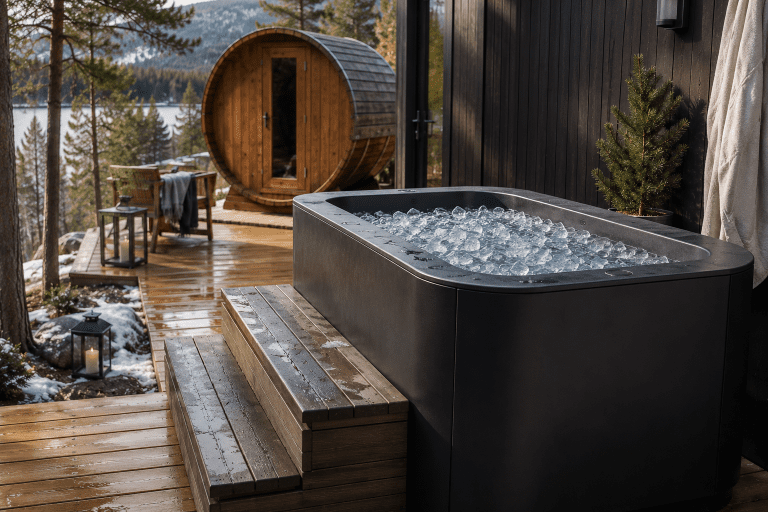
No electrical work is required for non-chilled units. You need a flat outdoor space or a room with a drain — that’s it. Some people set up in a garage, a yard, or even a bathroom with a large soaker tub and a bag of ice.
Chilled units do need a dedicated power outlet. Most run on standard 120V, though higher-end models may require a 240V circuit. If you’re installing indoors, ventilation and drainage become relevant. If outdoors, consider weatherproofing and whether the unit will be covered when not in use.
According to Nolo, most cold plunge installations don’t require permits unless structural work is involved. That’s worth checking locally, but for the majority of straightforward setups, you’re not dealing with planning applications.
Maintenance
A cold plunge used regularly for its effects on blood pressure and cold plunges as a cardiovascular practice needs consistent water hygiene management.
Water sitting in an unfiltered tub will degrade quickly. Bacteria, algae, and skin residue accumulate fast — especially in a unit used multiple times per week. Most serious users treat their plunge water with bromine or a small amount of chlorine and test it every few days.
Filtered and chilled units handle this more cleanly. They circulate the water and often include UV sanitation. Even so, water should be changed every 4–8 weeks depending on usage frequency and whether the system has active filtration.
The one thing people consistently underestimate is how quickly an unfiltered plunge tub becomes unusable without a basic maintenance routine. Ten minutes every few days keeps it clean. Ignoring it for two weeks is a different situation entirely.
Pros and Cons
Pros
The relationship between blood pressure and cold plunges carries real upside for people starting from a healthy baseline. The immediate cardiovascular stimulus — that sharp spike followed by controlled recovery — trains vascular responsiveness over time. Post-plunge, most people report a sustained reduction in perceived stress. That natural high after a hard gym session combined with cold contrast lasts hours — it’s not a short buzz. The mood effect alone makes consistency easier to maintain.
Recovery is faster with regular use. Muscles that have been working hard respond well to cold immersion. Inflammation markers drop. Sleep quality tends to improve.
Cons
Blood pressure and cold plunges are not a comfortable pairing for everyone, particularly at the start. The entry spike is real and can feel alarming. People with hypertension, heart conditions, or Raynaud’s disease need medical clearance before starting.
Cold shock response on entry carries a small but genuine risk if you’re not prepared. Hyperventilation on entry is common for beginners and can cause dizziness or — in rare cases — brief loss of consciousness. This is why solo plunging, especially in a deep tub, carries more risk than plunging with someone nearby.
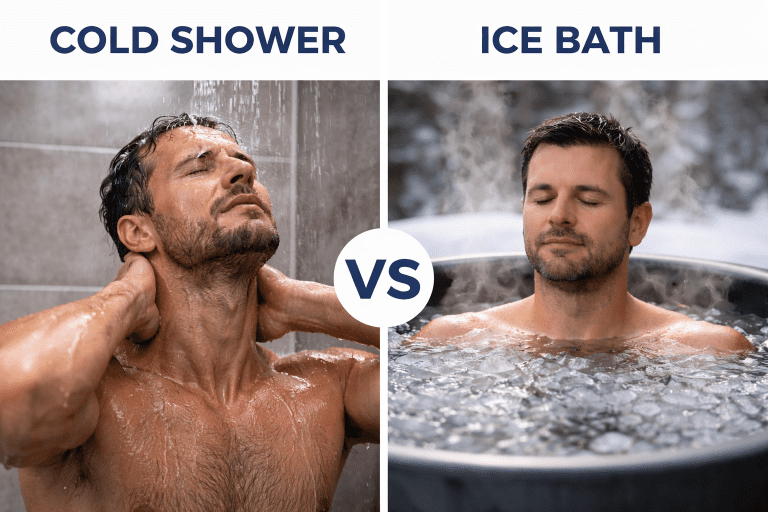
Cold Plunge vs. Cold Shower: Blood Pressure Comparison
For anyone exploring blood pressure and cold plunges, the question of whether a cold shower produces the same effect comes up constantly.
The honest answer is no — not at the same intensity. A cold shower triggers some of the same mechanisms: vasoconstriction, a mild spike in heart rate, the cold shock reflex. But full-body immersion in a cold plunge hits the system harder and more completely. The surface area exposed, the depth of cold, and the sustained duration all amplify the cardiovascular response.
That means both the acute spike and the subsequent adaptation are more pronounced with a plunge than a shower. For people building a practice specifically around cardiovascular training, the plunge produces a stronger stimulus. For people with cardiovascular concerns, that also means the plunge carries more acute risk on entry.
Cold showers are a reasonable starting point — a way to build cold tolerance before stepping into a full plunge. Many people use them as an everyday tool and reserve plunges for post-workout recovery, which is where blood pressure and cold plunges as a combination genuinely earns its keep.
If you’re also using heat in your routine — sauna or steam room — the contrast between heat and cold produces a cardiovascular effect that goes beyond either alone. steam room health benefits
Comparison Table
| Factor | Cold Plunge | Cold Shower |
|---|---|---|
| BP spike on entry | Sharp and immediate | Moderate |
| Full-body immersion | Yes | No |
| Cardiovascular stimulus | High | Moderate |
| Risk for hypertension | Higher | Lower |
| Adaptation over time | Stronger | Milder |
| Cost | $100–$5,000 | $0 |
| Convenience | Requires setup | Always available |
Helpful Gear
These are products that support a serious cold plunge practice. Owner verifies availability and inserts affiliate links before publishing.
Digital Water Thermometer — Knowing your exact water temperature takes the guesswork out of session intensity.
Waterproof Timer — Staying in longer than intended is a real risk when you’re focused on breathing. A visible timer removes that variable.
Chemical Test Strips (Bromine/Chlorine) — Works for cold plunge water hygiene too. Two-minute check every few days. Worth it.
FAQ
Does a cold plunge raise or lower blood pressure? Both — in sequence. Blood pressure and cold plunges follow a predictable pattern: a sharp spike on entry as blood vessels constrict, followed by a gradual return toward baseline as the body adjusts. Most healthy people stabilise within a few minutes. Long-term regular use may support better vascular function overall, though the evidence is still developing.
Is cold plunging safe if I have high blood pressure? Not without medical advice first. Blood pressure and cold plunges create a significant acute cardiovascular event on entry, and for someone with unmanaged hypertension, that spike can be dangerous. This is a conversation to have with your doctor before you start — not a risk to assess from a wellness blog.
How long does the blood pressure spike last after a cold plunge? For most healthy users, the acute spike from blood pressure and cold plunges normalises within 2–4 minutes of immersion as the cold shock response settles. Post-plunge, blood pressure often drops slightly below baseline as vasodilation follows the initial constriction. That post-plunge calm is part of why regular users report feeling so settled after sessions.
Simple rule: If your cardiovascular health is in question, talk to a doctor before you plunge — the spike is real.
Summary Snapshot
- Blood pressure spikes sharply on cold plunge entry — this is normal and temporary
- Full immersion produces a stronger cardiovascular stimulus than a cold shower
- Long-term regular use may support vascular health in healthy individuals
- People with hypertension or heart conditions need medical clearance first
- The post-plunge recovery effect — calm, elevated mood, reduced tension — is the reward
Final Verdict
Blood pressure and cold plunges are genuinely worth understanding before you commit to a practice — not to be scared off, but to approach it correctly.
The spike on entry is real. For healthy people, it’s a controlled stimulus that builds cardiovascular resilience over time. For people with existing conditions, it’s a variable that needs medical context before it’s a variable you experiment with.
Blood pressure and cold plunges, practised consistently and correctly, fit into a serious wellness routine as a recovery and resilience tool. The post-plunge effect — the sustained calm, the elevated mood, the physical reset — is what keeps experienced users coming back. That feeling is earned, and it’s real.
Start with cold showers if you’re new to cold exposure. Build tolerance. Then move to full immersion when your body has adapted enough that entry doesn’t trigger a panic response. That progression makes the practice sustainable — and sustainable is the only version that actually produces results.
Cluster Block — Ice Plunge Safety