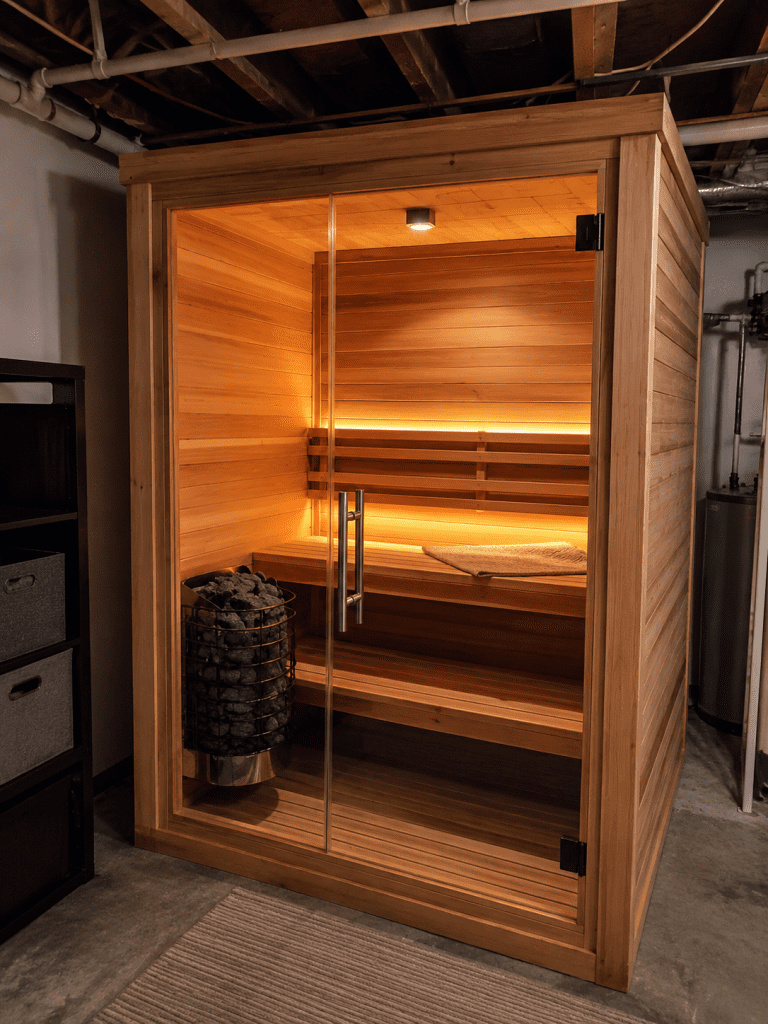

Do Steam Rooms Burn Calories? The Honest Answer You Need to Hear
If you’ve ever stepped out of a steam room dripping sweat and wondered whether steam rooms burn calories in any meaningful way, you’re not alone — it’s one of the most Googled questions in the wellness space right now.
And honestly? The answer is more nuanced than most sites will tell you. Yes, something is happening in there. But no, it’s probably not what you’re hoping for. Let’s get into the real numbers, the actual physiology, and what steam therapy is genuinely good for — because it is good for a lot.
Quick note: Some links in this post are affiliate links. If you buy through them, we may earn a small commission at no extra cost to you. We only ever recommend gear we’d actually use.
⚡ Quick Snapshot
- Steam rooms do burn some calories — roughly 50–100 calories per 20-minute session
- Most weight lost immediately after is water weight, not fat
- Your heart rate does elevate, similar to light cardiovascular activity
- Steam rooms offer real benefits: circulation, skin health, muscle recovery
- They are not a substitute for exercise or a calorie deficit
- Best used as a complement to an active wellness routine
The question of whether steam rooms burn calories comes up constantly, and the answer deserves more honesty than most wellness sites offer.

Table of Contents
- How Steam Rooms Affect Your Body
- Do Steam Rooms Actually Burn Calories?
- The Cost Reality of Steam Room Access
- Home Steam Room Installation
- Maintenance: What Nobody Tells You
- Pros and Cons
- Steam Room vs. Sauna: Calorie Burn Comparison
- Comparison Table
- Helpful Gear
- FAQ
- Final Verdict
How Steam Rooms Affect Your Body
When you walk into a steam room, you’re entering an environment that typically sits between 100–115°F with nearly 100% humidity. That combination does something interesting to your body — it forces your cardiovascular system to work harder to regulate your core temperature.This is the core mechanism behind why steam rooms burn calories at all — your body is working, even when you’re sitting still.
Your heart rate climbs. Your blood vessels dilate. You sweat — a lot. And your body is burning energy to manage all of that.
Does sitting in a steam room raise your heart rate? Yes. Research suggests that passive heat exposure can elevate heart rate by 50–75% above resting levels, which is comparable to a light to moderate walk. This gentle cardiovascular response is part of why heat therapy is often explored for its potential to support circulation and heart health, according to Healthline.
The key phrase there is passive heat exposure. Your body is working, but you are not. That distinction matters enormously when we talk about calorie burn.
Do Steam Rooms Actually Burn Calories?
Let’s be straightforward about this. Steam rooms burn calories, but not in the dramatic way wellness marketing sometimes implies.
Here’s a reasonable breakdown:
- A 150 lb person at rest burns approximately 68 calories per 20 minutes
- In a steam room, elevated heart rate and thermoregulation may increase that to around 80–120 calories per 20-minute session
- That’s roughly equivalent to a slow, casual walk
The inflated numbers you sometimes see — “400 calories in 30 minutes!” — are almost always measuring sweat loss, not actual energy expenditure. When you rehydrate (which you must), that weight comes straight back.So yes, steam rooms burn calories — just not in the way most people hope when they step out dripping
How many calories does a steam room burn? A typical 20-minute steam room session burns approximately 50–120 calories depending on your body weight, the temperature, and your individual metabolic rate. This is modest compared to exercise but slightly higher than simply sitting at rest, due to the cardiovascular effort required to regulate body temperature.
This isn’t meant to discourage you. It’s meant to set honest expectations so you can use steam therapy for what it actually excels at — which is considerable.
The Cost Reality of Steam Room Access
Before investing in home access, it’s worth being clear on what steam rooms burn calories-wise per session versus what you’re actually paying.
Gym or spa access: Most gyms with steam room facilities charge $30–$80/month for membership. Dedicated spa day passes with steam access typically run $25–$75 per visit. If you’re going two to three times a week, a gym membership is almost always the better value.
Home steam room installation: A pre-built home steam shower unit typically runs $1,500–$5,000 for a mid-range option. Custom-tiled home steam rooms with a quality steam generator can cost anywhere from $3,000 to $15,000+ including installation, tiling, waterproofing, and the generator unit itself.
Steam generator cost alone: A standalone steam generator (the unit that produces steam) ranges from $500–$2,500 depending on the kilowatt rating and brand. Mr. Steam and Thermasol are considered industry benchmarks.
The honest question to ask yourself: How often will I actually use this? If the answer is three or more times per week consistently, a home unit can pay for itself in avoided spa fees within two to three years.
Home Steam Room Installation: What to Know Before You Commit
Installing a home steam room is more involved than most people expect. Unlike a sauna, which is mostly a dry, insulated box, a steam room requires:
- Complete waterproofing of all walls, ceiling, and floor
- A ceiling slope (minimum 2-inch pitch) to prevent condensation dripping on you
- A sealed door — no gap at the bottom, unlike a sauna
- Proper ventilation to manage moisture after sessions
- Electrical work for the steam generator (typically 240V)
- Tile or non-porous surfaces throughout — wood absorbs moisture and molds
Many homeowners underestimate the waterproofing requirement. A failed steam room installation doesn’t just mean a damp room — it can mean structural water damage inside your walls within a year.
If you’re serious about home installation, get at least two quotes from contractors who have specifically built steam rooms before. This is not a standard bathroom renovation.
Maintenance: What Nobody Tells You
Steam rooms have real maintenance requirements that deserve honest discussion.People who use steam rooms regularly to burn calories and support recovery need to factor maintenance into the commitment.
Weekly: Wipe down all tile surfaces with a diluted white vinegar solution or a non-abrasive steam room cleaner. Moisture breeds mold and mildew aggressively in this environment.
Monthly: Flush the steam generator according to manufacturer instructions. Mineral buildup (scale) inside the generator is the number one cause of early unit failure. If you have hard water, this is even more critical.
Annually: Have the steam generator professionally inspected. Check door seals for wear. Inspect grout lines for any cracking or gaps — even small breaches allow moisture into the wall structure.
Water quality: If your home has hard water, a dedicated water softener or filtration line to the steam generator significantly extends unit life. This is an added cost many buyers don’t anticipate.
The maintenance burden for a steam room is meaningfully higher than for a sauna. Factor that into your decision honestly.
Pros and Cons of Steam Rooms for Calorie Burn and Wellness
Pros:
- Genuine cardiovascular response — heart rate elevation comparable to light exercise
- Improved circulation and vasodilation
- Skin hydration and pore cleansing from humid heat
- Muscle relaxation and recovery support post-workout
- Mental relaxation and stress reduction
- May support respiratory health in those with mild congestion
Cons:
- Calorie burn is modest — not a replacement for exercise
- Weight loss immediately post-session is almost entirely water weight
- Risk of dehydration if sessions are too long or fluids not replaced
- Not recommended for pregnant women, those with heart conditions, or low blood pressure without medical clearance
- High installation and maintenance cost for home units
- Requires consistent cleaning discipline to prevent mold
Steam Room vs. Sauna: Which Burns More Calories?
This is a genuinely interesting comparison because both involve heat stress, but they work differently on the body.
A dry sauna operates at 150–195°F with low humidity. The higher temperature creates a more intense cardiovascular response for most people. Studies on Finnish sauna use suggest heart rate can reach 100–150 bpm during a sauna session — comparable to moderate aerobic exercise.
A steam room operates at lower temperatures (100–115°F) but with 100% humidity. The humidity makes it feel hotter than it is and impairs your body’s ability to cool through sweat evaporation. The cardiovascular response is real but generally slightly lower than a dry sauna at peak temperatures.
Which burns more calories — steam room or sauna? A dry sauna generally produces a slightly higher calorie burn per session than a steam room, due to the higher operating temperatures and more intense cardiovascular response. However, the difference is modest — both are in the 50–150 calorie range per 20-minute session. Neither replaces structured exercise for weight management.
Comparison Table: Steam Room vs. Sauna vs. Hot Tub — Calorie Burn & Wellness
| Feature | Steam Room | Dry Sauna | Hot Tub |
|---|---|---|---|
| Avg. temp | 100–115°F | 150–195°F | 98–104°F |
| Humidity | ~100% | 10–20% | N/A (submerged) |
| Est. calories (20 min) | 50–120 | 80–150 | 50–100 |
| Cardiovascular response | Moderate | Moderate–High | Low–Moderate |
| Skin benefits | High (hydration) | Moderate | Low–Moderate |
| Respiratory benefits | High | Low | Low |
| Muscle recovery | Good | Very good | Good |
| Installation cost (home) | $3,000–$15,000+ | $2,000–$10,000+ | $3,000–$16,000+ |
| Maintenance effort | High | Low–Moderate | Moderate–High |

Helpful Gear for Your Steam Room Routine
These are products worth having whether you’re using a gym steam room or planning a home setup.
1. Steam Room Aromatherapy Eucalyptus Oil A few drops on the steam room floor or in a diffuser transforms the experience. Eucalyptus is well-documented for respiratory benefits and makes sessions feel genuinely therapeutic rather than just hot.
2. Digital Thermometer/Hygrometer Knowing your actual temperature and humidity levels helps you manage session intensity safely and ensures your steam generator is performing correctly.
3. Microfiber Steam Room Towel Set A quality, fast-drying towel set purpose-built for high-humidity environments. Regular cotton towels hold moisture and develop odor quickly in steam room use.
FAQ
Do steam rooms help with weight loss? Steam rooms can support a weight loss lifestyle but are not a direct weight loss tool. The calorie burn per session is modest (50–120 calories), and the immediate weight drop you see on the scale after a session is water weight that returns once you rehydrate. Where steam rooms genuinely help is in stress reduction, muscle recovery, and supporting an active lifestyle — all of which indirectly support sustainable weight management.
Is it safe to use a steam room every day? For most healthy adults, daily steam room use of 15–20 minutes is generally considered safe provided you stay well hydrated and listen to your body. However, anyone with cardiovascular conditions, low blood pressure, or who is pregnant should consult a doctor before regular use. The key risks are dehydration and overheating — both manageable with common sense.
Do steam rooms burn calories while you sit still? Yes — even at rest in a steam room, your body is burning slightly more calories than it would sitting in a normal room, because your cardiovascular system is working to regulate your core temperature. The increase is modest but real. It is not equivalent to exercise, but it is not zero either.
The simple rule: Use a steam room to feel better, recover faster, and support your wellness routine — not to replace the workout itself.
📋 Summary Snapshot
- Steam rooms do burn calories — roughly 50–120 per 20-minute session
- Most post-session weight loss is water weight, not fat
- Sauna sessions produce a slightly higher calorie burn due to higher temps
- Real benefits include circulation, skin health, muscle recovery, and stress relief
- Home installation requires serious waterproofing and ongoing maintenance
- Best results come from pairing steam therapy with consistent exercise and good nutrition

Final Verdict
So, do steam rooms burn calories? Yes — but modestly, and honestly. You’re looking at the equivalent of a slow walk, not a cycling class. Anyone telling you otherwise is selling something.
What steam rooms are genuinely excellent for is the stuff that makes a wellness routine sustainable long-term: real relaxation, circulation support, skin health, post-workout recovery, and that particular kind of mental reset that only comes from sitting in heat with nowhere to be. Those benefits are well documented and worth taking seriously.Used consistently, steam rooms burn calories modestly, improve circulation, and genuinely support recovery — that’s a worthwhile trade even without dramatic weight loss.
If you’re looking at a steam room purely as a calorie-burning tool, you’ll be disappointed. If you’re looking at it as one piece of a broader approach to feeling good in your body — you’re going to love it.
For a deeper look at what steam rooms do beyond calorie burn, our steam room health benefits guide covers the full wellness picture — If you’re pairing steam with cold exposure for recovery, Our Cold Plunge Benefits covers the contrast therapy side in detail.