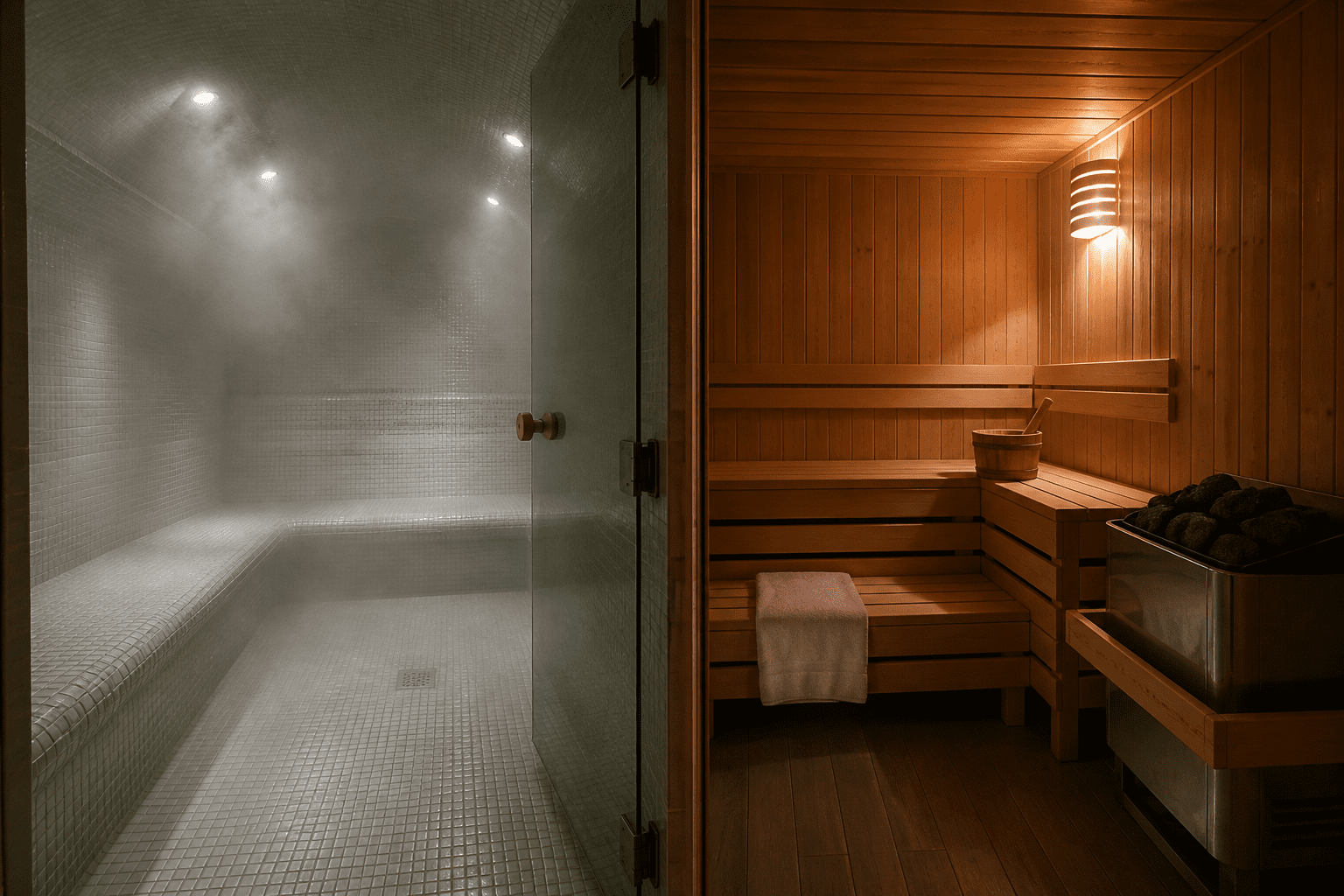
Steam vs Sauna: Key Differences
Steam vs sauna is one of those comparisons that looks simple until you’ve actually used both regularly — then you realise they feel completely different, cost differently, and suit different people for different reasons.
I’ve used both for years. Not casually. Consistently, as part of a real routine. So this isn’t a spec sheet comparison — it’s the honest version.
Heads up: some links in this post are affiliate links. If you buy through them, I earn a small commission at no extra cost to you. I only link things I’d genuinely recommend.
Quick Snapshot
- Steam rooms run at 100–115°F with 100% humidity; saunas run at 150–195°F with very low humidity
- Steam is gentler on the respiratory system for most people; sauna delivers more intense dry heat
- Home sauna installation is generally more expensive upfront; steam generators are cheaper but require a sealed room
- Both have real wellness benefits — the choice usually comes down to how you respond to heat and moisture
- Using both together produces better results than either alone
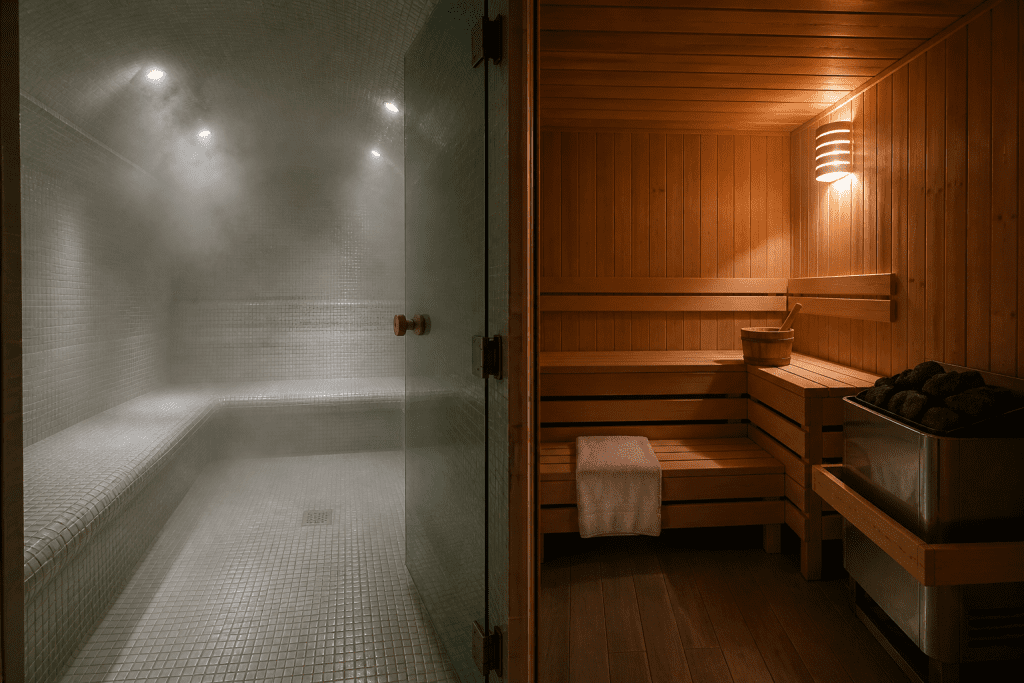
Table of Contents
- What Actually Separates Steam and Sauna
- The Real Cost Breakdown
- Installation: What You’re Actually Signing Up For
- Maintenance Differences
- Pros and Cons
- Which One Wins for Different Goals
- Comparison Table
- Helpful Gear
- FAQ
- Final Verdict
What Actually Separates Steam and Sauna
The steam vs sauna debate starts with temperature and humidity — but that’s only the surface.
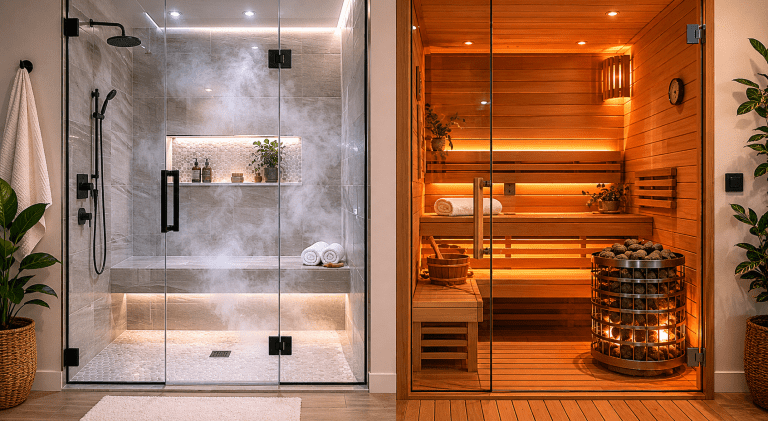
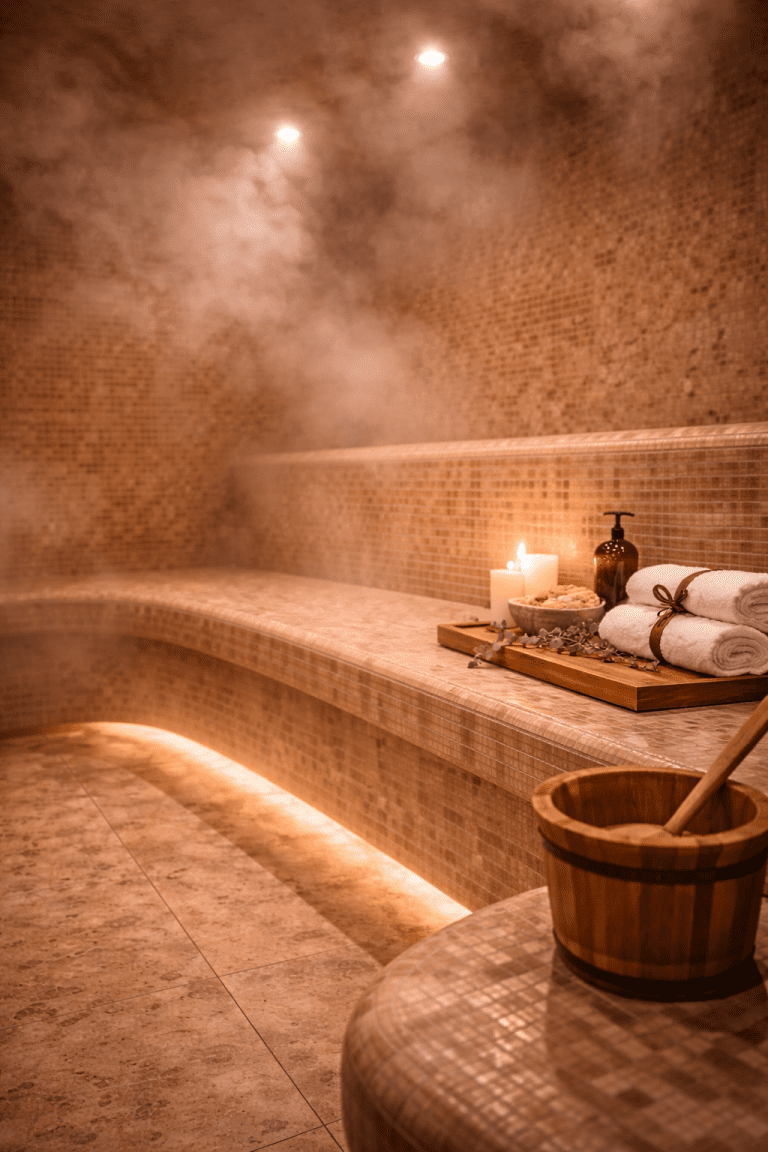
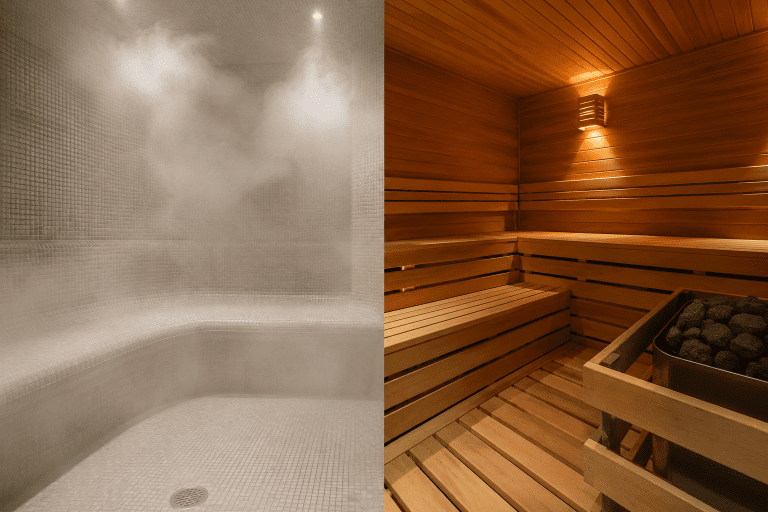
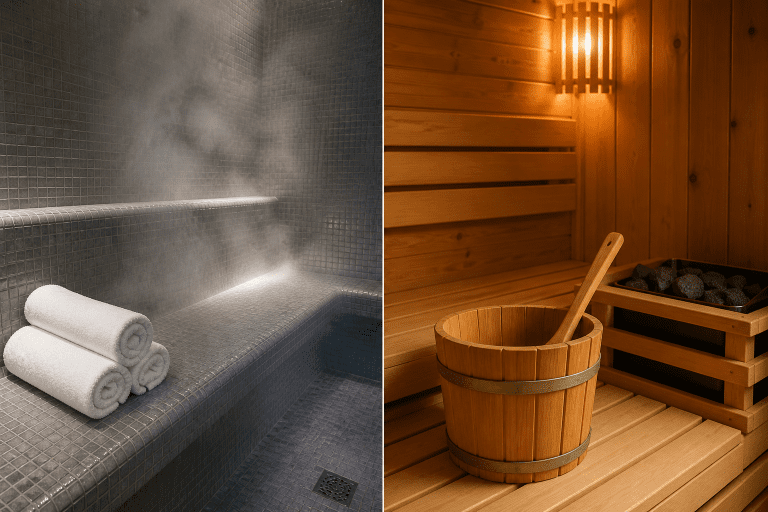
A traditional sauna runs hot and dry. We’re talking 150°F to 195°F with humidity sitting somewhere between 5% and 20%. The heat is intense and immediate. You feel it hit you. A steam room runs much cooler — 100°F to 115°F — but with 100% relative humidity. That moisture is what makes it feel so different. The air is saturated. You’re not just sitting in heat; you’re sitting inside a warm cloud.
That difference in environment changes the entire experience. In a sauna, the dry heat pulls sweat out fast. You feel a kind of purging happening — more aggressive, more physical. In a steam room, the moist heat wraps around you. It’s softer, more enveloping. I find the steam room genuinely energising in a way the sauna isn’t — not just relaxed after, but actively alert. Most people don’t expect that.
The heat source differs too. Saunas use either an electric heater with rocks, a wood-burning stove, or infrared panels. Steam rooms use a steam generator that boils water and pumps vapour into a sealed, tiled enclosure. The sealed room requirement is a practical consideration a lot of people overlook when planning a home installation.
What is the main difference between a steam room and a sauna? A sauna uses dry heat at 150–195°F with low humidity. A steam room uses moist heat at 100–115°F with 100% humidity. The lower temperature in a steam room feels equally intense due to the moisture in the air, but the experience and health effects differ meaningfully.
The Real Cost Breakdown
When people research steam vs sauna for a home setup, they often anchor on the wrong number first.
A home sauna — whether a pre-built barrel unit, an indoor cabin, or an infrared panel room — typically runs between $2,000 and $8,000 for the unit itself, before any electrical work. Traditional Finnish-style saunas need a 240V dedicated circuit. Infrared models are sometimes 120V, which makes installation easier, but the experience is noticeably different from traditional heat. As the U.S. Department of Energy notes, electric resistance heating carries real running costs that add up over consistent use — worth factoring into your long-term budget.
Steam generators for home use are actually cheaper at the unit level — many quality residential generators sit in the $500 to $1,500 range. But the steam vs sauna cost comparison doesn’t end there. A steam room requires a fully sealed, waterproofed, tiled enclosure. If you’re retrofitting an existing shower or bathroom space, that build-out cost can easily exceed the generator itself. Factor in a contractor for the tile work, a waterproof ceiling (critical — flat ceilings cause drips), and a proper door seal, and the total installed cost often surprises people.
Running costs are comparable. Both draw significant electricity during a session. Steam rooms heat up faster — 10 to 15 minutes versus 20 to 45 minutes for a traditional sauna — which slightly offsets the per-session cost if you’re using it regularly.
Installation: What You’re Actually Signing Up For
Steam vs sauna installation difficulty isn’t the same conversation.
A pre-built sauna is the more forgiving option. Modular indoor units can be assembled by two people over a weekend. You still need a dedicated 240V circuit, which typically means an electrician, but the physical build is straightforward. Outdoor barrel saunas are even simpler — flat ground, a power connection, done. Permits may be required depending on your municipality; Nolo’s home improvement permit guide is worth checking before you start.
Steam room installation is more demanding. The room itself must be completely sealed — walls, ceiling, floor. Any gap lets steam escape and moisture penetrate your home’s structure. That means cement board or waterproof backer on every surface, a proper membrane system, and fully grouted tile throughout. The ceiling must be sloped so condensation runs to the walls rather than dripping. The door needs a full perimeter seal. These aren’t optional details — they’re structural requirements. Get them wrong and you’re looking at mould inside your walls.
Both options benefit from professional electrical work. Neither is a true DIY job unless you have real construction experience.
Maintenance Differences
Ongoing maintenance is where the steam vs sauna comparison shifts again — and where a lot of buyers get a surprise.
Sauna maintenance is minimal. Wipe down the wood periodically, treat the benches with a sauna-safe oil once or twice a year, and keep the heater stones in good condition. There’s no water system to manage. No chemistry. The main enemy is moisture left sitting on untreated wood, which you avoid by leaving the door open after sessions to let the room breathe. Infrared saunas require even less — just a regular wipe-down.
Steam rooms are higher maintenance. The generator accumulates mineral scale from the water it boils, and that build-up eventually damages the unit if ignored. Flushing and descaling the generator every few months is non-negotiable. The tiled surfaces need regular cleaning to prevent mould and mildew, which thrive in the warm, wet environment. If you live in a hard water area, a water softener or filter on the supply line extends the generator’s life considerably.
Neither is difficult to maintain — but they’re different kinds of effort. Sauna is low-touch. Steam room requires a real routine.
Pros and Cons
The honest steam vs sauna pros and cons list looks different depending on what you actually want from the experience.
Steam Room Pros: Gentler on the respiratory system, excellent for skin (people genuinely ask what moisturiser you’ve been using after consistent use — the effect is visible and unprompted), faster heat-up time, lower equipment cost, pairs brilliantly with a cold shower. Cons: Higher installation complexity, more maintenance required, sealed room requirement limits placement options, not suitable for all respiratory conditions.
Sauna Pros: More intense heat experience, lower maintenance, more flexible installation options, well-researched health benefits including cardiovascular support, faster installation with modular units, the purging sensation is genuinely different to anything else. Cons: Longer heat-up time, higher upfront cost for quality units, dry heat can be uncomfortable for some people, requires dedicated electrical circuit.
Which One Wins for Different Goals
Choosing between steam vs sauna comes down to what you’re trying to get from the experience.
For respiratory benefits and skin health, the steam room has a clear edge. The warm, humid air is soothing for airways, and the effect on skin texture and appearance with consistent use is real — not marketing language. For intense heat exposure, cardiovascular stress response, and the classic post-workout recovery feeling, the sauna delivers something the steam room can’t match. That dry heat at 180°F is a different physiological event. According to the Cleveland Clinic, regular sauna use is associated with meaningful cardiovascular benefits — the research base for traditional sauna is particularly strong.
For people who want to use both — which is genuinely where the best results come from — the combination of steam vs sauna in the same session is something else entirely. The swim/shower/sauna/steam/cold shower rotation produces the best overall feeling of any combination I’ve found. Each element does something the others don’t. You don’t have to choose if you have access to both.
If you’re also considering how cold exposure fits into your routine, Our Ice Plunge Benefits guide adds contrast therapy after either heat option compounds the effect significantly.
Is a steam room or sauna better for muscle recovery? Both support muscle recovery, but through slightly different mechanisms. Sauna’s intense dry heat increases circulation and promotes muscle relaxation effectively. Steam room’s moist heat is gentler and may be preferable if you have respiratory sensitivity. For maximum recovery, using both in sequence with cold exposure produces the best combined result.
Comparison Table
| Factor | Steam Room | Sauna |
|---|---|---|
| Temperature | 100–115°F | 150–195°F |
| Humidity | 100% | 5–20% |
| Heat-up time | 10–15 min | 20–45 min |
| Unit cost | $500–$1,500 | $2,000–$8,000 |
| Installation complexity | High (sealed room required) | Moderate |
| Maintenance | Higher (descaling, mould prevention) | Lower |
| Skin benefits | Excellent | Good |
| Respiratory effects | Soothing | Drying |
| Cardiovascular research | Moderate | Strong |
| Best for | Skin, airways, gentler heat | Intense heat, workout recovery |

Helpful Gear
A few things that genuinely improve the experience with either option:
Sauna thermometer and hygrometer combo — Knowing the actual temperature in your sauna matters more than most people realise, especially when you’re dialling in sessions.
Steam room shower seat / teak stool — If your steam room is a converted shower enclosure, a properly sealed teak stool transforms the experience. Teak handles moisture without warping.
Microfibre sauna towel set — Thin, fast-drying, and they don’t hold moisture the way standard towels do. Useful for both environments.
FAQ
Can you use a steam room and sauna on the same day? Yes, and it’s worth doing. Many people use the sauna first for the intense dry heat, then move to the steam room for a gentler cool-down phase. Ending with a cold shower or ice plunge after both gives the best overall result. Stay hydrated throughout and listen to your body — total combined session time over 30 minutes requires careful attention to how you feel.
Which is better for weight loss — steam or sauna? Neither is a meaningful weight loss tool on its own. The steam vs sauna comparison on this point comes down to honest expectations: both produce temporary water weight loss through sweat, which returns when you rehydrate. The real benefit is indirect — consistent use supports recovery, reduces stress, and makes regular training more sustainable. That’s where the long-term body composition effect comes from.
Is a steam room or sauna easier to install at home? A sauna is generally easier. Pre-built modular saunas can be assembled in a day with basic tools and a dedicated electrical circuit. A steam room requires a fully sealed, tiled, waterproofed enclosure — a construction project that usually needs professional tile and waterproofing work before the generator is even connected.
One simple rule: if you can only pick one, match the choice to your heat tolerance — steam for those who find dry heat overwhelming, sauna for those who want the full intensity.
Summary Snapshot
- Steam room: moist heat, gentler, better for skin and airways, higher installation effort
- Sauna: dry intense heat, stronger research base, easier to install, lower maintenance
- Both deliver real wellness benefits with consistent use
- The combination of both, with cold contrast, is where the best results come from
- Cost difference matters less than which environment you’ll actually use regularly

Final Verdict
The steam vs sauna question doesn’t have one right answer — it has a right answer for your situation.
If I had to choose one permanently, I’d take the steam room. It’s my personal favourite of the four categories I use regularly. The skin effect is real, the feeling afterwards is genuinely energising rather than just relaxed, and the moist heat suits the way I recover. But I’d be giving something up. The sauna’s intensity is irreplaceable. That purging feeling at 180°F is a different experience — and the research behind it is stronger and deeper.
If you have the space and budget for both, that’s the answer. The steam vs sauna comparison becomes irrelevant when you’re using them in sequence. For anyone working with constraints, honestly assess which environment you’ll step into on an average Tuesday when you’re tired and busy — that’s the one worth buying.
- Steam Room Health Benefits
- Ice Plunge Benefits — contrast therapy pairing